TLDR: Summary
Using a permanent marker on a carpet bleach spot is a quick way to turn a small problem into a permanent eyesore. Markers use surface-level ink that doesn't bond to fibres, fails to neutralise active bleach, and rarely matches the complex colours of a professional carpet. For a permanent, seamless fix, professional bleach spot repair is the only sustainable choice.
The "Oh No" Moment
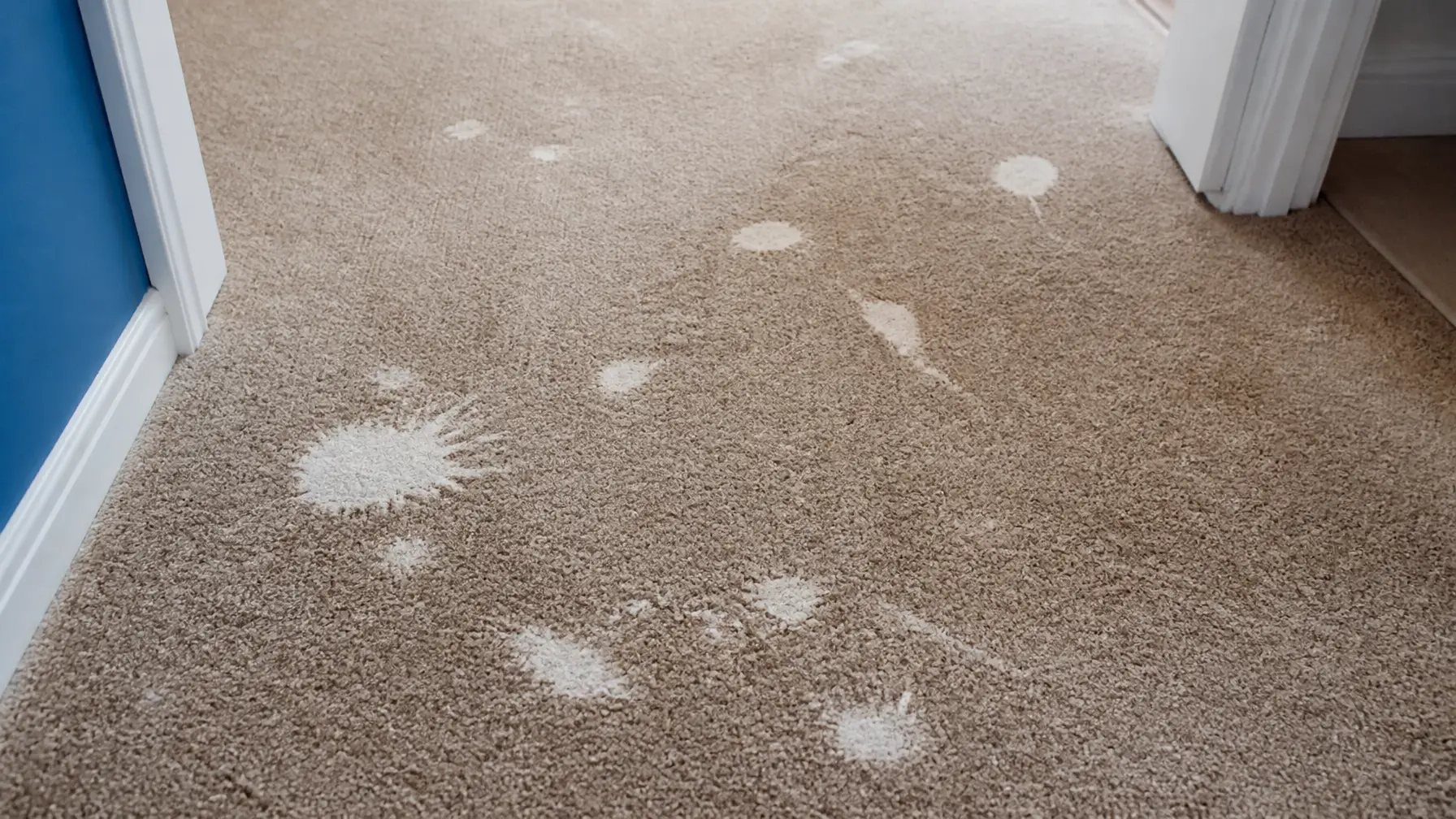
You dropped a bottle of cleaning spray. A white ghost appeared on your beige carpet. The panic sets in. You reach for the junk drawer. You find a "Tan" or "Brown" Sharpie.
Stop. Put the lid back on.
It feels like a genius hack. It looks like a five-second fix. In reality, you are about to apply a layer of permanent ink that will react poorly with the carpet's chemistry and leave you with a blotchy, metallic, or off-color stain that is much harder to fix than the original bleach spot.
The Science of Disappointment: Ink vs. Dye
Most people think ink and dye are the same. They aren't.
Ink (Markers)
- Composition: Pigment or dye suspended in a solvent.
- Action: Sits on top of the fibre.
- Result: Coats the surface but doesn't integrate.
Carpet Dye (Professional)
- Composition: Acid dyes (for nylon or wool).
- Action: Forms an ionic bond with the polymer.
- Result: Becomes part of the fibre itself.
When you use a marker, you are essentially painting the carpet. When we at BD365 Carpet Colour Solutions restore a carpet, we are re-colouring it at a molecular level.

The Bleach Residual Trap
Bleach is an oxidiser. It doesn't just "go away" when the spot turns white. It stays in the fibres, waiting for its next victim.
If you colour over a bleach spot without neutralising it first:
- The Bleach Eats the Ink: The leftover bleach will often oxidise the marker ink, turning your "tan" fix into a weird pink, purple, or grey patch within days.
- The Damage Continues: Active bleach continues to weaken the carpet fibres. A marker does nothing to stop the chemical reaction.
Professional restoration starts with a pH-balanced neutralisation process. We stop the bleach in its tracks before we even think about adding colour.

Why Colour Matching with Markers is Impossible
Your carpet isn't just "beige." It is a complex mix of yellow, red, and blue primary colours blended together. Often, it contains different coloured flecks or "heathered" tones to hide dirt and add depth.
Markers are flat. They are one single, intense pigment.
- The Metamerism Problem: A marker might look okay under your kitchen light, but turn into a glowing neon spot the moment the sun hits it.
- The Overlap Effect: Every time the marker tip touches the fibre twice, the colour gets darker. You end up with a "scribble" pattern that screams "DIY disaster."
Our technicians use precision colour theory to match the exact hue, value, and chroma of your specific carpet. We can even replicate the multi-tone patterns found in high-end residential flooring.

The Depth Problem (The Iceberg Effect)
A carpet fibre is a three-dimensional tube. A marker only touches the very tip.
- The White Base: As soon as someone walks on the carpet or you run a vacuum, the fibres move. The white, bleached base of the fibre will peek through the inked tips.
- The "Halos": Ink tends to "wick" or spread. It can travel up the fibre and create a dark ring or "halo" around the original spot, making the damaged area look twice as large.
Durability: The Blue Sock Syndrome
Permanent markers are "permanent" on paper. On a carpet that gets walked on, vacuumed, and occasionally spilled on, they are quite temporary.
- Transfer: Marker ink is often solvent-based. If you walk on the spot with damp socks or if a cleaning product touches it, the ink can transfer to your feet, your pets, or other parts of the carpet.
- Fading: Marker ink lacks the UV-stability of professional carpet dyes. It will fade much faster than the rest of your floor, leaving a ghostly reminder of your DIY attempt.

The Professional Solution: BD365
We don't "hide" spots. We fix them. Our process is designed for high-end homeowners and property managers who value quality over quick fixes.
Our Step-by-Step Process:
- Identify: We determine the fibre type (nylon, wool, etc.).
- Neutralise: We use professional-grade agents to stop the bleach reaction.
- Clean: We remove any residue or failed DIY "ink" attempts.
- Calibrate: We calculate the exact "missing" colours in the bleached area.
- Dye: We apply high-heat acid dyes that bond permanently.
- Set: The carpet is ready for foot traffic almost immediately.
Sustainability Matters
Replacing a carpet because of a few bleach spots is expensive and wasteful. Landfills are full of carpets that could have been saved with a bit of colour science.
By choosing BD365, you are:
- Saving thousands of pounds in replacement costs.
- Keeping bulky waste out of the environment.
- Avoiding the hassle of moving furniture and fitting new rolls.
Final Verdict: Marker or Professional?
If the carpet is in a dark cupboard and you don't care how it looks, a marker might "hide" it for a week.
If the carpet is in your living room, hallway, or office, do not use a marker.
A marker makes a professional repair more difficult (and sometimes impossible) because we have to remove the ink before we can apply the proper dye. Save yourself the stress. Skip the junk drawer and call the experts.
Ready for a real fix?
Contact BD365 Carpet Colour Solutions today. We give your carpets a second chance.
FAQ
Can you fix a spot if I've already tried a marker?
Yes, but it is more complex. We have to carefully extract the ink pigments without damaging the fibre further before we can begin the re-dyeing process.
Is professional dyeing safe for pets?
Absolutely. Our eco-friendly dyes are non-toxic and safe for children and pets once they are set into the fibre.
How long does a professional repair last?
A professional dye repair is permanent. It will last as long as the carpet itself and can be cleaned just like the rest of the floor.