TLDR: peroxide can bleach carpet colour
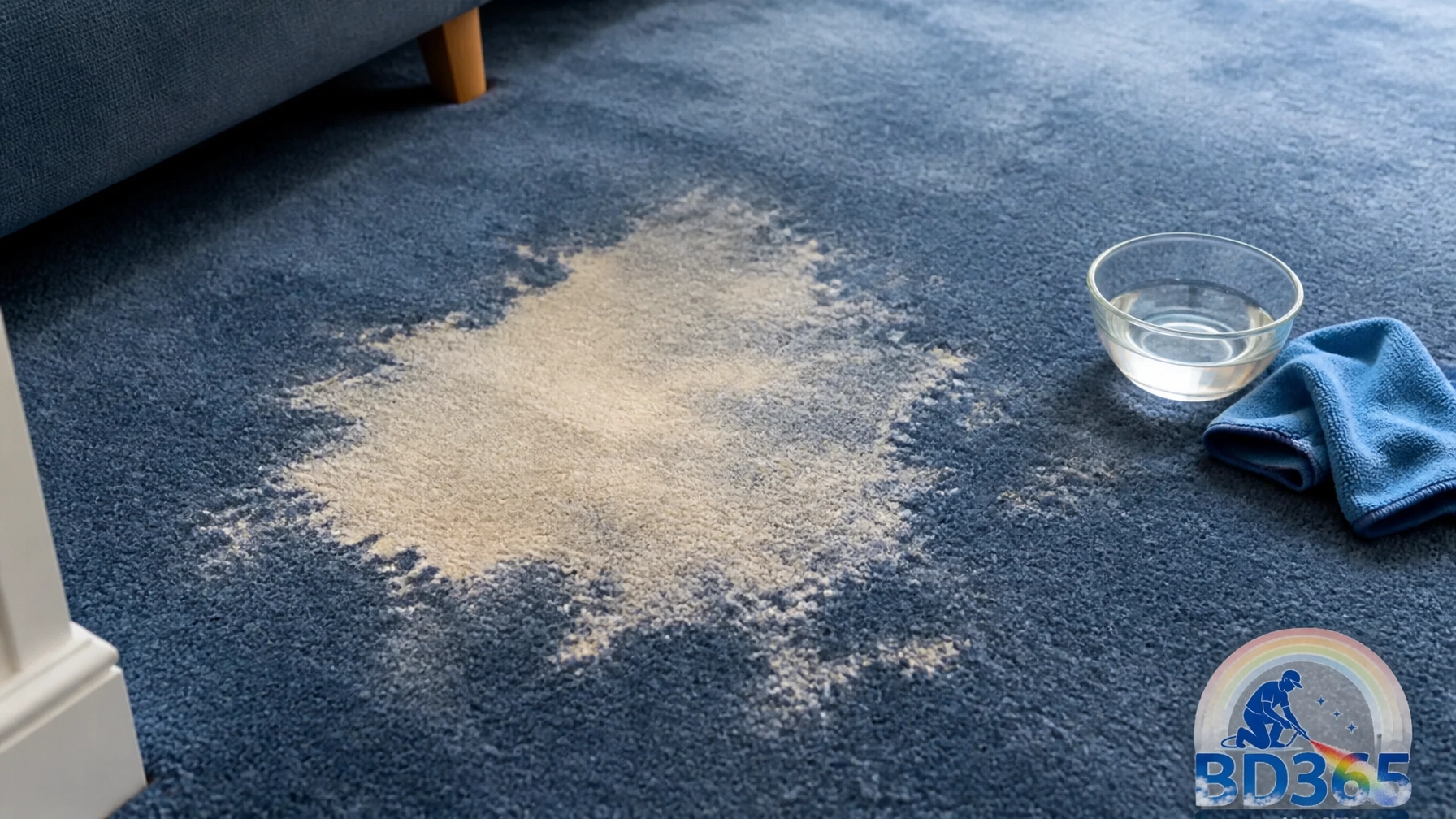
Homemade carpet cleaners containing hydrogen peroxide or oxygen-bleaching ingredients can remove more than the stain. They can also strip or alter the carpet’s original colour, leaving a pale white, yellow or orange patch once the fibres dry.
This is colour loss, not dirt. More scrubbing will not clean it away. In fact, adding another product can make the damage larger.
BD365 Carpet Colour Solutions provides professional bleach spot repair, carpet dyeing and carpet restoration across the UK. We help homeowners, hotels, landlords, property managers and businesses restore damaged carpet without rushing into full replacement.
The innocent-looking DIY carpet cleaner
You spot a mark on the carpet.
Perhaps it is coffee. Maybe red wine. A pet accident. A mystery splash that appeared just before guests arrived. Naturally, you search online for a quick solution.
That is when you find a homemade carpet-cleaning recipe containing peroxide, oxygen bleach or another ingredient marketed as a gentler alternative to chlorine bleach.
It sounds reassuring.
“Natural.”
“Powerful.”
“Safe for carpets.”
“Works like magic.”
You mix it, apply it and wait.
At first, everything seems fine. Then the carpet dries.
And there it is.
A pale patch staring back at you.
It may be white, cream, yellow, orange or simply much lighter than the surrounding carpet. On a patterned carpet, it can look especially obvious. On a hotel corridor or office floor, it may resemble a permanent spotlight.
The DIY cleaner has not just attacked the stain. It may have altered the carpet dye too.

Why peroxide can cause a bleach spot
Hydrogen peroxide is an oxidising agent. That is why it can be useful against certain stains. It changes the compounds that create unwanted colour.
The problem is that carpet dye is also made from colour-producing compounds.
Peroxide does not understand the difference between:
- The stain you want to remove.
- The dye you want to keep.
If the carpet’s colour is not resistant to oxidation, the peroxide can lighten or change it. Oxygen-bleaching powders work in a similar way because they release peroxide when dissolved.
That is why a product described online as “oxygen bleach” or “colour-safe” can still create a visible patch on some carpets.
The result can depend on several factors, including:
- The carpet’s original dye.
- The fibre type.
- The age and condition of the carpet.
- How long the product remained in contact with it.
- Whether the area was scrubbed or repeatedly treated.
- Exposure to heat, sunlight or further cleaning chemicals.
A carpet may look perfectly normal while it is wet. The colour change often becomes much more noticeable as the fibres dry.
“But it was only peroxide”
This is a common reaction.
Peroxide can sound much less alarming than bleach. It may be kept in a bathroom cupboard or included in cleaning products sold for everyday household use.
But “less harsh than chlorine bleach” does not mean “unable to affect carpet colour”.
Some carpets tolerate oxidising ingredients better than others. A light, synthetic carpet may show little change. A dark, richly coloured carpet can be far less forgiving. Wool and other natural fibres may also require particularly careful treatment.
This is especially important with:
- Navy and royal blue carpets.
- Burgundy and red carpets.
- Deep green and teal carpets.
- Brown and patterned carpets.
- Older carpets with faded or weakened dye.
- Areas already affected by sunlight or previous cleaning.
The patch may not be stark white. Orange, peach, yellow or rusty-looking marks can all indicate that the original colour has been chemically altered.
It is colour loss, not a stubborn stain
Once the carpet is dry, the natural instinct is often to treat the area again.
Perhaps the first attempt did not remove the mark completely. Perhaps the patch looks worse than the original stain. Perhaps you assume there is still residue sitting on the surface.
This is where many DIY disasters become larger.
If the area is lighter because the carpet dye has been altered, further cleaning will not put the colour back. Scrubbing may roughen the fibres and make the patch more visible. Another stain remover may trigger more colour loss or create an uneven halo around the original area.
The same applies to steam cleaning. It may remove residue or improve the appearance of the surrounding carpet, but it cannot recreate dye that has already been stripped or changed.
Our guide on why your carpet may look white after using bleach cleaner explains the difference between surface residue and genuine colour damage.
The simple rule is this:
If the area is visibly lighter than the surrounding carpet after drying, treat it as potential colour loss rather than dirt.
Common commercial and hotel scenarios
At home, a small pale mark may be frustrating. In a commercial environment, it can quickly become expensive and embarrassing.
Hotel bedrooms
A guest spills a drink. A member of the housekeeping team reaches for a homemade cleaning solution. The stain appears to improve, but the next morning a pale patch is visible beside the bed.
The room may then be taken out of service while the hotel considers replacing the carpet.
Hotel corridors
A cleaning product is used along a busy corridor to deal with tracked-in marks. After drying, the treated sections look lighter than the rest of the carpet.
Because corridors are viewed from a distance, uneven colour can be more noticeable than the original marks.
Offices and reception areas
A business wants to make its reception area look presentable before an important meeting. A DIY peroxide treatment is used on a coffee stain, leaving a yellow-orange patch in a high-visibility position.
Replacing the whole carpet may disrupt staff, visitors and daily operations.
Rental properties
A landlord or property manager may discover pale patches during an end-of-tenancy inspection. The tenant may have tried to solve a stain themselves, only to create a larger colour problem.
This can lead to disputes, delays and unnecessary replacement quotes.
In many cases, professional colour restoration is a more practical option than removing an otherwise serviceable carpet.
What to do after a peroxide accident
If you have just discovered a pale patch, resist the urge to experiment further.
Avoid:
- Repeating the peroxide treatment.
- Scrubbing the area aggressively.
- Layering different cleaning products over the mark.
- Using household paint, felt-tip pens or hair dye as a colour match.
- Assuming a steam clean will restore the original shade.
Instead, take a clear photograph in good natural light and arrange a professional assessment. The sooner the damage is understood, the easier it is to decide whether spot repair, wider carpet dyeing or another restoration approach is suitable.
BD365 can assess photographs before discussing the next step. You do not need to commit to replacing the room or the entire floor before finding out whether restoration is possible.

How BD365 repairs the damage
At BD365 Carpet Colour Solutions, we specialise in restoring carpet colour after bleach, peroxide, cleaning chemicals, sun damage and stubborn stains.
Our professional bleach spot repair service is designed to blend the damaged area with the surrounding carpet. Depending on the carpet and the extent of the colour loss, this may involve careful colour matching, localised repair or broader carpet dyeing.
The aim is not to cover the problem temporarily. It is to create a natural, consistent finish that works with the existing carpet.
For hotels and commercial premises, this can mean:
- Fewer rooms or areas taken out of service.
- Less disruption to guests, customers and staff.
- A faster alternative to arranging a full carpet replacement.
- Better visual consistency across adjoining areas.
- Lower costs when the surrounding carpet is still in good condition.
We work with residential and commercial clients across the UK, offering nationwide coverage for suitable projects.
Restore rather than replace
Replacing a carpet because of one DIY peroxide mark can feel disproportionate.
The carpet may still be structurally sound. It may be clean, comfortable and perfectly suitable for another several years of use. The problem is that a small area has lost its colour.
Professional restoration can help you keep the carpet in service.
That saves money compared with unnecessary replacement. It also reduces waste, avoids sending usable flooring to landfill and limits the environmental impact of manufacturing, transporting and installing a new carpet.
For eco-conscious homeowners, landlords and businesses, restoring an existing carpet is often the more responsible choice.
It is also a sensible choice for high-end hotels and commercial spaces where matching an existing pattern, texture and colour can be difficult. A replacement roll may not be available, or a new section may look noticeably different from the surrounding floor.
Our article on the cost of fixing a bleach spot on carpet covers some of the factors that can affect the price of professional repair.
When might replacement be necessary?
We believe in restoration where it is suitable, but professional advice should be honest.
Replacement may be more appropriate when:
- Colour damage covers most of the carpet.
- The fibres are badly melted, damaged or missing.
- The carpet has severe wear across the whole area.
- There is extensive water, mould or backing damage.
- No suitable repair or dyeing method can provide an acceptable finish.
- The carpet is already at the end of its practical service life.
- A matching remnant is available and a local patch is the best solution.
A photo assessment helps establish which situation applies. Sometimes the answer is a neat local repair. Sometimes it is wider carpet colour restoration. Occasionally, replacement is the sensible option.
The important point is not to assume that replacement is the only option before asking.
Made a peroxide carpet-cleaner mistake?
DIY cleaning recipes can be tempting, especially when a stain needs to disappear quickly. But peroxide and oxygen-bleaching ingredients can alter carpet colour, even when they are presented as a softer alternative to household bleach.
If your carpet has developed a pale, white, yellow or orange patch, it may not need more cleaning. It may need professional colour restoration.
For a free photo assessment, contact BD365 Carpet Colour Solutions:
- 0800 1931 365
- 07561 700670
- info@bd365.co.uk
Send us a clear photograph of the affected area, along with a little information about the carpet and what happened. We will help you understand whether professional bleach spot repair, carpet dyeing or another restoration service could bring it back to looking its best.
Don’t let one homemade cleaner turn a manageable stain into a full flooring replacement. Restore the carpet where possible. Save money, reduce waste and leave the chemistry experiments in the cupboard.
