TLDR
A pale patch near a window or patio door is not always bleach. It may be gradual UV sun damage. Sun fading usually affects a wider area, often with a soft gradient or a clear line where furniture once stood. A real bleach spot is more likely to be localised, bright and irregular, with sharp edges, drips or splashes.
Both problems mean the carpet colour has been removed or chemically changed. They are not ordinary stains, so standard cleaning cannot simply bring the colour back. The good news? BD365 Carpet Colour Solutions provides professional carpet colour restoration, carpet dyeing and bleach spot repair nationwide across the UK. Where the carpet is suitable, restoration can save money, reduce waste and avoid the disruption of full replacement.
The Reddit mystery: “Why has my carpet gone white?”
It is a familiar story.
A hotel manager notices a pale patch beside a sunny window. A homeowner finds a bright mark near the patio doors. A cleaner spots a strange yellow-orange area in a corridor.
The first thought is often:
“Someone has spilled bleach.”
Sometimes that is exactly what happened.
But sometimes the culprit is the sun, quietly working away through the glass. No dramatic spill. No overturned bottle. Just months or years of UV exposure slowly fading the carpet.
And then there is the reverse problem. A genuine chemical bleach spot is dismissed as “just fading”, allowing the damage to become more noticeable while the surrounding carpet gets cleaned and maintained.
So, how can you tell the difference?
Sun damage usually affects an area, not just a spot
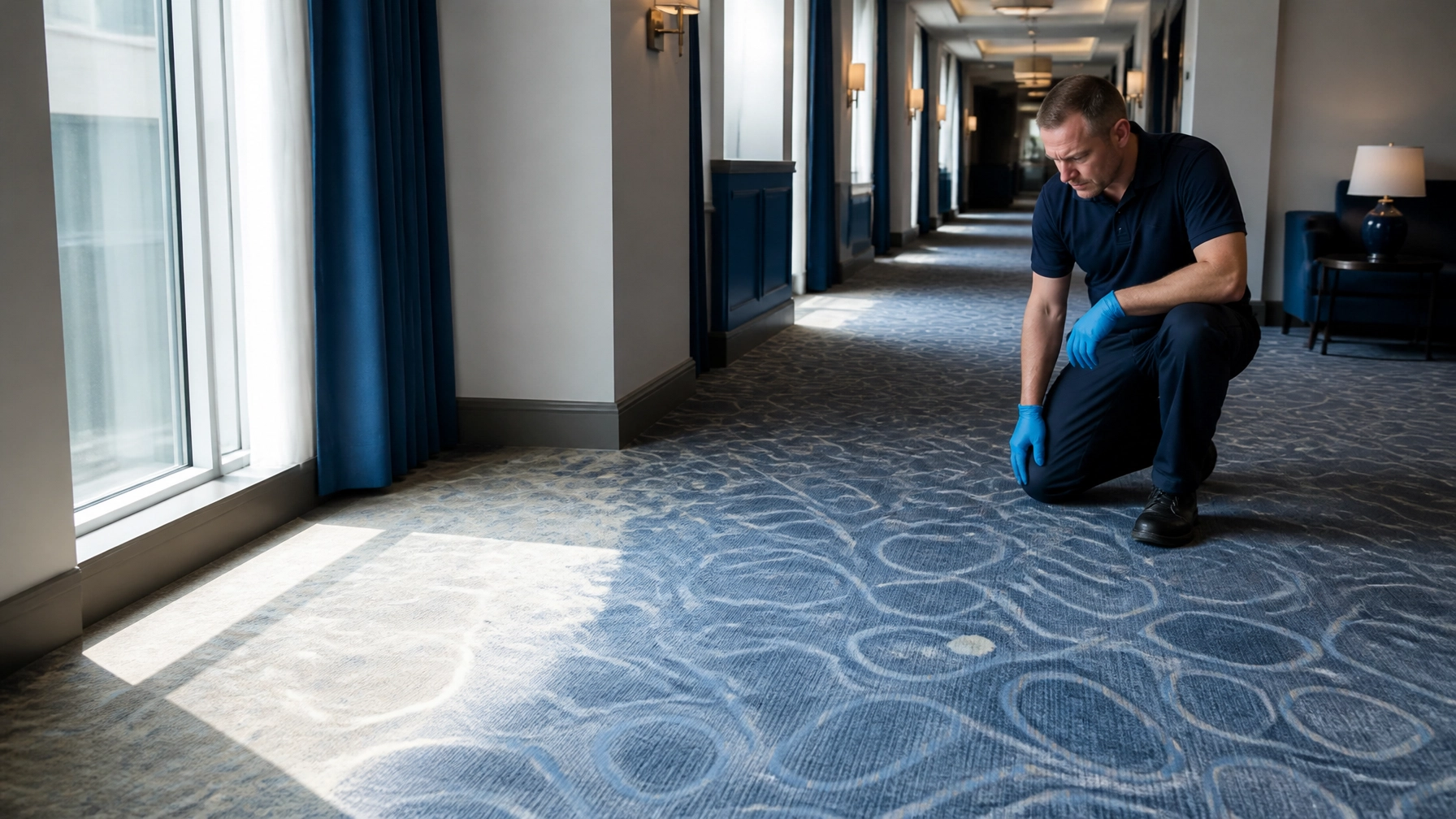
UV damage is often gradual. It develops wherever sunlight repeatedly reaches the carpet.
Look for these clues:
- A broad faded area beside windows, glass doors or skylights.
- A soft transition from the most faded section to the original colour.
- Carpet that looks washed out rather than sharply marked.
- A clear outline where a rug, table or sofa protected the carpet.
- Fading that follows the shape of the light coming through the window.
- Similar colour loss in several rooms with the same sun exposure.
In hotels, this can be especially obvious in:
- Guest rooms beside patio doors.
- Reception areas with large glazed frontages.
- Corridors next to windows.
- Conservatories, atriums and event spaces.
- Restaurants with bright south- or west-facing windows.
Sunlight does not usually leave a neat little circle. It is less “someone dropped a bottle” and more “the sun has been redecorating while nobody was looking”.

What UV light does to carpet colour
Carpet dyes contain colour molecules that can be broken down by prolonged UV exposure. Over time, the original colour becomes weaker.
The carpet may turn:
- Pale beige.
- Yellowish.
- Grey and washed out.
- Orange or rusty, depending on the original dye.
- Uneven, with lighter sections near the glass.
Long-term exposure can also affect the fibre itself. Some carpets become brittle, tired-looking or more prone to wear. This is one reason sun fading should not be treated as a simple cleaning issue.
Once the dye has been broken down, cleaning cannot restore it. Cleaning removes dirt. It does not replace colour that has disappeared.
A real bleach spot is usually more localised
Chemical damage tends to happen quickly. A splash, drip or spray can remove carpet colour in a very short time.
Common signs include:
- A bright white, cream, yellow or orange patch.
- A small, sharply defined area on otherwise healthy carpet.
- Irregular edges or a splatter pattern.
- Drip marks or several small spots in a line.
- A mark near a bathroom, entrance, housekeeping trolley or cleaning cupboard.
- A patch where someone has used a strong cleaning product.
Not every bleach spot comes from a bottle labelled “bleach”. Some bathroom cleaners, disinfectants and other oxidising products can alter carpet colour too.
In a hotel, a small chemical spot might come from:
- A toilet or bathroom cleaner carried through a bedroom.
- A disinfectant spray used too close to carpet.
- A leaking housekeeping bottle.
- A guest attempting to remove a mark with the wrong product.
- A cleaning trolley dripping along a corridor.
Unlike an ordinary stain, bleach damage is not something sitting on top of the fibre waiting to be lifted away. The original colour has been changed or removed.
That is why more scrubbing usually creates more frustration, not a better result.

The tricky bit: some damage shows both patterns
Carpets do not always follow a perfect textbook.
A hotel corridor may have general sun fading along one side, plus a few bright chemical spots from cleaning activity. A guest room may have a large UV-faded section near the window and a separate bleach splash near the entrance.
This can make the whole area look like one large problem.
The difference matters because the best restoration approach may not be the same for every section. A small bleach spot may respond well to targeted colour repair. A larger sun-faded area may need broader carpet dyeing to even out the appearance.
The carpet fibre, age, pile condition, original colour and severity of damage all affect what is possible.
Photos can provide a useful first assessment, but a professional opinion is important before deciding between restoration, patching or replacement.
Both are permanent colour loss : but that does not mean the carpet is finished
Here is the good news hidden inside the bad news.
The colour loss may be permanent, but the carpet may still be restorable.
This is the key distinction:
- A stain may be removable through appropriate cleaning.
- Sun fading cannot be cleaned away, but suitable carpet may be recoloured.
- Bleach damage cannot be cleaned back to its original shade, but missing colour may be professionally restored.
- Physical fibre damage may require patching or replacement.
At BD365 Carpet Colour Solutions, we specialise in carpet restoration, professional carpet dyeing, colour restoration and bleach spot repair. Our work is about putting the right colour back into suitable carpet, not disguising the problem with a marker, household dye or suspiciously dark splodge.
Expert colour matching helps the repaired area blend with the surrounding carpet. On patterned carpets, reception flooring and hotel corridors, careful matching is particularly important because guests see the floor from different angles and lighting conditions.

Why restoration can beat replacement for hotels
Replacing a carpet is rarely just the cost of a new roll.
There may also be:
- Uplift and disposal fees.
- New underlay and fitting.
- Furniture removal.
- Closed guest rooms.
- Restricted access to corridors or reception.
- Lost bookings or operational disruption.
- Difficulty matching adjoining areas.
- Waste sent to landfill.
For a small bleach spot, replacing an entire room can feel rather like replacing a car because of one muddy wheel.
Professional repair may offer a more practical alternative when the rest of the carpet is in good condition.
This is especially valuable in guest-facing spaces. A single pale mark in a reception area can look far worse than it is. A corridor with several visible spots can affect a hotel’s overall presentation. Restoring the colour may help protect the appearance of the property without committing to a full flooring project.
For landlords, property managers and business owners, restoration can also be a useful first step before approving a costly replacement.
When restoration may not be the right answer
We believe in restoration, but we also believe in honest advice.
Replacement may be more sensible when:
- The carpet is threadbare or heavily worn.
- UV exposure has weakened the fibres significantly.
- The damaged area is very large.
- The pile has melted, hardened or physically broken down.
- The carpet has widespread staining as well as colour loss.
- The carpet is already close to the end of its useful life.
- A suitable colour match is not realistic.
Colour restoration is not a magic wand. It is a specialist solution for suitable carpet. The right provider should explain what result is achievable before work begins.
What should you do if you are unsure?
Do not add more chemicals.
Avoid scrubbing, household bleach, bathroom cleaner, fabric dye, hair dye or felt-tip pens. These can spread the damage or make professional colour matching more difficult.
Instead:
- Take a close-up photograph in natural light.
- Take a wider photograph showing the mark in the room.
- Note whether the area is near a window, patio door, bathroom or entrance.
- Record what products may have been used.
- Ask for a professional assessment.
You can also compare the mark with our guide on the difference between a bleach spot and a regular stain.
A brighter future for faded and bleached carpet
Sun damage and bleach damage can look similar. Both can leave carpet pale, patchy and frustratingly resistant to cleaning.
The main clues are pattern, location and scale:
- Wide, gradual fading near glass usually points towards UV damage.
- Small, bright, sharp-edged marks are more likely to be chemical damage.
- A mixture of both is possible.
Whatever the cause, replacement is not always the only answer.
BD365 Carpet Colour Solutions provides professional carpet colour restoration, carpet dyeing and bleach spot repair for homes, hotels, offices, rental properties and commercial spaces nationwide. Our eco-friendly techniques are designed to be safe for children and pets, while helping you save money and reduce unnecessary carpet waste.
Before you replace the whole floor, send BD365 photographs for an assessment. We can help you understand whether restoration, dyeing or another solution is likely to be the best route.
For more answers, visit our carpet restoration FAQs or explore the wider BD365 carpet restoration blog.
The sun may have started the mystery. Bleach may have taken the blame. But your carpet may still deserve a second chance.