TLDR
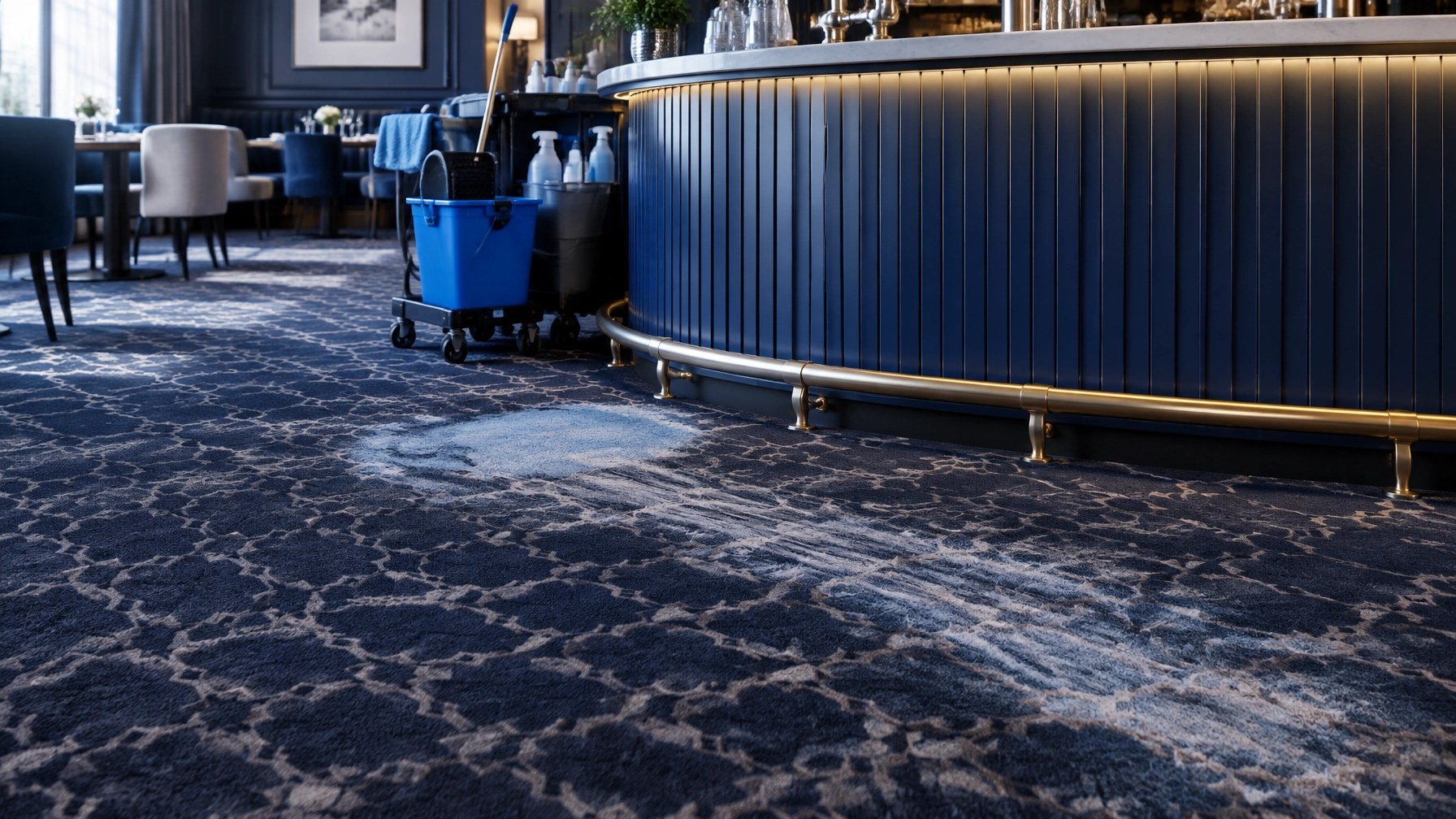
That pale band along the bar front is rarely “just a dirty patch”. It may be missing carpet dye caused by disinfectant, toilet cleaner, mop water, spray mist, bar spillages or a store-bought stain remover.
For hotels, pubs, restaurants and function venues, carpet dyeing, bleach spot repair and professional carpet restoration can often be completed far faster than a full flooring refit. A suitable localised repair may keep the restaurant trading, protect upcoming bookings and avoid unnecessary waste.
BD365 Carpet Colour Solutions provides nationwide UK coverage, from Cornwall to the Highlands, with Europe by arrangement. Send photos for a free assessment before closing the room or ordering replacement carpet.
It always appears at the worst possible moment
Monday morning.
The breakfast rush is over. The deep clean has started. Someone moves the mop bucket away from the end of the bar and there it is.
A pale, washed-out band running along the bar front.
Perhaps it trails towards the cellar steps. Perhaps it follows the route taken by a cleaning trolley. Perhaps it looks like someone has dragged a giant, ghostly paintbrush across the carpet.
And naturally, the function room is booked for the weekend.
There are Christmas party enquiries arriving in October. A wedding viewing is scheduled for Thursday. The hotel restaurant is taking covers. The bar cannot exactly close for a week while everyone waits for a new carpet to be ordered, delivered, fitted and admired.
This is the point where many managers search:
“I got bleach on my carpet and it has stained.”
The important answer is this: bleach damage is usually colour loss, not a normal stain.

Why food and beverage spaces are especially vulnerable
Carpet in a restaurant, bar or hotel function suite lives in a busy chemical ecosystem.
There are drinks, food, cleaning products, wet shoes, ice, trolleys and a surprising number of containers that were never designed to be carried across carpet.
Common causes include:
- Mop buckets parked at the end of the bar.
- Cleaning trolleys leaking or leaving damp tracks.
- Disinfectant used around bar fronts and service areas.
- Bar mats and drip trays trapping residue underneath.
- Cellar steps carrying moisture and cleaning chemicals into the room.
- Kitchen cleaner overspray drifting onto nearby dining carpet.
- Toilet cleaner and limescale products being carried through public areas.
- Spray-and-wipe products misting onto the pile.
- Rubber-backed mats trapping chemicals against the carpet.
- Ice buckets, hand sanitiser and surface sprays being placed on the floor.
- The famous “glasswasher salt or soda spill” that nobody logs because it looked harmless at the time.
Sometimes the original spill is obvious. Often it is not.
The product may have been diluted. The bucket may have been wiped. The carpet may have dried overnight. By Monday, nobody remembers exactly what happened.
A pale patch is not always dirt
A normal stain adds something to the carpet. Wine, coffee, grease and mud sit on or within the fibres.
Chemical damage can do the opposite. It removes or alters the existing colour.
That is why more scrubbing often makes the problem look worse. Steam cleaning and extraction can remove surrounding soil, but they cannot put missing pigment back into the fibre.
You may see:
- A pale cream, yellow, orange or white area.
- A halo around the original contact point.
- A dragged trail rather than a neat round splash.
- A mist-like pattern from spray application.
- A band following the edge of a mat or trolley.
- A lighter section where a rubber backing has held residue against the pile.
A round splash is possible, but the bar-front culprit often leaves a trail, halo or working pattern. It tells a story, even if the staff incident book does not.
Why nobody spots it until the evening lights go on
Hospitality carpet is very good at hiding trouble.
Bars are often dim. Patterned carpets disguise colour changes. Dark pile absorbs low light. Furniture and bar stools cover the most affected areas. During a busy service, nobody is inspecting the floor at ankle level.
Then the spotlights come on.
Raking light from the bar, wall washers and low evening lighting can make a pale patch glow. What was invisible during breakfast suddenly looks like a map of a small country.
The room may also have been inspected only under artificial light. Daylight from a function suite window can reveal a completely different picture.
Why same-day colour restoration makes commercial sense
Replacing a restaurant or function-room carpet is not simply a flooring cost.
You also have to consider:
- Lost covers and cancelled bookings.
- A closed bar or restaurant during busy periods.
- Furniture removal and reinstatement.
- Uplift, disposal and fitting.
- Underlay and gripper replacement.
- Minimum carpet orders.
- Discontinued patterns or unavailable matching stock.
- Function-suite viewings that suddenly need an explanation.
- Wedding and event photographs showing the damaged area.
- Guest reviews commenting on tired or patchy presentation.
A localised repair can be a much more sensible first option when the rest of the carpet is sound.
Same-day attendance may be possible for suitable jobs, depending on location, access, fibre, size and availability. In the right circumstances, professional carpet colour restoration can be completed with minimal downtime, allowing the room to return to service rather than waiting for a refit.
It is not a promise that every commercial carpet can be repaired in a few hours. It is a practical reason to ask for an assessment before closing the room.
What professional carpet restoration involves
BD365 specialises in carpet restoration, carpet dyeing and bleach spot repair for residential and commercial settings.
The assessment usually considers:
- The carpet fibre.
- The carpet construction and pile condition.
- Whether the damage is chemical colour loss, fading, staining or physical wear.
- Any residue still present.
- The original colour and pattern.
- Whether the carpet has already been treated with other products.
- Whether a same-day repair is realistic.
Colour matching is carried out against the actual carpet, not a generic online shade. On patterned commercial carpet, the repair needs to work with the surrounding colours and design rather than creating a new obvious spot.
Specialist tools may include precision syringes and airbrushes, used carefully to blend colour into the affected pile and pattern.

BD365 uses eco-friendly restoration techniques designed to be safe for children and pets when used correctly. The aim is a strong, natural-looking blend with as little disruption as possible.
There is an honest caveat. Dye cannot rebuild fibre that has melted, torn, perished or worn away. Some polypropylene and polyester carpets are also unsuitable or difficult to restore. A responsible specialist will explain that before work begins.
Please be careful with the second attempt
The first chemical incident is often accidental.
The second one sometimes arrives in a red bottle with a satisfying trigger spray.
Store-bought products such as Vanish Oxi-Action and Dr. Beckmann Carpet Stain Remover are designed for particular types of staining. Their product information refers to oxygen-based or oxidising ingredients, and both manufacturers advise following the label and checking colour fastness or material compatibility.
That does not mean these products are bad products. It means they are not designed to replace carpet colour that has already been removed.
Applying an oxygen-based stain remover to an existing pale patch can create a larger halo or further colour variation. Spray-and-scrub treatment may also spread residue beyond the original mark.
If a product has already been used:
- Stop adding more products.
- Do not scrub the area repeatedly.
- Photograph the damage in natural light.
- Tell the carpet specialist exactly what was used and when.
That information helps the specialist decide whether further assessment, residue treatment or colour restoration is appropriate.
The cost: repair versus replacement
Every commercial site is different, but sensible budget planning helps.
A localised professional repair and blend may typically start around:
- £80–£150 for one small area.
- £150–£250 for multiple spots or splashes.
- £300+ for complex patterns, larger areas or difficult colour work.
These are indicative figures, not a fixed tariff. Access, travel, out-of-hours attendance, VAT, testing and the carpet itself can affect the quote.
Replacement can quickly reach £600–£1,600 and upwards once you include new carpet, underlay, gripper, uplift, disposal, fitting, furniture movement, minimum order quantities and lost trading days.
Restoration is also the more sustainable choice when it is suitable. Keeping an otherwise serviceable carpet in use avoids sending it to waste simply because one section has lost colour.
When replacement really is the right call
Restore-over-replace is a sensible message, not a blind rule.
Replacement may genuinely be better if the carpet has:
- Perished or delaminated backing.
- Failed seams.
- Water damage or contamination.
- Melted synthetic fibres.
- Extensive thinning or bald patches.
- Severe general wear across the room.
- Damage covering too large an area for a sensible blend.
- A construction or fibre that will not accept colour restoration.
Sometimes a patch is more appropriate. Sometimes full replacement is the honest answer. A good assessment should tell you that, even when restoration is not possible.
A simple F&B prevention and logging checklist
For duty managers, housekeeping teams and F&B supervisors:
- Keep strong bathroom and kitchen chemicals away from carpeted routes.
- Do not park mop buckets or cleaning trolleys on carpet.
- Check beneath bar mats, drip trays and rubber-backed mats.
- Record spills involving disinfectant, sanitiser, glasswasher products or limescale remover.
- Photograph any chemical spill before cleaning it.
- Note the product name, dilution and approximate time.
- Include carpet damage in the handover log.
- Inspect public areas in daylight as well as evening lighting.
- Check function suites before viewings, weddings and large events.
- Contact a specialist before trying several different spotters.
Keep the room trading
A pale patch at the end of the bar can look like a major flooring failure. Often, it is a localised colour problem hiding in plain sight.
Before you close the restaurant, cancel the function or order replacement carpet, send BD365 a few clear photographs. We offer free photo assessments and practical advice on whether carpet dyeing, bleach spot repair or wider colour restoration may be suitable.
BD365 covers the UK from Cornwall to the Highlands, with Europe by arrangement.
Send photos for a free assessment via the BD365 FAQs and photo assessment page, or contact the team:
- UK freephone: 0800 1931 365
- WhatsApp: 07561 700670
- Email: info@bd365.co.uk
- Website: BD365 Carpet Colour Solutions
