TL;DR: A pale patch on a rug is often colour loss, not a stain that more cleaning can remove. For suitable wool, silk and wool-blend rugs, professional colour restoration may blend the missing colour back into the original pattern, without replacing the piece nobody else can match. BD365 Carpet Colour Solutions specialises in carpet restoration, dyeing and bleach spot repair, and can assess rug damage from Cornwall to the Highlands, with Europe by arrangement. Send photos for a free assessment before approving a costly replacement.
There’s a particular kind of panic that starts with a bottle tipping over at a dinner party. Or a Vanish Oxi-Action or Dr Beckmann spotter used on a mark that seemed harmless, until a pale patch appeared. Sometimes the rug comes back from a “professional” clean lighter than it went out.
Then comes the familiar online advice: “Just buy a new one.”
Easy to say when it isn’t your nan’s Persian rug. Or the runner you brought home from a trip. Or a wedding gift with a pattern you’ve never seen anywhere else.
A pale patch usually means colour has gone
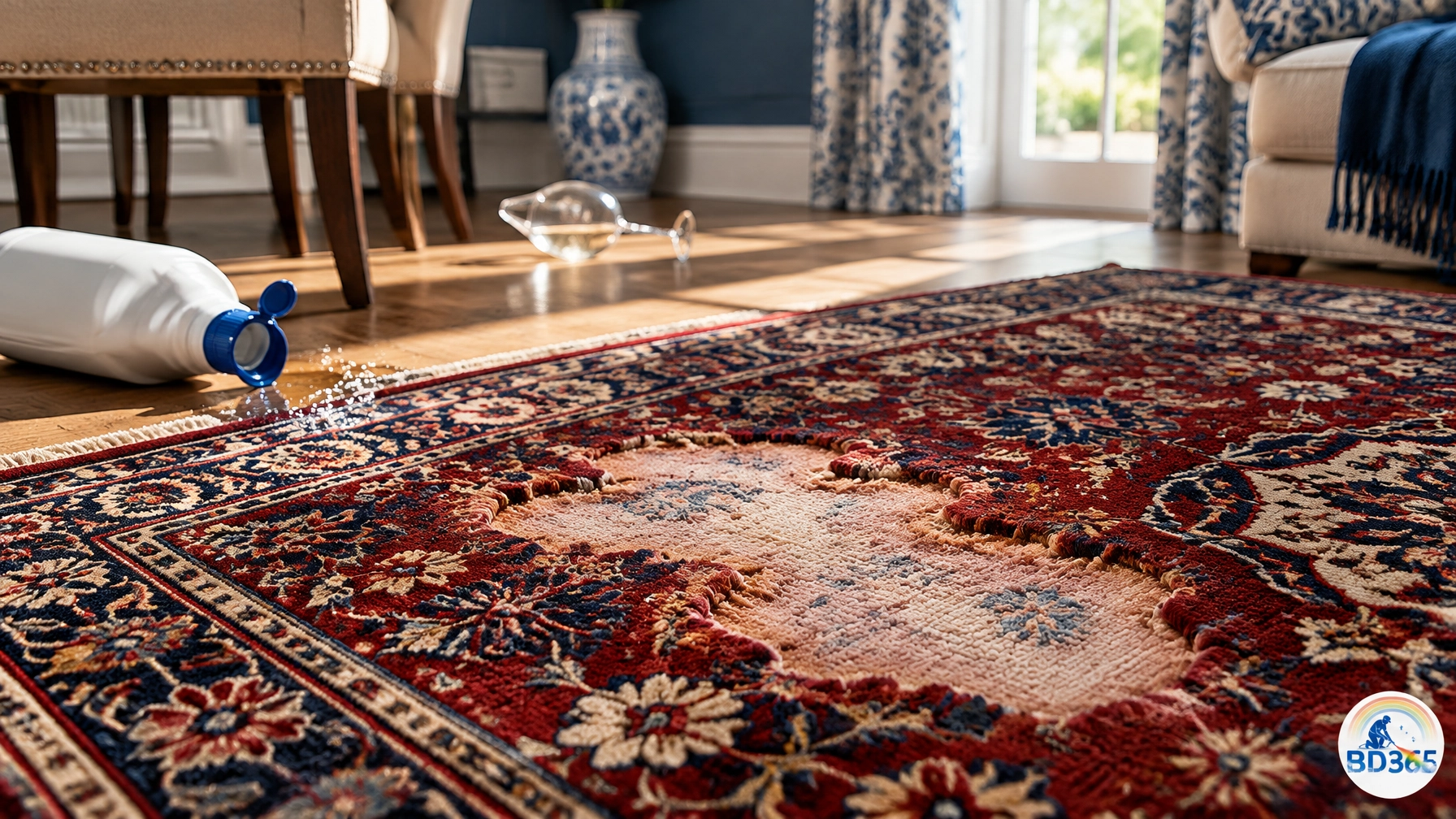
A regular stain sits on, or within, the fibres. A bleach or chemical spot can remove or alter the colour itself. That’s why the area may look cream, orange or simply wrong against the surrounding design.
Cleaning can remove soil. Steam cleaning can refresh a rug. But neither can put missing pigment back into the fibres. If the problem is colour loss, more cleaning may leave you with a cleaner pale patch.
Store-bought stain removers deserve a fair mention. Products such as Vanish Oxi-Action and Dr Beckmann carpet stain removers use oxygen-based cleaning ingredients; that is not the same as saying every product is chlorine bleach. Formulas and suitability vary, though, and oxygen-based spotters can still affect colour or delicate fibres. Dr Beckmann, for example, advises checking colour fastness and says its Carpet Stain Remover is not suitable for silk. Follow the product label, and tell your restoration specialist exactly what has already been used.
A patch left by a “professional” clean can also have several causes, including colour movement or damage to the rug’s existing dyes. An assessment matters before anyone decides what treatment is suitable.

Why a treasured rug may be a good candidate for restoration
Wool, silk and wool-blend rugs are not automatically beyond help. In suitable cases, the work can focus on restoring colour within the rug’s existing design, rather than covering the whole piece with one new shade.
That can be especially valuable on a Persian or patterned rug. Its beauty comes from several colours working together. A replacement might have a similar palette, but it won’t have the same pattern, history or place in your home.
Every rug is different, however. Its fibre, construction, previous cleaning and the extent of the damage all matter. Silk needs particular care. Wool may be a strong candidate for colour work, but chemical damage can affect the fibres as well as the dye. An experienced specialist should assess both before recommending restoration.
What professional rug colour restoration involves
At BD365, assessment comes before a promise. A typical professional evaluation considers:
- Fibre and construction: What the rug is made of, how it is built and whether the pile is sound.
- Existing colour and damage: The affected shades, pattern and any products or cleaning used previously.
- Colour matching: Matching the missing colour to the rug’s existing tones, rather than guessing from a photograph alone.
- Precision application: Where appropriate, specialist tools such as fine syringes and airbrushes can work colour into the pile and around the pattern.
- A sample and agreed expectations: For complex work, a physical sample can help agree the colour and likely finish before proceeding.
The aim is to blend the repair with the original rug. The realistic result depends on the piece and the damage, so it’s sensible to discuss what should be visible at normal viewing distance and what may still show on close inspection.
BD365 brings expertise in carpet restoration, carpet dyeing and bleach spot repair, with assessment tailored to the rug in front of us. You can also read about bleach damage to wool and the difference between a bleach spot and a regular stain.

Hotels: one pale patch, plenty of photos
In a hotel suite, boutique guest house or country-house hotel, a rug or stair runner helps set the tone. A pale patch in the wrong place can appear in every guest photo. And taking a suite out of service while a replacement is sourced, delivered and fitted can mean lost revenue.
Colour restoration may offer a more practical route, depending on the rug’s condition and the size of the damaged area. It can also help preserve the look of a room where matching the existing furnishings matters.
Serviced accommodation and furnished lets
In a furnished let, a damaged runner can quickly become a check-out deposit dispute. Before anyone approves replacement, the letting agent or landlord should document the area, record any products used, and obtain a written assessment and quote. That gives everyone a clearer basis for deciding whether restoration, repair or replacement is appropriate.
The cost case: repair can be the smaller bill
As a broad guide, localised colour restoration may fall around:
- £80–£150 for a small, straightforward spot
- £150–£250 for multiple areas or more involved matching
- £300+ for larger or intricate work
These are guide prices, not a rug quote. Size, fibre, pattern, condition and access all affect the cost. A highly valuable or complex rug needs an individual assessment.
By comparison, replacing a room’s flooring can run to £600–£1,600+ once you factor in the new material, uplift, disposal, fitting, moving furniture out and back, and room downtime. A one-off rug can cost far more than those figures to replace, and still not match the room, its lighting or the other soft furnishings.
For more on restoration costs, see BD365’s guide to bleach spot repair pricing. The figures there relate to carpet repairs; a rug should be quoted on its own merits.
When replacement really is the right call
Restoration is not a magic wand. Dye cannot rebuild fibres that are worn through, melted, torn or badly weakened. Some polypropylene rugs, particularly solution-dyed pieces, may not be suitable for conventional dyeing. Blended fibres and damaged backing can also limit what is possible.
If the rug is structurally compromised, the colour damage is extensive, or a repair would not give a satisfactory result, conservation or replacement may be the better choice. A responsible specialist should say so rather than promise an invisible fix.
Homeowners: before you say goodbye to Nan’s rug
A new rug can fill the space. It can’t replace the original. If yours has a bleach spot, a pale patch after cleaning or an unusual colour mismatch, professional assessment may show that restoration is possible, and save a much-loved piece from being discarded.
BD365 Carpet Colour Solutions provides a free photo assessment and serves customers nationwide, from Cornwall to the Highlands, with Europe by arrangement.
- Call: 0800 1931 365
- WhatsApp: 07561 700670
- Email: info@bd365.co.uk
Send a clear photo of the rug, a wider view of the pattern, and details of any products or cleaning already used. We’ll help you explore the options before anyone says, “Just buy a new one.”