TL;DR
Fake tan, gradual tan and tanning drops can leave orange-brown marks on carpets, especially near beds, bathrooms and bedroom doorways. The mark may deepen as it dries, and scrubbing or adding stain remover can spread the discolouration or damage the carpet fibres. If you wake up to orange footprints, photograph the area, gently blot fresh transfer with a plain white cloth and get a professional assessment before trying anything else. BD365 specialises in carpet restoration, carpet dyeing and bleach spot repair, with nationwide UK coverage. Restoring a suitable carpet can save the cost and disruption of replacement, and keep more flooring out of landfill.
The morning-after discovery
The story practically writes itself: self-tan applied, bedtime reached, and somehow the carpet becomes part of the beauty routine. In the morning, there’s an orange shadow beside the bed, a drip near the bathroom and a trail across the doorway.
A familiar refrain in Reddit-style stain confessions is: “I only noticed after it dried.” That’s because the mark can become more obvious over time. It may look like dirt, a spill or a shadow in the pile, but it may not behave like an ordinary stain.
Self-tanning products often contain DHA, dihydroxyacetone, the ingredient that develops colour on skin. DHA reacts with amino groups in the outer layer of skin, including in keratin, to form brownish colour compounds. On carpet, the precise cause and result can vary. Transferred product may include DHA, bronzers, colourants and other ingredients; interactions with the carpet fibre and residues can also matter. Wool is a protein fibre, while many synthetic carpets are not, so the same product may not behave the same way on every floor.
The result can be an orange-brown mark that deepens as it dries and develops over hours or days. Research on DHA’s colour-forming reaction is available in this scientific study, and a forensic study of self-tanner transfer to clothing shows that product can transfer from skin to fabric.

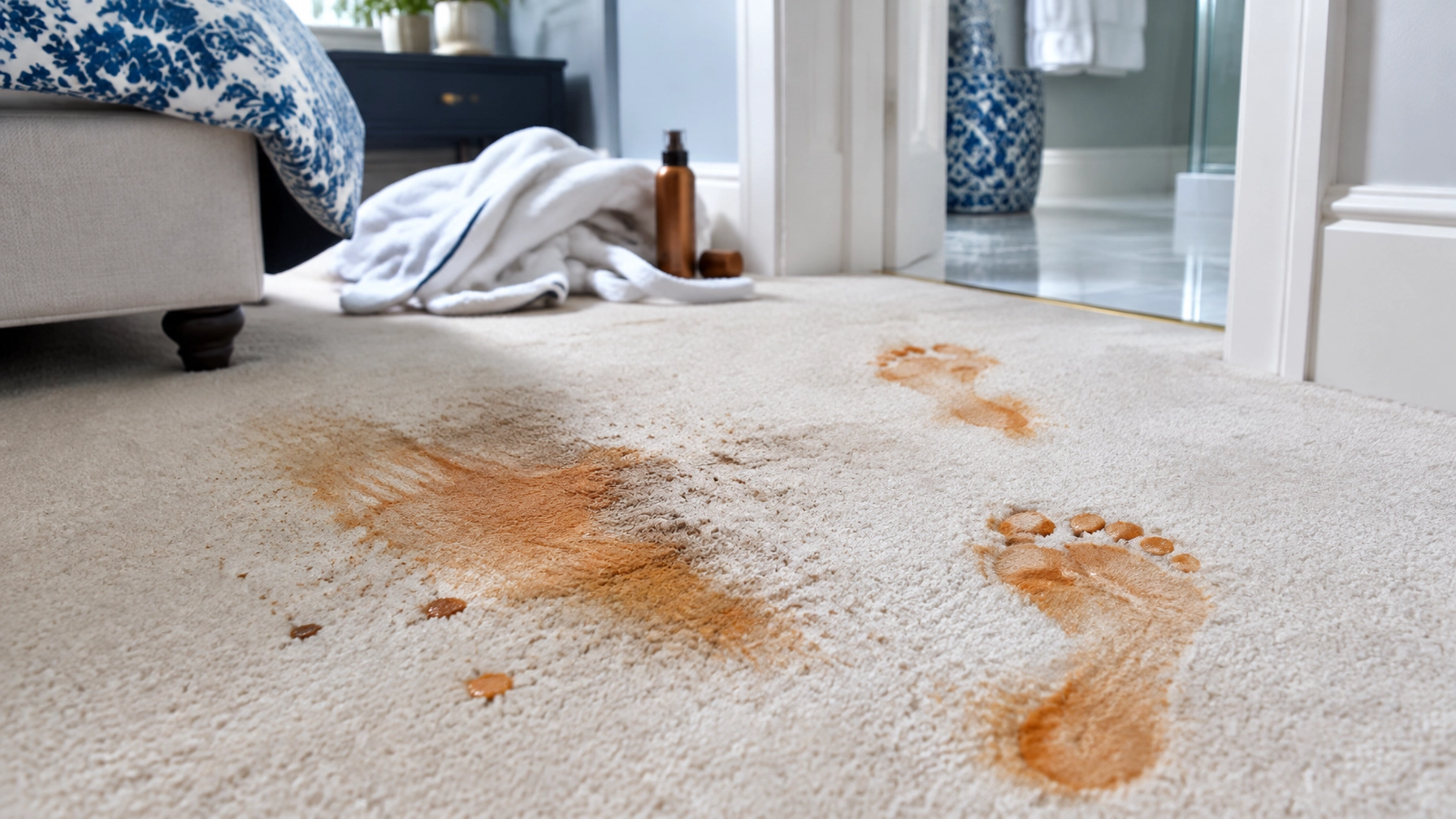
Illustrative close-up of possible self-tan discolouration. This is not a photograph of a BD365 customer’s carpet.
Why more scrubbing can mean more trouble
If the mark is a chemical colour change rather than removable dirt, ordinary carpet cleaning may not return the carpet to its original colour. Cleaning can sometimes address product residue, but it can’t necessarily undo discolouration within the fibre.
Scrubbing is especially risky. It can spread the transfer, rough up or fray the pile and make the affected area more noticeable. Adding water or a home cleaner may also move product further into the carpet. There’s no reliable one-size-fits-all fix, and the wrong treatment can complicate a professional assessment.
Bicarbonate of soda, vinegar and improvised stain-remover combinations are not a safe bet. Moisture and agitation can spread the mark, while an unsuitable or overly aggressive stain remover may create new colour damage. Some spot-cleaning products, including Vanish or Dr Beckmann’s products, can discolour carpet if they’re unsuitable for the fibre or used contrary to their label. That damage can resemble a bleach spot. Read more about why carpet can turn white after using a bleach cleaner and the difference between a bleach spot and a regular stain.
Restoration before replacement
A self-tan mark doesn’t automatically mean the carpet needs replacing. The right option depends on what transferred, the carpet’s fibre and colour, the extent of the mark and what’s already been applied.
BD365 Carpet Colour Solutions assesses carpets for suitable restoration options, including professional carpet dyeing and carpet colour restoration. Our expertise also includes bleach spot repair for colour loss caused by bleach or other damaging products. Different cause, different assessment: the service needs to match the problem.
Where dyeing is suitable, professional colour matching may help blend the affected area into the surrounding carpet. BD365 uses specialist colour training and advanced eco-friendly dyeing techniques described as safe for children and pets. We’re trusted by and used by Dr Beckmann’s, and offer fast turnaround times. The honest starting point is still an assessment: some marks may respond to colour restoration, some carpets aren’t suitable for dyeing, and occasionally replacement really is the sensible choice.

Illustrative before-and-after concept only. It does not show a documented BD365 self-tan repair or guarantee a particular result.
Restoration can also be a more sustainable choice. If the carpet is otherwise in good condition, repairing the colour may avoid the cost, upheaval and waste of replacing the whole floor. For an idea of the costs involved in restoring certain types of carpet damage, see BD365’s guide to the cost of fixing a bleach spot. It’s a useful reference for that specific repair, not a quote for self-tan damage.

This is an example of a BD365 hotel bleach-spot repair. It is not a self-tan case, and the result is not a promise of what any particular tanning mark will look like after assessment.
What to do if you spot orange footprints
Keep it simple and don’t start experimenting:
- Photograph the mark in natural daylight, including one close-up and one wider view of its position in the room.
- Note which tanning products were used and when. Include anything already applied to the carpet.
- If the transfer is fresh, gently blot it with a plain white cloth. Don’t scrub.
- Get a professional assessment before trying a cleaner or deciding the carpet must be replaced.
BD365’s FAQs explain what photos are useful and why the carpet’s fibre and condition matter. Not every orange mark is fake tan, so an assessment helps establish what may have caused it and whether restoration is appropriate.
A note for hotels
For hotels, tanning products can transfer from guests, while self-tan bottles may leak in a room or mark carpet near a bathroom. A visible patch can affect presentation, but replacing the whole room’s carpet is not always the first answer. Hotel carpet repair through a professional assessment may offer a less disruptive route, helping avoid unnecessary room closure where restoration is suitable.
For landlords and letting agents
At check-out, tanning marks can become an end-of-tenancy concern or part of a deposit conversation. Carpet restoration for landlords is worth exploring before assuming a whole-room replacement is necessary. Clear photos and a professional assessment can help establish whether the carpet is suitable for repair.
For cleaning companies
If you’re a professional cleaner, avoid treating an orange self-tan mark as a routine dirt stain. Repeated scrubbing and extra product may spread the transfer, fray the pile or add fresh discolouration. Document what you see and refer the customer for a carpet colour assessment rather than trying to correct a possible colour change through more cleaning.
Need an honest assessment?
BD365 provides carpet restoration services across the UK, including professional carpet dyeing, bleach spot repair and carpet colour restoration. If the carpet is suitable, restoration may help you restore rather than replace. If it isn’t, we’ll say so.
- Call: 0800 1931 365
- WhatsApp: 07561 700670
- Email: info@bd365.co.uk
A few orange footprints are frustrating. They don’t have to mean a new carpet.