TL;DR
A pet stain remover can tackle an accident and still leave a surprise behind: a pale, blonde patch that appears days later. Some products labelled “Oxy” contain oxygen-bleaching ingredients, which can alter or remove carpet colour. If this has happened, stop applying products, take photos in daylight and note what you used. BD365 provides nationwide UK carpet dyeing, bleach spot repair and carpet restoration services, with an honest assessment of whether restoring your carpet is a realistic option.
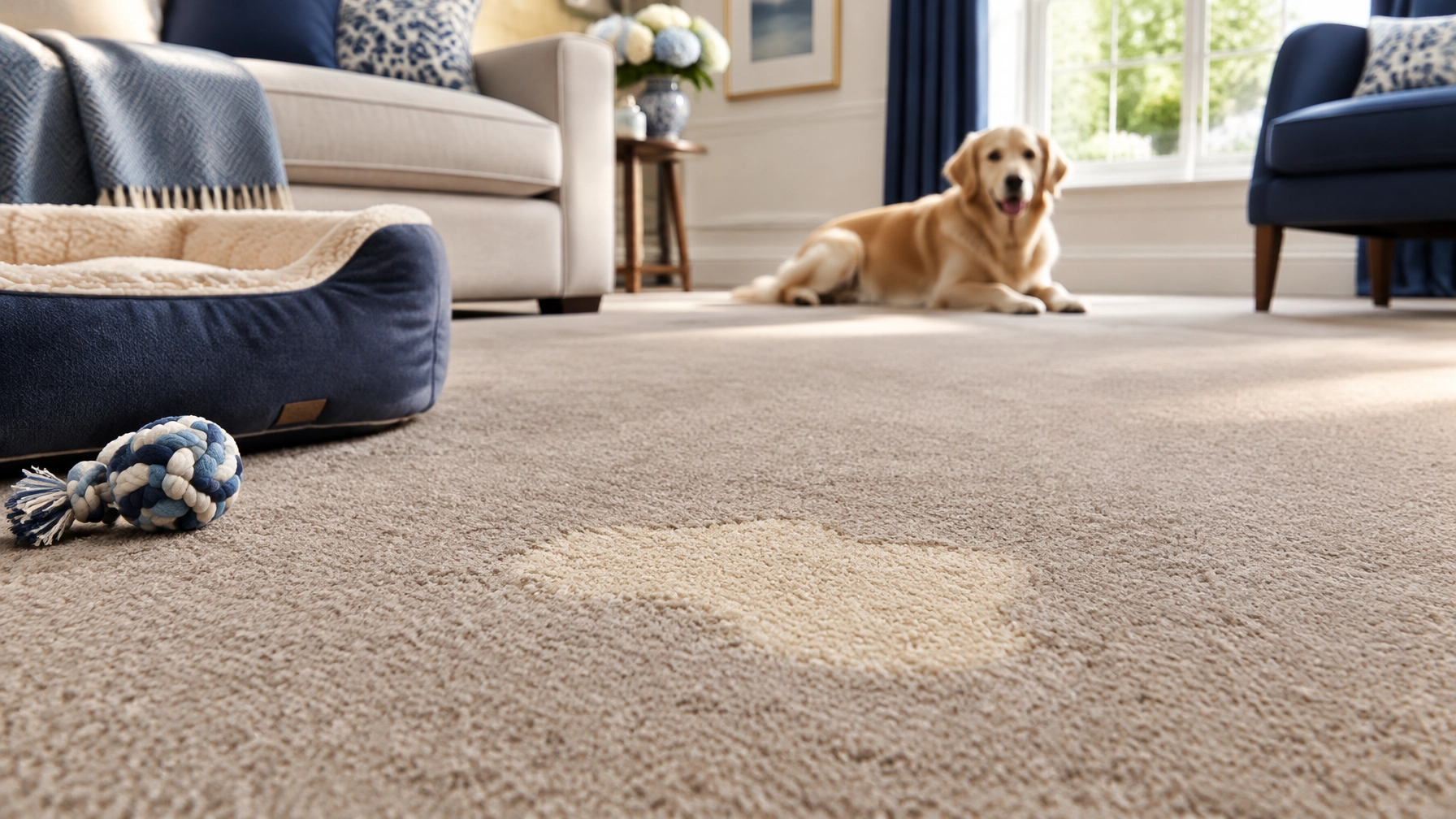
Your dog had an accident. You reached for a pet stain remover. A few days later, the carpet looked as if it had acquired a tiny blonde streak.
That is a very understandable “wait, what?” moment. The product was meant to help with the accident, not redecorate the carpet.
The key detail is that some pet stain removers combine enzymes with oxygen-based cleaning ingredients. Enzymes and oxygen bleach are not the same thing: enzymes help break down organic matter, while an oxygen-bleaching ingredient can affect carpet dyes. The exact formula varies, so check the product label rather than assuming every “Oxy” cleaner works the same way.
If the pale patch appeared after using one, the carpet may have lost colour rather than gained a stain. That difference matters.

Why can the patch appear days later?
“Oxy” is a familiar label, but it does not guarantee that a product is harmless to every carpet colour or fibre. Some oxygen-based products use oxidising ingredients, such as hydrogen peroxide or other forms of oxygen bleach. Depending on the product and carpet, these can change or remove dye.
The IICRC consumer carpet care tips warn that consumer Oxy spotters may cause permanent bleaching over time if they are not thoroughly rinsed. Their guidance notes that colour changes can become more noticeable during later professional cleaning. Natural fibres such as wool need particular care, and the outcome depends on the carpet and the product involved.
That delay can make the patch seem to appear out of nowhere. A chemical reaction may take time to show clearly. Meanwhile, damp carpet, residue or the original accident may disguise the colour change. As the area dries or the remaining soil is removed, the pale patch becomes easier to see.
Research from the University of Nebraska–Lincoln Extension explains that chemical spots can change or destroy textile dyes, and that visible discolouration may take days or longer to develop.
This is different from a typical stain, where something has been added to the carpet. With a bleach spot, colour may have been taken away. Scrubbing cannot put it back.
For a closer look at the distinction, read our guide to bleach spots versus regular carpet stains.
What to do if your carpet has gone blonde
If the accident has just happened, gently blot the fresh moisture with a plain white cloth. Don’t scrub. Stop using the Oxy product, and don’t apply it again at full strength or repeatedly. Avoid adding other cleaners while you work out what has happened.
Then:
- Take a clear photo in natural daylight, plus a wider photo showing where the patch is.
- Note the product name and how it was used.
- Keep the bottle or photograph its ingredients and directions.
- Ask a carpet restoration specialist to assess the carpet before trying anything else.
A pale patch does not always tell the whole story from a photo. A professional can assess whether the problem looks like colour loss, residue or another kind of discolouration. If the dye has been altered, more cleaning will not restore the original colour.
Homeowners: don’t let one accident decide the fate of the whole carpet
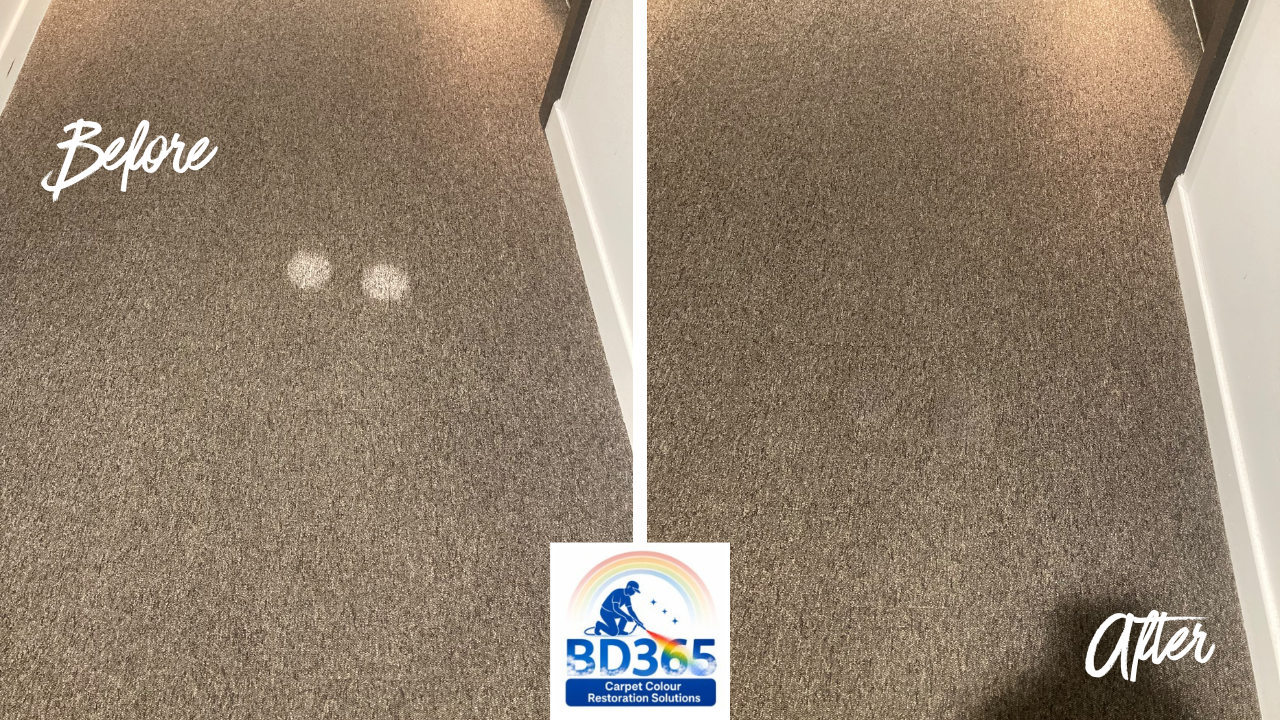
A blonde mark beside the dog’s bed can be frustrating, especially when the rest of the carpet is still in good condition. But a single patch does not automatically mean you need to replace an entire room.
BD365 specialises in carpet restoration, professional carpet dyeing and bleach spot repair. Where the carpet is suitable, careful colour matching can help rebuild the missing colour and blend the damaged area with its surroundings. We use specialist colour training and eco-friendly dyeing techniques described as safe for children and pets.
Every carpet is different, though. Fibre, colour, condition and the extent of damage all affect what is possible. Not every carpet is suitable for dyeing, and sometimes replacement is the more sensible choice. We’ll give you an honest view before you commit.
You can read more about why carpet may turn white after a bleach cleaner and what affects the cost of fixing a bleach spot.
Pet-friendly hotels: a small patch can mean a room out of action
In a pet-friendly hotel, an accident followed by an over-enthusiastic spot treatment can become a bigger operational headache. A pale patch may affect the room’s presentation, prompt a guest concern or lead to a room being held back while the team decides what to do.
Hotel carpet repair can be a practical alternative to replacing a larger area of otherwise serviceable flooring. BD365 assesses commercial carpets across the UK and can advise whether targeted carpet colour restoration is worth considering. A photo assessment is a useful first step; the right approach depends on the carpet and the damage.

Estate and letting agents: document the damage, then assess the options
End-of-tenancy pet damage can quickly become a difficult conversation about carpets, costs and deposits. If a pale patch followed the use of a pet stain remover, it may be useful to record the product used and photograph the area clearly before deciding on replacement.
BD365 provides carpet restoration for landlords and assesses damage for estate and letting agents, property managers and tenants. Restoration may offer a way to improve localised colour damage and keep a usable carpet in service. It is not guaranteed to suit every carpet, but it can be worth checking before a full replacement is arranged. Our FAQs cover carpet suitability, rental properties and assessment photos.
Cleaning companies: oxygen cleaners need careful use
For cleaning professionals, the useful reminder is simple: oxygen-based products can be effective on some organic soils, but using too much, applying them repeatedly or leaving residue behind can put carpet colour at risk. Follow the product directions and consider the carpet fibre and colour. If a pale patch is reported, record the product and application history rather than treating colour loss as an ordinary stain.
Restore where possible, replace when it makes sense
When oxygen-based cleaner has changed a carpet’s colour, cleaning alone cannot reliably put that colour back. Depending on the carpet, professional dyeing or another repair may be possible. In other cases, replacement is the honest recommendation.
Restoring a suitable carpet can save the cost and disruption of replacing a much larger area, while keeping serviceable flooring out of landfill. BD365 is trusted by Dr Beckmann’s and brings specialist colour training, expert colour matching and fast turnaround to carpet restoration work across the UK.
If the patch has gone blonde, send us a photo before trying another product. We’ll take a look and explain whether bleach spot repair or professional carpet dyeing is a realistic option.