TL;DR
A sunny patio-cleaning session can leave an unwelcome trail indoors. If a sodium hypochlorite patio or moss cleaner gets onto shoes or paws, it can transfer to carpet and damage its colour. Pale footprints that appear along a route from the back door may be colour loss, not dirt, and shampoo won’t put missing dye back. BD365 provides specialist carpet restoration, dyeing and bleach spot repair across the UK, helping homeowners and property teams explore restoration before replacement.
“We only sprayed the patio…”
It was a sunny weekend. Someone sprayed the mossy slabs with a patio cleaner, left it to work as directed and got on with the day.
Then came the trips back indoors: trainers, sliders, socks, dog paws. Straight over the wet patio and on to the hallway carpet. Nobody noticed anything at the time.
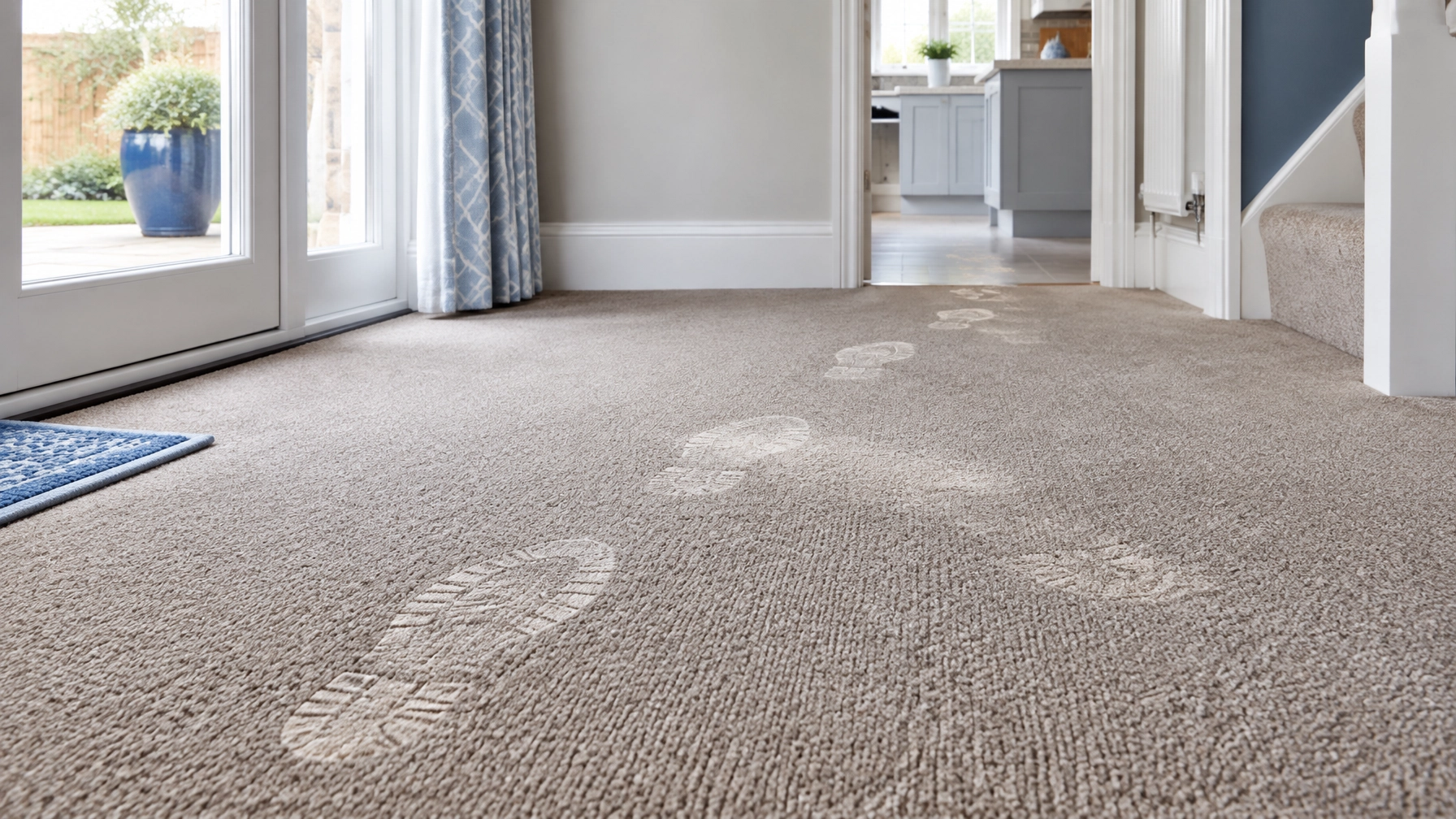
A few days later, pale marks began to appear. First near the back door. Then along the route to the kitchen. The clearest ones were where someone had stopped to answer a message or wait for the kettle.
So came the carpet shampoo. The marks looked better while the carpet was damp. Relief! Then it dried. The pale prints returned, with some edges looking darker than before.
That pattern can be consistent with chemical colour damage from a product containing sodium hypochlorite. It is a strong oxidiser, and it can destroy carpet dye molecules rather than leave ordinary dirt behind. The exact timing and appearance depend on the product, concentration, carpet and conditions. The marks alone cannot confirm the cause, but the product label and the route of the footprints are useful clues.

Why can the marks show up days later?
The cleaner may have travelled in on damp footwear or paws and transferred to the carpet. While the fibres are wet or drying, an oxidising product can affect their colour. The change may be noticed later, once the carpet is dry, or become more obvious in daylight.
Sometimes the carpet looks temporarily more even when re-wetted, only to look different again as it dries. That doesn’t mean the colour has returned. A dark-looking edge may involve residue, soil or the way the carpet dries; it isn’t a reliable sign on its own.
The University of Nebraska–Lincoln Extension explains that chemical products can cause a different kind of discolouration from ordinary stains, and describes chlorine-bleach tracking as a potential source of carpet bleaching. The IICRC consumer carpet care tip sheet also notes that chlorine bleach can cause colour loss, which cleaning cannot correct. WoolSafe cautions that bleach can affect carpet backing and underlay, and that residue tracked onto other carpet can strip colour there too (WoolSafe Organisation).
The same broad colour-loss problem can also follow some store-bought carpet spotters, including certain Vanish or Dr Beckmann products, depending on the specific formulation and how it is used. That is not a claim that every product from those brands bleaches carpet. The useful takeaway is to keep the bottle and share its exact name with a professional.
What to do now
If you suspect patio cleaner has reached the carpet, avoid turning one trail into a larger job.
- Stop walking along the affected route. Blot any still-wet residue with a plain white towel; do not rub.
- Rinse footwear and keep pets off the treated patio until it is bone dry. Keep people and pets off the carpet while it dries.
- Photograph the marks in daylight, including a straight-down photo that shows the footprint trail, and note the product name from the bottle.
- Arrange a professional assessment before trying to clean or colour the carpet.
Do not re-shampoo the area, use vinegar or bicarbonate of soda, add other cleaning products, or test marker pens or dye on it. Mixing or layering products can complicate the assessment and may make the damage harder to address.
Cleaning removes soil. It doesn’t replace colour.
A regular stain usually means something has been added to the carpet. Oxidising bleach damage is different: it can alter or remove the dye already there. That is why more cleaning may remove surface residue but cannot simply wash the original colour back into the fibres.
Our guide explains why carpet turns white after bleach cleaner, and this page covers the difference between a bleach spot and a regular stain.
Depending on the carpet and the damage, professional neutralising followed by expert colour matching and re-dyeing may be an option. Fibre type matters. Wool and nylon can be particularly vulnerable to colour loss. Some solution-dyed polypropylene carpets resist dye, so re-dyeing may not be suitable. In some cases, replacement really is the sensible answer.

For hotel teams: keep a small spill from becoming a corridor problem
The same route can play out at a larger scale in hotels. Patio or moss cleaner used around entrances, terraces or pool surrounds may be tracked indoors by staff or guests before the treated area has dried. Lobby and corridor carpets can then show a trail of colour loss, especially where foot traffic pauses or converges.
That can affect presentation, guest experience and room or corridor availability. Before planning a broad replacement, consider whether targeted hotel carpet repair or hotel carpet restoration is suitable. A professional assessment can help you understand what can be repaired, what needs more investigation and what may need replacing.
BD365 works with commercial spaces as well as homes. Our carpet restoration services include bleach spot repair, professional carpet dyeing and wider carpet colour restoration. We’re trusted by Dr Beckmann’s, have specialist colour training and offer fast turnaround times. That can make restoration worth exploring when downtime and replacement costs matter.

For estate and letting agents: check before quoting for replacement
An end-of-tenancy patio clean can have an unexpected sequel: pale footprints across the hallway carpet just before checkout. If the outgoing tenant used a spray-and-leave cleaner outside, residue may have come indoors on shoes or paws.
That can quickly become a deposit conversation. Photograph the trail, record the product details if available, and get the carpet assessed before assuming the whole floor needs replacing. For landlords, carpet restoration for landlords may offer a practical alternative when the carpet is otherwise in good condition. You can also read about the cost of fixing a bleach spot.
If you’re a cleaning company
If a client asks you to spray a patio as part of a job, flag the risk of wet product being carried indoors. Make sure the client understands the product’s drying guidance and the need to keep traffic off treated surfaces until they are fully dry. If carpet marks appear, don’t promise that another clean will restore the colour; recommend a specialist assessment instead.
Restore where it makes sense
Where a carpet is suitable, professional carpet dyeing and bleach spot repair can restore colour without replacing the whole floor. BD365 uses expert colour matching and eco-friendly dyeing techniques designed with homes, children and pets in mind. Every carpet that can be restored rather than replaced avoids some waste going to landfill, and can help avoid the cost and disruption of a new installation.
We’ll also be honest if the carpet is unsuitable or replacement makes more sense. Find answers on our FAQs page, or contact us for an assessment. We cover the UK nationwide.
Call 0800 1931 365, WhatsApp 07561 700670, or email info@bd365.co.uk.
If you’ve searched for carpet recoloring, that’s the US spelling of carpet recolouring. Either way, the aim is the same: restore the colour where possible, rather than replace a carpet that may still have plenty of life left.