The short version
A bottle of fake blood, a vampire costume and one panicked cleaning decision can leave two problems on the same patch of carpet: red dye that is still there, and carpet colour that has been stripped away. Cleaning may tackle the residue, but it cannot put lost colour back. BD365 specialises in carpet dyeing, bleach spot repair and carpet colour restoration, helping customers across the UK explore restoration before replacement.
The vampire’s encore: a red stain and a ghostly ring
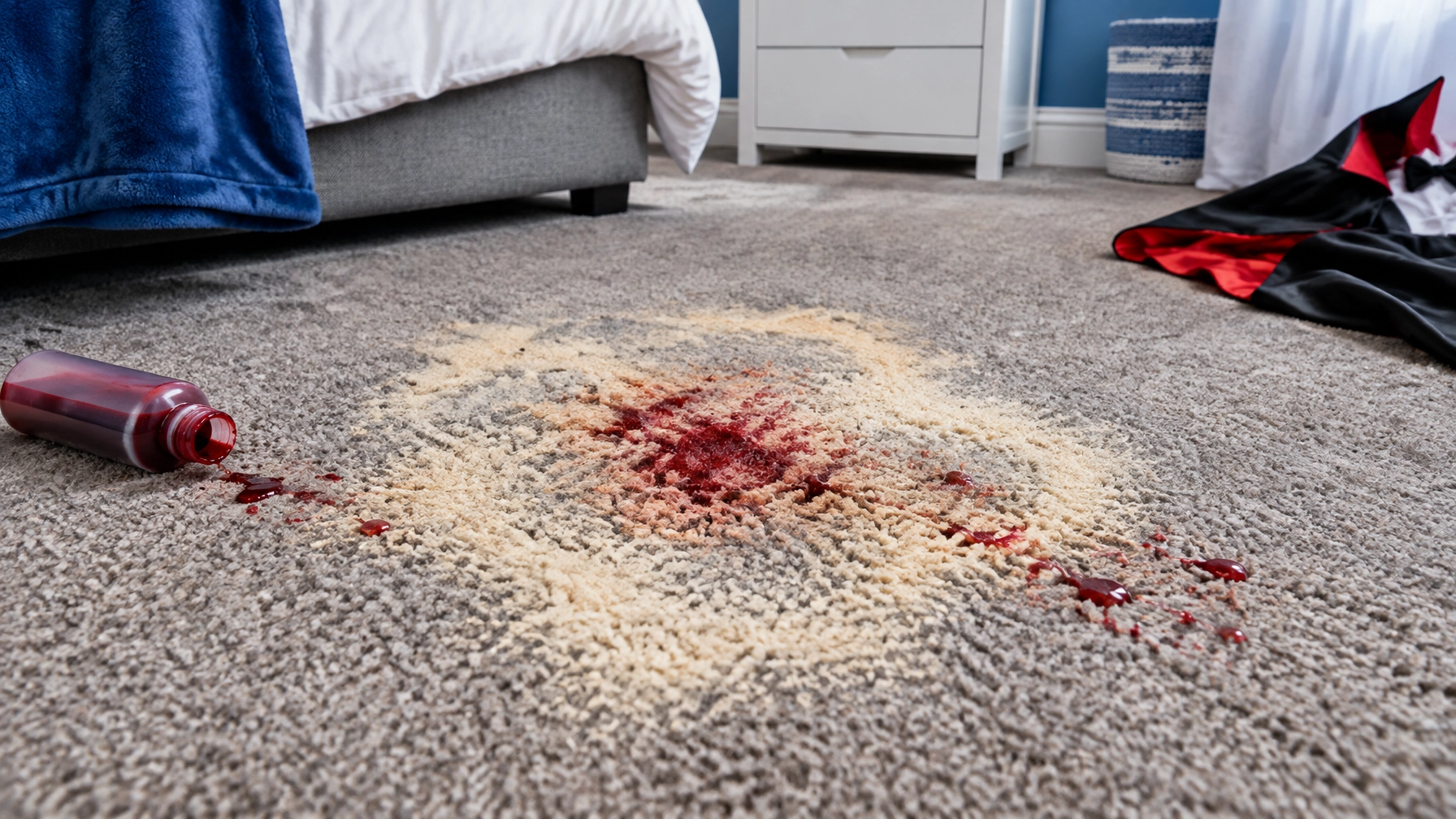
Picture the Reddit post: “Our Halloween party was going brilliantly until someone in a vampire cape knocked fake blood off the bedroom shelf. I panicked, grabbed bleach, and now the carpet has a pale ring around the red. Have I made it worse?”
It’s an all-too-plausible party mishap. Shop-bought fake blood can contain red colourants such as Red 40, alongside a sticky syrup or alcohol-based carrier. Ingredients vary, but the dye can be stubborn. The Rug Doctor guide to real and fake blood stains notes that fake blood can be particularly difficult because of its red dye.
Then comes the tempting comment: “Just use bleach. It strips everything.” It does strip something, but that may be the carpet’s own colour. A red mark might lighten while a pale, ghostly halo appears where the bleach was dabbed, ran or dripped.
The American Cleaning Institute’s Halloween stain guide covers costume marks such as face paint. That’s useful context for fancy-dress laundry, but advice for clothing is not a green light to put bleach on carpet. And fake blood isn’t the only party culprit: face paints, coloured hairsprays and costume make-up can transfer dye to carpet too. Bleaching products are a risky answer to all of them.
One patch, two different problems
The red residue and the pale halo may look like one mess, but they are not the same issue.
The remaining red is added colour. Dye and sticky residue may still be sitting on or within the carpet fibres. Depending on the product and carpet, specialist cleaning may help lift some of it.
The pale area is missing or changed carpet colour. Bleach can damage the carpet’s original dye. The IICRC carpet care tip sheet explains that chlorine bleach can cause moderate to complete colour loss on textiles; correcting bleach damage generally requires dyeing or patching. Cleaning can remove soil or residue, but it cannot simply wash the missing colour back in.
That distinction matters. Scrubbing harder, adding more bleach or layering on stain remover can make the colour loss bigger, while leaving the original red dye problem unresolved. Read more about why carpet turns white after bleach and the difference between a bleach spot and a regular stain.
What to do now
- Blot and lift remaining red residue with plain water or a proper carpet spotter, following its label.
- Stop applying bleach or bleach-based sprays to the patch. Never mix bleach with anything; keep it away from children’s costumes and party areas. Ventilate the room if any bleach product has been used indoors.
- Photograph the damage and get a specialist colour assessment.
That’s the whole immediate plan. No DIY colour experiments and no second round of cupboard chemistry.
For hotels and venues: the morning-after fright
Halloween event nights can be brilliant for guests, and hard on carpets. In a dim function room, lobby or bar, a red spill may go unnoticed until checkout, the next morning’s inspection or a deep clean. By then, there may be both lingering dye and a pale patch where someone tried to treat it with bleach.

For a hotel, an affected patch is more than a housekeeping headache. If carpet damage means a function room is taken out of use, that can mean lost revenue as well as disruption to staff and bookings. Hotel carpet repair and hotel carpet restoration may offer a practical alternative to replacing a larger area, where the carpet and damage are suitable.

This real BD365 hotel repair shows how specialist colour work can improve a pale damaged patch. Each carpet is different, so results and suitability need assessing rather than promising a perfect match from a photo.
BD365 provides carpet restoration services for homes and commercial spaces, including hospitality. The team has specialist colour training in the UK from leading restoration experts, and is trusted by Dr Beckmann’s to help repair carpet colour damage. Where suitable, professional carpet dyeing can be a fast-turnaround way to improve appearance and reduce the disruption and cost of replacement.
Estate and letting agents: the November inspection surprise
For estate and letting agents, Halloween spills often arrive with an unwelcome sequel: the end-of-tenancy inspection. In an HMO or student rental, a pale patch may only become obvious at November check-out, after the red residue has been cleaned or the room has been properly inspected.
That can start an uncomfortable deposit conversation. A photo assessment can help establish whether the carpet has a removable stain, colour loss, or both, and whether restoration is worth considering before everyone jumps straight to replacement.
BD365 offers carpet restoration for landlords, letting agents and property managers. Where the carpet is suitable, bleach spot repair or carpet colour restoration may help avoid the bill and waste of replacing an otherwise serviceable carpet. See our guide to the cost of fixing a bleach spot and browse the carpet restoration FAQs.

A note for cleaning companies
Standard extraction can lift dye residue, but it cannot put colour back into fibres bleached by a chemical. If a pale patch remains after cleaning, repeated cleans may not solve the colour loss. A specialist colour assessment is the sensible next step.
Also, not every pale patch comes from the Halloween party. Some shop-bought spotters, including products from Vanish or Dr Beckmann, may contain oxygen-bleaching ingredients that can leave pale patches if they affect carpet dye. The IICRC notes that oxygen-bleach spotters can cause permanent colour change if not properly rinsed and neutralised. If the patch appeared after a cleaning product was used, mention that when arranging an assessment.
Restore where it makes sense
Bleach spot repair is specialist colour work, not ordinary stain cleaning. BD365 assesses the carpet fibre, condition and damage before recommending professional carpet dyeing or another option. Some solution-dyed polypropylene carpets resist re-dyeing, and occasionally replacement is the sensible answer. We’ll be honest about that.
When restoration is suitable, it can save the replacement bill, keep usable carpet out of landfill and reduce the disruption of fitting new flooring. BD365’s eco-friendly dyeing techniques are safe for kids and pets. Whether you call it carpet recolouring, or, for US searchers, carpet recoloring, the aim is the same: restore rather than replace where the carpet can be saved.
To ask about your carpet, call 0800 1931 365, send photos on WhatsApp to 07561 700670, or email info@bd365.co.uk. Start with a photo assessment before the fake blood becomes a full carpet replacement story.