TL;DR: A drip of hair bleach or peroxide developer can strip colour from carpet fibres, leaving a pale patch that bicarb and scrubbing won’t put right. It’s colour loss, not ordinary dirt. BD365 specialises in carpet dyeing, bleach spot repair and carpet restoration, helping homeowners, landlords and letting agents restore rather than replace. We cover the UK nationwide.
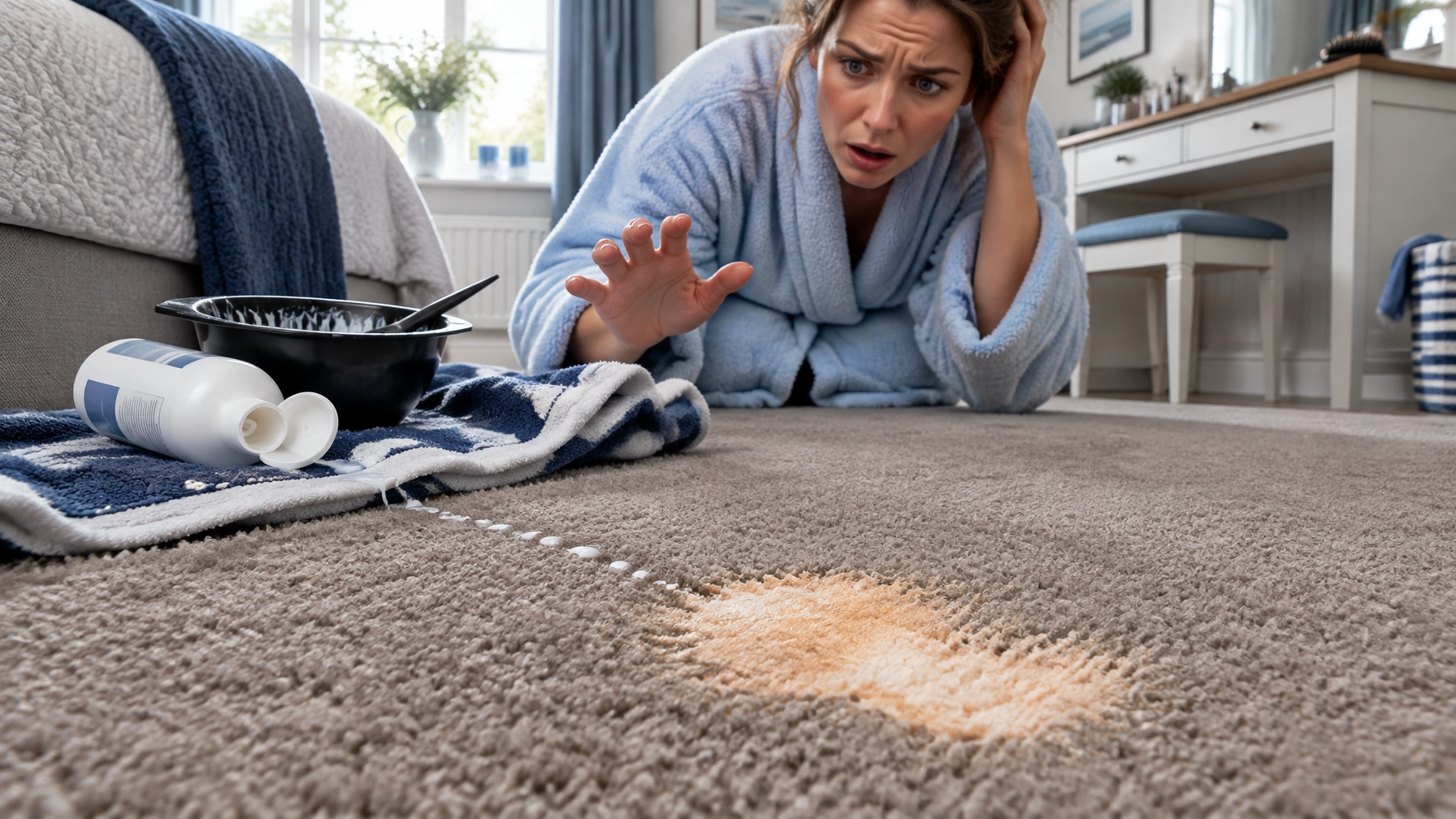
You were only doing your roots. The developer was safely on the bathroom shelf. The towel was mostly under the bowl. So how did a pale splash appear on the bedroom carpet?
Welcome to the home hair-colour mystery: “It was only on my roots. How did it get THERE?”
Perhaps the mixing bowl tipped. Maybe a brush dripped on the way to the bathroom. Or a towel with a little product on it landed on the floor. However it happened, the result can be a light patch that looks stubbornly like a stain, and attracts a flurry of “try bicarb” suggestions online.
The trouble is, a bleach or peroxide mark usually isn’t something sitting on top of the carpet. The colour itself may have been altered. That calls for a different kind of solution.
Hair-colour developer can affect carpet colour
Many hair-lightening products use peroxide-based developer. Depending on the product, toner and colouring formulas can also contain ingredients that affect carpet dyes. Not every product is the same, and the carpet fibre matters too, so it’s best not to guess from the bottle alone.
When an oxidising product affects the dye in a carpet, the patch may appear pale, yellowish or orange. It can be easy to mistake it for dirt or leftover product, especially when it’s still damp. But cleaning removes unwanted material; it doesn’t replace colour that has been lost.
That’s why scrubbing and bicarb aren’t a repair. They can leave residue or rough up the fibres, making the area look more noticeable. Store-bought stain spotters, including products such as Vanish or Dr Beckmann’s, are designed for particular cleaning jobs. They are not carpet dye, and using the wrong product on a colour-loss patch can complicate the eventual repair.
BD365 has also explained why a carpet can turn white after bleach cleaner: the key difference is that a bleach spot is about colour being changed or removed, not simply a mark waiting to be cleaned away.

An example of a bleach-spot repair on patterned carpet. This is not the specific hair-colour scenario described in the article.
Why the internet’s bicarb fix falls short
Bicarb has a starring role in many online cleaning tips. But it can’t recreate the carpet’s original colour once that colour has been chemically altered. It isn’t a colour-matching dye, and the pale patch isn’t necessarily a layer of dirt that needs more effort.
The same goes for vigorous brushing, random stain removers, household dyes or a dab of hair colour. These can affect the carpet’s appearance, leave residue or make accurate colour matching harder. A carpet is not a spare head of hair, despite what a late-night forum thread may suggest.
If the spill has just happened, avoid rubbing or experimenting with products. The safest next step is to contact a carpet restoration professional and explain what was spilled. Keep the product packaging handy if you can, so they can consider its ingredients when assessing the carpet.
What professional bleach spot repair involves
A proper repair starts with an assessment, not a guess. The technician needs to consider the carpet’s fibre, its colour and pattern, the size of the affected area, and whether the fibres themselves have been damaged.
BD365 specialises in carpet restoration, bleach spot repair and carpet dyeing. The company’s specialist colour training helps inform the assessment and colour matching needed for a repair. It also addresses common questions about products such as Dr Beckmann’s in its carpet-care advice: a stain remover and a colour-restoration service are not the same thing.
Depending on the carpet and the damage, a professional may be able to apply colour precisely to the affected area. Where colour loss is widespread, a broader restoration may be more appropriate. Sometimes the fibres are too damaged, or the carpet is already worn enough, that repair is not the right option. An honest assessment matters; no responsible specialist should promise an invisible result before seeing the carpet.
You can read more about the difference between a bleach spot and a regular stain and browse BD365’s frequently asked questions.
Restore the carpet, not the whole room
A small developer drip can prompt a surprisingly big thought: “Do we have to replace the carpet now?”
Often, no. Replacing a room’s flooring can mean more than buying a new carpet. There may be underlay, fitting, moving furniture and disposal to consider too. By comparison, a targeted professional repair may offer a more cost-conscious way to deal with a localised patch. The right option depends on the carpet and the extent of the damage.
BD365’s guide to the cost of fixing a bleach spot on carpet explains why quotes vary. A photo can help start the conversation, but the carpet’s fibre, shade, pattern and condition all affect what’s possible.
There’s a practical sustainability benefit as well. Keeping a carpet in use, where it can be restored, helps avoid unnecessary waste and the resources involved in replacing it. That’s the thinking behind eco-friendly carpet restoration: give a serviceable carpet a second chance rather than pulling it up over one unlucky drip.
A useful option for landlords and letting agents, too
Hair-colour accidents aren’t limited to owner-occupied homes. In a rental property, a pale patch might turn up during an inspection, between tenancies or just before photographs and viewings. It’s easy to jump straight to replacement when a room needs to look its best, but a professional assessment may reveal a repair option instead.
For homeowners, landlords and letting agents, carpet dyeing and colour restoration can help address local damage without automatically committing to a full refit. BD365 provides nationwide UK coverage, with restoration services for residential and commercial spaces.
Give the carpet a professional second look
That “how did it get there?” developer patch may be frustrating, but it doesn’t mean the carpet is beyond help. Bicarb can’t put back missing colour, and more scrubbing can make the situation messier. Professional assessment is the sensible route when the mark is pale and chemical damage is possible.
For a quote or advice, contact BD365 Carpet Colour Solutions:
- Phone: 0800 1931 365
- WhatsApp: 07561 700670
- Email: info@bd365.co.uk
Send a clear photo and, if possible, the name of the product involved. BD365 can advise on carpet dyeing, bleach spot repair and carpet colour restoration, and whether restoring your carpet is a better choice than replacing it.