TLDR
If you are searching, “I got bleach on my carpet and it has stained. How do I hide it before my landlord sees it?”, take a breath.
A rug, Sharpie, shoe polish, hair dye or Amazon DIY dye kit may hide the damage for five minutes. It can also turn a small bleach mark into a much more obvious repair problem.
BD365 Carpet Colour Solutions provides professional bleach spot repair, carpet dyeing and colour restoration nationwide across the UK. A small repair is often around £80–£150, while replacing a whole room can cost £600–£1,600.
The sensible route is simple: photograph the damage, stop applying products, be honest early and request a free photo assessment. Restore over replace.
The Reddit panic is real
The question appears again and again on Reddit and tenant forums:
“How do I hide a bleach stain before my landlord checks the flat?”
Usually, the story starts innocently. Someone is cleaning the bathroom. A bottle tips over. A few drops land on the carpet. Or a store-bought spotter such as Vanish or Dr Beckmann lightens the fibres instead of removing the mark.
Then comes the panic.
The rug is dragged across the room. The sofa is repositioned. Someone suggests a Sharpie. Another person recommends shoe polish. A third suggests hair dye or an Amazon carpet dye kit.
This is how a small repair becomes a larger problem.
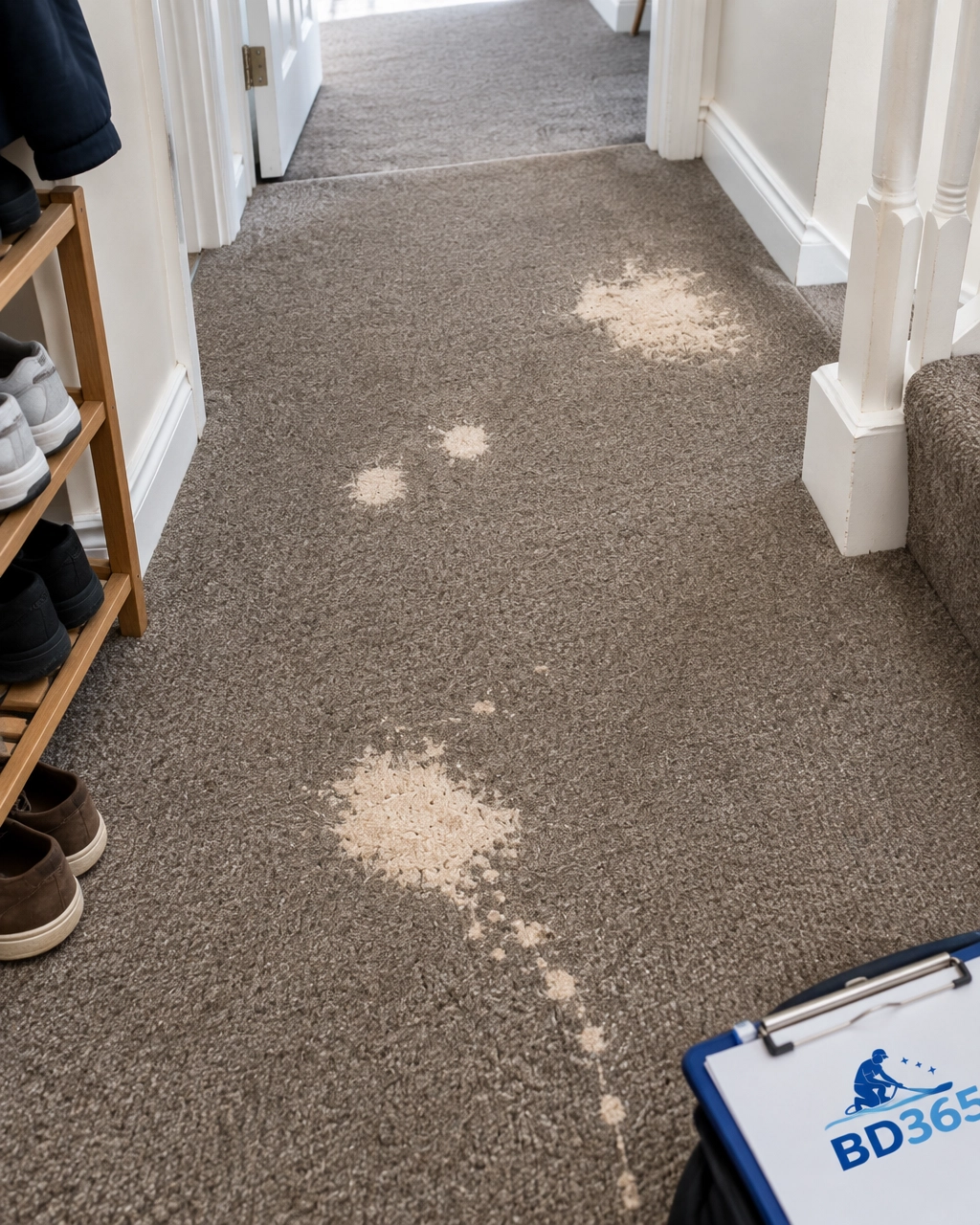
Why bleach spots are not normal stains
A normal stain adds colour to carpet fibres. Think coffee, mud or red wine.
Bleach does the opposite. It removes or changes the existing colour.
That is why carpet cleaning alone cannot restore a bleach mark. Scrubbing harder will not put the lost pigment back. It may spread remaining chemicals, roughen the pile and create a larger pale halo.
The same issue can happen after using cleaning products incorrectly. Vanish and Dr Beckmann products are designed for particular types of stains and fabrics. They are not carpet dye restorers. On some carpets, repeated use, over-application or contact with unsuitable fibres can cause lightening or bleaching.
So if you are thinking, “I got bleach on my carpet and it has stained,” the first step is to identify whether the carpet has lost colour rather than simply picked up dirt.
The five cover-up attempts that usually backfire
1. Moving a rug over it
A rug can be a temporary way to stop people walking over a damaged area.
It is not a repair.
During an inventory or check-out inspection, rugs are often moved. If the carpet underneath looks untouched from a distance but has obvious marks around the edges, the cover-up may attract more attention than the original spot.
It can also create a cleaning issue. Dirt and moisture collect underneath rugs, particularly in hallways and living rooms.
2. Using a Sharpie or marker pen
This is one of the most popular DIY suggestions online.
It is also one of the least reliable.
Marker ink rarely matches carpet colour properly. A grey carpet may contain several subtle tones, not one flat shade. Black ink can look purple, blue or shiny. It may bleed into surrounding fibres or transfer onto socks, furniture and cleaning equipment.
Under daylight, artificial light and camera flash, the mark can look completely different.
3. Trying shoe polish
Shoe polish is made for leather and similar materials. It is not designed to blend naturally into carpet fibres.
It can leave the pile greasy, stiff or shiny. It may also attract dirt and create a darker patch around the original bleach damage.
That “quick fix” can become evidence of an attempted concealment.
4. Applying hair dye or an Amazon DIY dye kit
Hair dye sounds tempting because it is designed to add colour.
But carpet fibres do not all react in the same way. Wool, nylon and polypropylene have different properties. A dye that appears close when wet may dry too dark, too warm or too flat.
DIY kits can also leave hard edges, uneven saturation and a patch that changes colour after cleaning.
Professional carpet dyeing is not simply colouring in a pale patch. It involves assessing the fibre, understanding the original colour and building a suitable match carefully.
5. Cutting a patch from inside a wardrobe
A carpet patch can work when carried out professionally and when a suitable matching piece is available.
A rushed DIY patch often shows.
The replacement section may have a different pile direction, texture or level of wear. Glue can stiffen the edges. The outline may become visible when sunlight crosses the floor.
A landlord or inventory clerk may reasonably see this as additional damage rather than a successful repair.
Why hiding damage can make a deposit dispute worse
For tenants, the fear is understandable. Nobody wants to lose their deposit over a few pale marks.
But hiding damage does not make it disappear. It can make the conversation harder.
If an agent discovers bleach spots under a rug, marker ink across the pile or a badly fitted patch, the issue is no longer just accidental carpet damage. There may also be concerns about:
- Further damage caused by chemicals.
- A failed DIY repair.
- The cost of removing marker, polish or dye.
- A larger area needing restoration.
- The carpet being unsuitable for cleaning or repair.
- A lack of honest communication before check-out.
For letting agents and landlords, the fairest approach is usually calm and practical. Ask for clear photographs. Establish what happened. Check the carpet’s age and condition. Then obtain a specialist opinion before assuming that full replacement is necessary.
A small, professional repair may cost far less than replacing an otherwise serviceable carpet.
The cost difference: repair versus replacement
Prices vary according to the carpet fibre, location, access, damage and complexity of the colour match. As a general guide:
| Job | Typical guide price |
|---|---|
| One small bleach spot | £80–£150 |
| Several spots or splashes | £150–£250 |
| Larger colour restoration | £300+ |
| Full room carpet replacement | £600–£1,600 |
For an estate agent managing multiple properties, this difference matters. A repair can reduce void-period disruption, avoid unnecessary disposal and help present the property properly for the next tenant.
For a tenant, a repair costing around £100 may be considerably better than leaving a hidden problem that leads to a full replacement claim.
Read the BD365 bleach spot repair cost guide for more information.
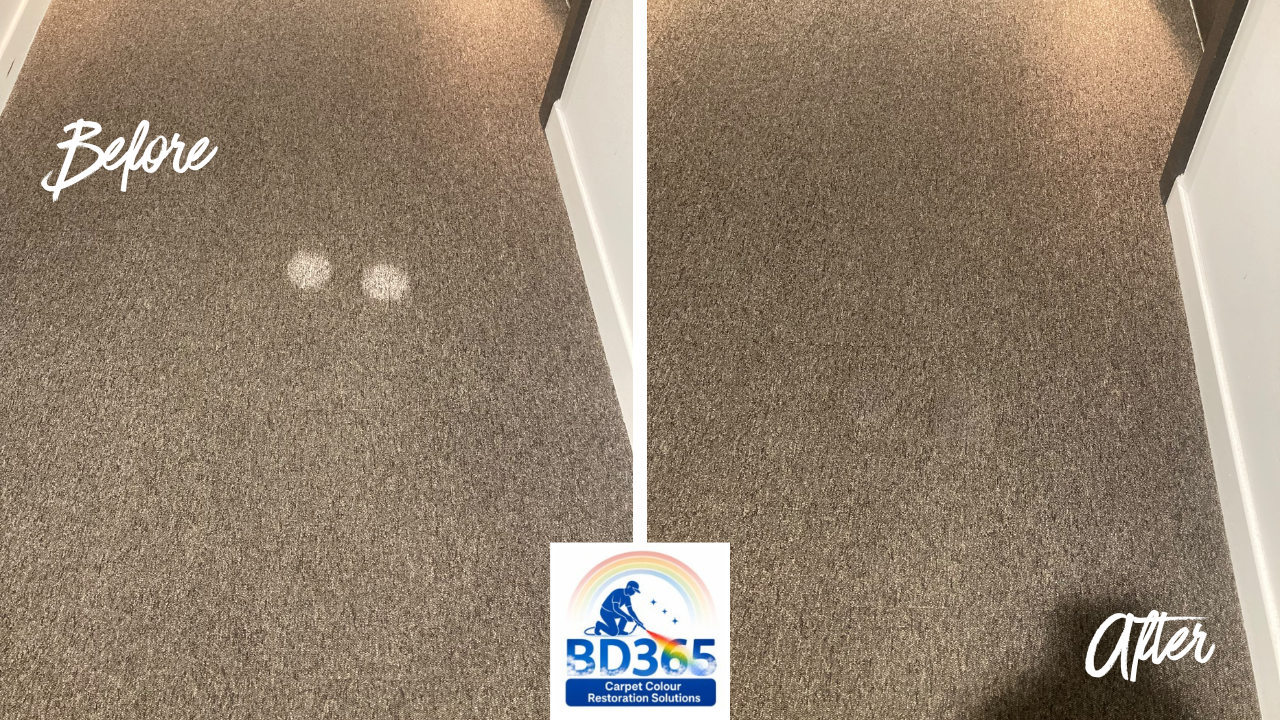
What professional bleach spot repair involves
At BD365 Carpet Colour Solutions, we assess the damage before recommending treatment.
The process may include:
- Reviewing clear photographs of the affected area.
- Considering the carpet fibre, colour and condition.
- Checking whether bleach or another chemical is still active.
- Preparing the damaged fibres.
- Rebuilding or correcting colour with specialist dyeing techniques.
- Blending the repair into the surrounding carpet.
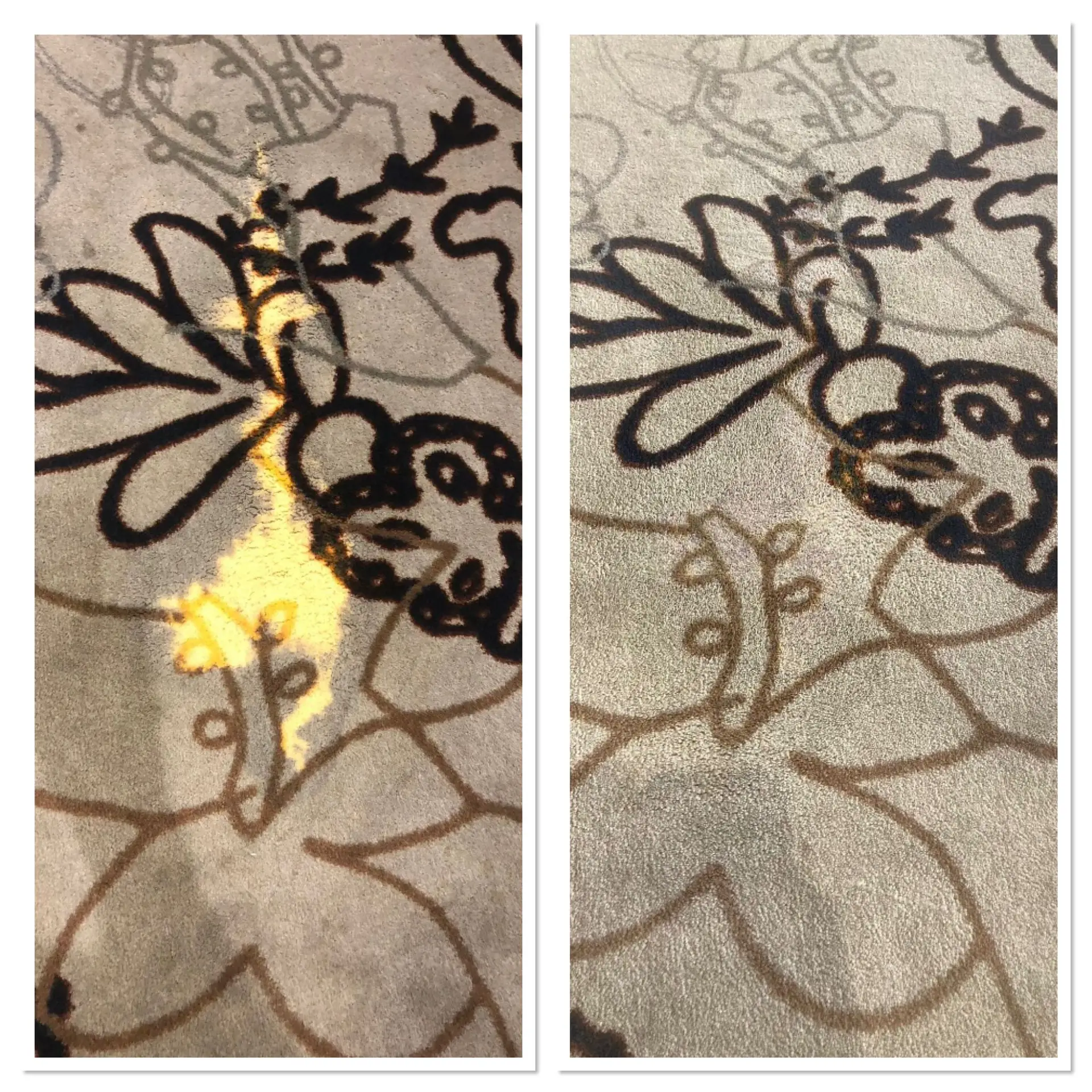
The aim is a natural, durable improvement. Some repairs can blend extremely well. Others may achieve a significant improvement rather than becoming completely invisible. The result depends on the carpet itself.
That honest assessment matters. BD365 will tell you when restoration is worth exploring and when replacement is likely to be the better option.

A practical checklist for tenants
If you have just discovered a bleach mark, do this:
- Take clear photographs in daylight. Include a close-up and a wider room view.
- Write down what caused it. Include the product used, if known.
- Stop scrubbing. Rubbing can spread the damage and disturb the pile.
- Do not apply marker, polish, hair dye or another cleaner.
- Tell the landlord or agent early. Honest communication is usually easier than explaining a failed cover-up later.
- Request a free photo assessment before agreeing to replacement.
Send photos through BD365’s free photo assessment page. Clear daylight photographs help the team give more useful initial advice.
A practical checklist for letting agents and landlords
When a tenant reports bleach damage:
- Ask for photographs before arranging replacement.
- Avoid blaming language. Accidents happen.
- Ask whether Vanish, Dr Beckmann or another spotter has been applied.
- Record the carpet’s approximate age and condition.
- Check whether the damage is localised or widespread.
- Obtain a restoration assessment where appropriate.
- Compare the repair cost with the carpet’s remaining useful life.
- Keep before-and-after photographs for the property file.
- Explain the proposed cost clearly to the tenant.
This approach is better for everyone. It protects the property, supports fair deposit discussions and avoids replacing carpet that may still have plenty of life left.
Restore over replace
Carpet replacement has its place. If the fibres are badly worn, melted, torn or extensively damaged, a new carpet may be sensible.
But one or two bleach spots do not automatically mean the entire room is finished.
BD365 specialises in carpet restoration, professional carpet dyeing and bleach spot repair for:
- Tenanted homes and rental properties.
- Estate and letting agents.
- Landlords and property managers.
- Hotels and serviced accommodation.
- Offices and commercial premises.
- Homeowners who want a more sustainable option.
Restoration can save money, reduce waste and minimise disruption. It also removes the need for suspicious furniture arrangements that make a room look like it is hiding a secret.
The short answer to “How do I hide a bleach stain?”
You do not need to hide it.
Do not cover it with a rug and hope nobody looks underneath. Do not colour it with a Sharpie. Do not use shoe polish, hair dye or another cleaning product. Do not cut into the carpet unless you have professional advice.
Photograph it. Report it. Ask whether it can be restored.
A small professional repair may cost around £100. A failed cover-up could cost considerably more.
For nationwide UK advice, contact BD365 Carpet Colour Solutions, or request a free photo assessment. Restore where possible. Replace only when necessary.