TL;DR
A slow leak from a bleach bottle, toilet cleaner or disinfectant can quietly remove carpet colour for weeks. It may creep beneath a cupboard, along the gripper and into the underlay before anyone spots it. If you search, “I got bleach on my carpet and it has stained”, the answer is simple: this is usually colour loss, not a normal stain. Cleaning will not put the pigment back. Professional carpet dyeing, bleach spot repair and wider carpet restoration may restore the appearance without replacing the whole floor. BD365 Carpet Colour Solutions provides coverage nationwide, from Cornwall to the Highlands, with Europe by arrangement.
The pale trail nobody noticed
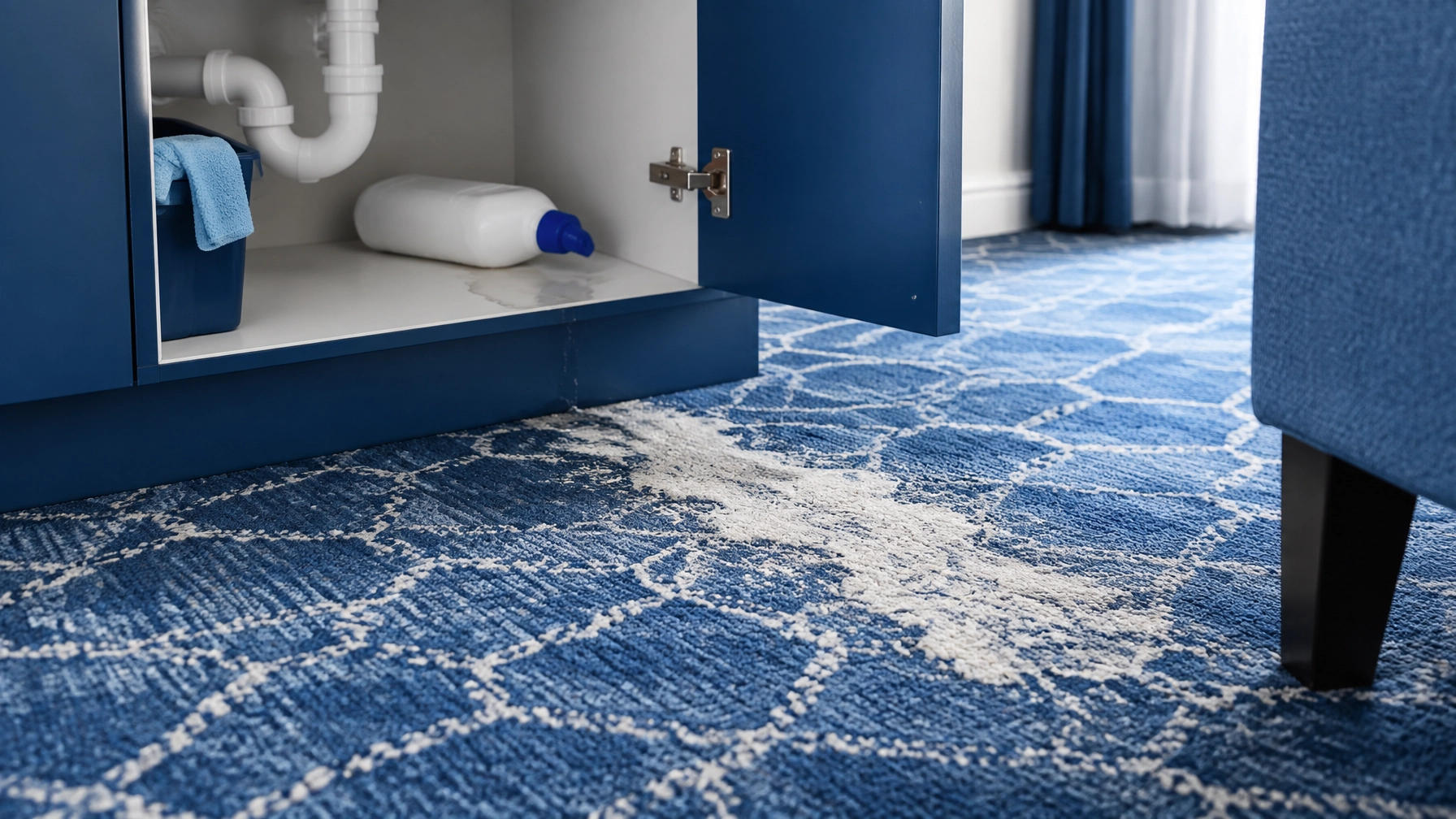
It usually starts with a strange pale line beside the under-sink cupboard.
Not a dramatic puddle. Not a bottle knocked over in the middle of the room.
Just a faint mark that seems to appear when the light catches it at the right angle.
Then someone moves the cleaning supplies. At the back of the cupboard sits a bottle on its side. The cap is not quite tight. There is a sticky ring underneath it.
The carpet nearby has a pale trail.
Perhaps it looks cream, orange, yellow or almost white. Perhaps the mark runs beneath the edge of a unit or disappears under a sofa.
And then comes the baffled question:
“I didn’t spill anything. How did my carpet get bleached?”
The culprit may have been leaking quietly for weeks.

A slow leak is not the same as a spill
A spill is obvious. You see it happen. You can identify the bottle, the puddle and the rough location.
A slow leak is sneakier.
Liquid can travel along the carpet edge, the gripper and the underlay. It can spread beneath furniture before becoming visible. Each time the carpet dries and then becomes damp again, any remaining chemical residue may continue reacting with the fibres.
That is why the halo can seem to grow.
The original leak may have been tiny. The final pale band may not be.
This is particularly common around:
- Hotel housekeeping cupboards.
- Office cleaning stations.
- Utility rooms.
- Under-sink cupboards.
- Bar and kitchen stores.
- Toilet cubicles.
- Cleaning trolleys parked overnight.
- Rental properties discovered at check-out.
In hotels, a housekeeping trolley may be left beside a room entrance or service cupboard. In an office, bottles can sit beneath a sink for months. In a rental property, the damage may only become visible when furniture is removed during an end-of-tenancy clean.
The carpet has not suddenly developed a mysterious stain. It has been quietly losing colour.
“I got bleach on my carpet and it has stained”. What has actually happened?
A normal stain adds colour or residue to the carpet.
Coffee, wine, mud and grease sit on or within the fibres. Cleaning may remove some or all of that material.
Bleach damage is different.
Bleach and some oxidising cleaning products can break down the carpet’s original dye. The pale patch is therefore not simply something sitting on the carpet. It is missing colour.
That is why steam cleaning cannot restore it. The machine may remove dirt around the mark, but it cannot replace pigment that has been chemically removed.
Our guide, What’s the difference between a bleach spot and a regular stain?, explains the difference in plain English.
In short:
- A stain may need cleaning.
- Colour loss may need dyeing.
- Damaged fibre may need repair or replacement.
The “I tested it under the sofa” story
We hear this one often.
Someone finds a bottle of cleaner. They test it on a hidden corner. Nothing obvious happens. So they assume it is safe.
Unfortunately, that hidden corner may have a different pile direction, less wear or different lighting. It may also be left to dry without anyone checking it again.
Colour change is not always immediate.
With slow leaks, the problem is even harder to identify. The affected area may be hidden beneath a sideboard, bed, kitchen unit or sofa. It only comes to light when furniture moves.
That is when a tiny-looking issue becomes a long pale trail across the room.
A fair word about Vanish and Dr Beckmann
Store-bought spotters are not automatically bad products. They are designed for specific uses and should be treated with care.
However, products such as Vanish Oxi-Action and some Dr Beckmann stain removers use oxygen-based or other oxidising ingredients. These can affect carpet colour if the fibre is not colourfast, if the product is over-applied or if it is left in place too long.
Always:
- Use only the product specified for carpets.
- Follow the label.
- Test colour fastness first.
- Never mix products.
- Tell the restoration specialist exactly what has already been used.
Vanish’s own guidance distinguishes between its laundry products and its carpet-specific range. You can read more in our article, I used Vanish to clean my carpet and it turned orange.
For Dr Beckmann, the manufacturer’s carpet stain remover guidance is the sensible starting point.
The important point is this: neither product can put colour back after it has been removed. Repeated applications may make a pale area larger or complicate later restoration.
What professional restoration looks like
At BD365 Carpet Colour Solutions, we assess the carpet before recommending anything.
That includes:
- Fibre type.
- Carpet construction.
- Existing colour.
- Pile condition.
- Size and depth of the damage.
- Any cleaning products already used.
- Whether the chemical has affected the backing or underlay.
Where the carpet is suitable, professional colour restoration can rebuild the missing colour area by area.
This may involve precision syringes, airbrushes and carefully blended dye applications. The aim is not to paint over the top. It is to match the surrounding pile, pattern and shade so the damaged area sits naturally within the carpet.
For larger or more complex work, we agree a physical colour sample before proceeding. That gives property owners, hotel managers, landlords and agents a clear reference point.
We are also honest about limitations. Dye cannot rebuild fibre that is worn, melted, torn or badly damaged. Some polypropylene and polyester carpets may be unsuitable. Perished backing, delamination, failed seams and serious water damage can also make replacement the better option.

Why hotels and businesses should act quickly
In a hotel, one pale trail can affect more than the carpet.
It can mean:
- A room taken out of service.
- Lost room nights.
- A corridor that looks poor in guest photographs.
- Complaints at reception.
- Extra pressure on housekeeping.
- A visible mark in online booking images.
Offices, retail premises and commercial buildings face a similar problem. A pale chemical trail near a reception desk or customer area creates a poor first impression.
Our guide to hotel carpet repair without closing the room explains why targeted restoration can be worth considering before a full replacement.
A simple fix-and-log process helps facilities and housekeeping teams:
- Record the location and likely source.
- Photograph the area before furniture is moved.
- Photograph the bottle or product involved.
- Note everything already applied to the carpet.
- Keep the area available for assessment.
- Log the incident for future cupboard and trolley checks.
For letting agents, document the leak at check-out. Include room photographs, the cupboard condition, the affected carpet and any relevant inventory notes. Clear evidence can help prevent a small repair becoming a disputed full replacement claim.
Restoration versus replacement: the real maths
BD365’s published guide prices are usually:
- £80–£150 for a single spot.
- £150–£250 for multiple areas.
- £300+ for complex or full-room work.
By comparison, replacing a room can cost £600–£1,600+.
That replacement figure may include:
- Measuring.
- Carpet minimum order quantities.
- Discontinued ranges.
- New underlay.
- Gripper rods.
- Uplift.
- Disposal.
- Fitting.
- Furniture moving.
- Room or office downtime.
- Waste sent towards landfill.
A replacement carpet may also look noticeably newer than the surrounding areas. In hotels and rental properties, replacing one section can create a colour mismatch that is more obvious than the original damage.
Read our full bleach spot repair cost guide before approving a whole-floor replacement.
Prevention for property teams and homeowners
Prevention is wonderfully unglamorous. It is also cheaper than replacing a corridor.
Store bleach, toilet cleaner and oxidising products in sealed trays or secondary containment. Keep them off carpet wherever possible.
For property managers and agents:
- Check under-sink cupboards at every tenancy change.
- Photograph cupboards before refurbishment.
- Include cleaning stores in inventory photographs.
- Look for sticky bottle bases and damaged caps.
- Keep chemical bottles upright.
- Inspect hotel rooms during quarterly audits.
- Do not leave cleaning trolleys parked on carpet overnight where a leak could go unnoticed.
For homeowners, the same rule applies. A cupboard is not a safe place just because it has a door.
When replacement really is the right call
Restoration is not magic. Sometimes replacement is the sensible option.
That may be true where there is:
- Perished or weakened backing.
- Delamination.
- Failed seams.
- Significant water damage.
- Melted synthetic fibre.
- Severe wear or exposed traffic lanes.
- Torn or physically damaged pile.
- Unsuitable polypropylene or polyester.
- Widespread contamination.
- A carpet already at the end of its useful life.
BD365 will assess the condition and explain the realistic options. Sometimes that is carpet dyeing. Sometimes it is targeted bleach spot repair. Sometimes it is replacement.
The point is to decide with evidence, not panic.
Send BD365 a photo before replacing the floor
A slow leak can make a carpet look beyond saving. Often, the surrounding carpet is still perfectly serviceable.
Send BD365 a room photograph and a close-up of the damaged area for a free initial photo assessment. Include what leaked, when you noticed it and any products already used.
We provide carpet restoration, carpet dyeing and bleach spot repair nationwide, from Cornwall to the Highlands, with Europe by arrangement.
Send photos through the BD365 FAQs photo assessment page.
Call 0800 1931 365.
WhatsApp 07561 700670.
Email info@bd365.co.uk.
Before you replace the whole floor, check whether the carpet simply needs its colour back.
