TL;DR: Spraying an acidic limescale remover and then using bleach nearby can release dangerous fumes and leave a sharp pale patch where the mist reaches carpet. Put people and pets first: leave the affected area, get fresh air and don’t add or spray anything else. Once it is safe, photograph the carpet damage and contact a specialist. BD365 provides carpet restoration services across the whole of the UK, helping homeowners, hotels, landlords and letting agents explore restoration before replacement.
The “surely two cleaners are better than one” moment
You know the thinking: the limescale spray has loosened the bathroom grime, so a quick pass with bleach will finish the job. One product, then the next. A deeper clean. What could go wrong?
Quite a lot, unfortunately.
Some limescale removers are acidic. Many bleach cleaners contain chlorine bleach. If an acidic cleaner and bleach meet, the reaction can release chlorine gas. The CDC warns never to mix bleach with other cleaners, and the Washington State Department of Health explains the dangers of mixing bleach with acids and other cleaning products.
Even if the products weren’t poured into the same bucket, using one over the other before the first has been properly dealt with can still create a hazardous situation. A fine spray or residue may be enough for the products to meet. Irritating fumes can build quickly, especially in a small bathroom or a room with the door closed.
And then there’s the carpet.

First problem: the fumes. Carpet can wait.
If you notice coughing, burning eyes, a sore throat or breathing discomfort after using the products, don’t stay to work out exactly what happened. Don’t lean in for a closer look, and don’t rely on the room’s smell or appearance to decide it’s safe.
Take these immediate steps:
- Ventilate and leave the room. Get people and pets away and into fresh air. Open doors or windows only if you can do so without staying in or re-entering the affected area.
- Don’t mix more products or re-clean. Leave the cleaners alone; don’t spray, scrub or add another chemical.
- Once it is safe, photograph the carpet and call a specialist. Tell them which products were used and where.
If anyone has breathing difficulty, chest tightness or severe irritation, seek urgent medical help. Protecting people comes before assessing the flooring.
Why the carpet can be left with a sharp pale patch
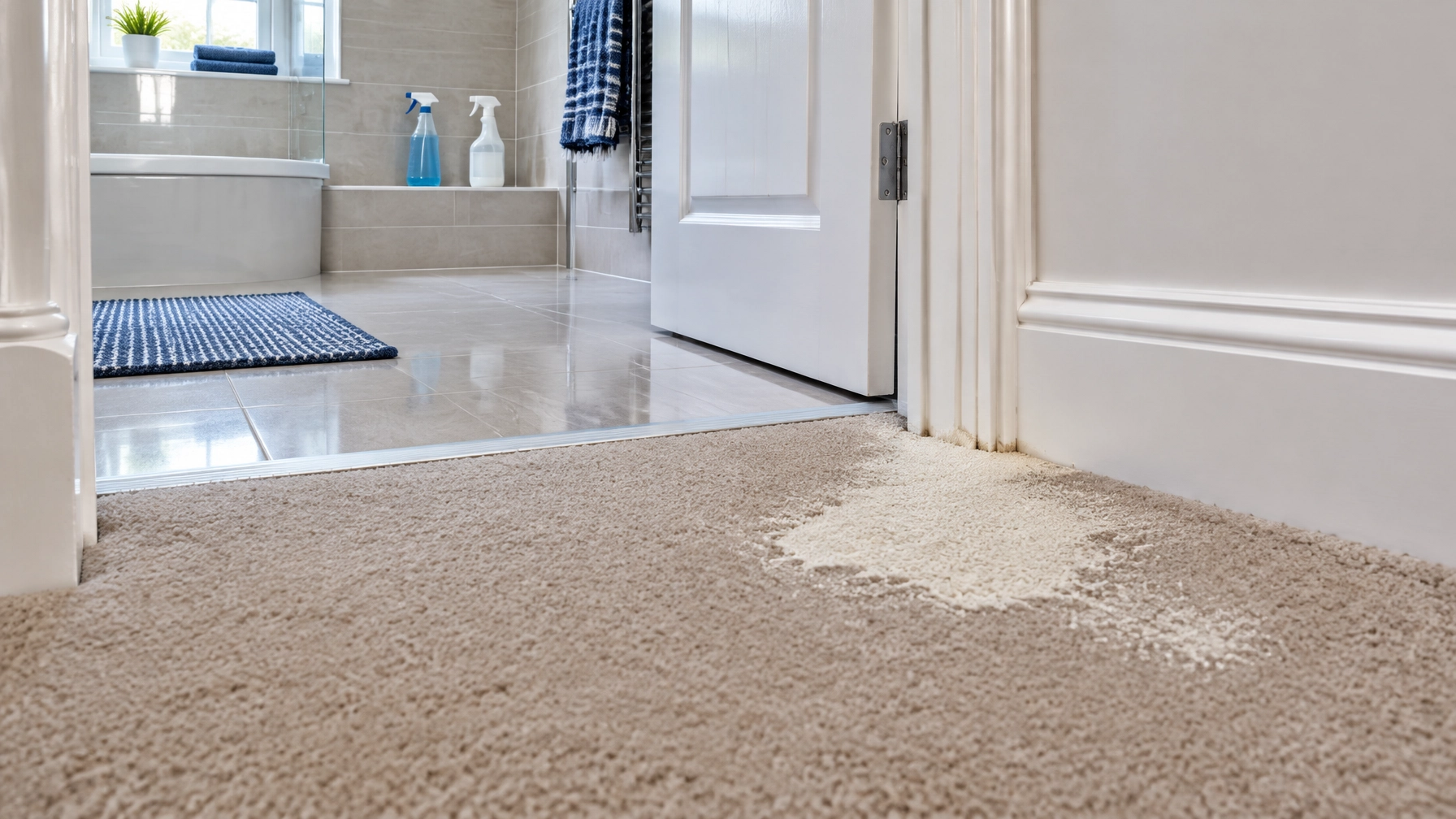
In this scenario, the sprays are used near the bathroom doorway or on the landing. A mist of cleaner can drift, settle on the threshold or land on carpet close to the skirting. Where bleach reaches the fibres, it can remove or change the carpet’s existing dye. The result may be a pale, yellowish or white mark with a surprisingly crisp edge.
If residues of different products meet on or near the carpet, the damage can be unpredictable. The exact result depends on what was used, how much reached the fibres and the type and colour of the carpet. But cleaning the patch afterwards won’t put lost colour back.
That’s the important difference between a stain and bleach damage. A stain adds unwanted colour or soil; bleach can take the carpet’s colour away. Read more about the difference between a bleach spot and a regular stain, or find out why carpet can turn white after bleach cleaner.
The IICRC carpet care tip sheet notes that chlorine bleach can cause colour loss in carpet. Where dye has been lost, professional spot dyeing or repair, not routine cleaning, is generally needed to correct the appearance.
Homeowners: a bathroom clean becomes a hallway problem
The homeowner’s version usually starts as a normal cleaning mission. Tiles get sprayed with descaler, the bleach cleaner comes out moments later, and suddenly the room feels harsh and irritating. Once the immediate safety issue is handled, there’s a second discovery: a pale mark on the carpet outside the bathroom.
It’s a rotten surprise, especially if the landing carpet is in good condition and the patch sits right in your eyeline. But a damaged area doesn’t automatically mean the whole carpet must go. BD365 specialises in carpet restoration, carpet dyeing and bleach spot repair. We can assess whether professional carpet dyeing or carpet colour restoration may be suitable, based on the fibre, colour, condition and extent of the damage.
If you’re wondering whether it’s worth investigating, see our guide to the cost of fixing a bleach spot on carpet. A photo assessment can help you consider restoration before committing to a replacement bill.
Hotels: one room out of order can affect the day
For hotels, the same mistake can happen during a busy housekeeping rota. A team descalers en-suite tiles, then follows with a chlorine cleaner before the area is clear. In a closed guest room, irritating fumes can become an urgent safety concern. Spray mist may also drift past the bathroom threshold and mark the bedroom carpet.

Once guests and staff are safe, the flooring issue still needs attention. A room may be taken out of order while the situation is assessed, affecting rooms-ready-to-sell and potentially the revenue that room could have earned. That’s why a prompt, honest assessment matters.
BD365 offers hotel carpet repair and hotel carpet restoration for suitable carpets, with fast turnaround times where the job and schedule allow. A targeted repair may help a hotel avoid replacing a much larger area of otherwise serviceable flooring. Here’s an example of hotel carpet damage assessed for repair:

Estate and letting agents: a pale patch at check-out
End-of-tenancy deep cleans bring different people, products and deadlines into the same property. A contractor may use a limescale remover and then a bleach product nearby. At check-out, a pale patch near the bathroom door suddenly becomes part of a conversation about the carpet, the deposit and who is responsible.
For agents and landlords, an assessment can help clarify whether the carpet is a candidate for restoration or whether replacement is the more realistic option. BD365 provides carpet restoration for landlords, letting agents and property managers, including professional bleach spot repair and carpet colour restoration where suitable.
Choosing to restore rather than replace can save disruption and keep a usable carpet out of landfill. It may also help avoid the cost of replacing a whole room to address one localised patch. We’ll give an honest view; restoration is not right for every carpet.
A note for cleaning companies
Never mix cleaning products or use them one after another in a way that allows residues to meet. Follow each product label, keep a clear record of what was used and where, and don’t try to disguise a pale carpet patch with another product. Once the site is safe, arrange a specialist assessment.
Restore where suitable. Replace when it makes sense.
BD365 is trusted by Dr Beckmann’s and brings specialist colour training to carpet dyeing and bleach spot repair. Our advanced eco-friendly dyeing techniques are designed to be safe for children and pets, with suitability and aftercare discussed for each job. We serve customers across the whole of the UK.
Some carpets can respond well to professional carpet recolouring (the US spelling is “carpet recoloring”). Others cannot. In particular, some solution-dyed polypropylene carpets resist re-dyeing, and occasionally replacement really is the sensible answer. BD365 will say so if that’s the case.
If you’re looking to fix bleach spots on carpet, send clear photographs once the area is safe. We’ll assess whether our carpet restoration services may help, without promising that every mark can be made invisible.
- Call 0800 1931 365
- WhatsApp 07561 700670
- Email info@bd365.co.uk
For more answers, visit our FAQs.