TL;DR
A pale carpet patch by a window, conservatory door or hotel room’s big glazed frontage may be sun fade. A small, sharply defined mark could be bleach or colour damage from a cleaning product, stain spotter such as Vanish or Dr. Beckmann, or a spill. The clues help, but only a professional assessment can confirm what’s happened. Both are colour loss, not dirt, so cleaning won’t put the missing colour back. BD365 specialises in carpet restoration, carpet dyeing and bleach spot repair, helping suitable carpets avoid the cost, waste and disruption of replacement. We cover the UK nationwide and Europe.
The Reddit mystery: “Is this bleach, or has the sun done it?”
It is one of those carpet questions that appears in homes, rental properties and hotel housekeeping chats alike.
There is a pale patch. It will not clean away. Nobody remembers spilling anything. The room has a sunny window. So is it a cleaning mishap, or slow-motion fading?
A few visual clues can point you in the right direction. They are not a guaranteed diagnosis, though. Carpet fibre, wear, lighting and previous cleaning can all muddy the picture.

Clues that suggest sun fading
Sun damage tends to develop gradually where daylight repeatedly reaches the carpet. It is often an area of colour loss rather than one neat little spot.
Look at the position and pattern:
- Is the carpet close to a window, patio door or conservatory entrance?
- Does the faded area follow the path of sunlight across the floor?
- Is the colour change broad or gradual, rather than sharply outlined?
- Has a sofa, rug or other furniture left a darker area where it protected the carpet?
- Are similar exposed areas faded in other rooms?
You may notice this in a conservatory, a bright living room, or a hotel bedroom with large windows. The sun can quietly fade carpet over time, leaving a tell-tale difference between exposed flooring and the original shade protected by furniture.
That contrast can look dramatic. It does not, by itself, mean the fibres are beyond saving.
Clues that suggest a bleach or product spot
Chemical colour damage is more likely when the pale area is localised and has a distinct edge, irregular shape, drip or splash pattern. It may have appeared soon after a spill or a cleaning attempt.
And “bleach spot” does not always mean someone used a bottle labelled bleach. Some stain spotters and other cleaning products contain ingredients that can affect carpet colour. For example, the published ingredient information for Dr. Beckmann Carpet Stain Remover lists oxygen-based bleaching agents. The Vanish Carpet & Upholstery Stain Remover lists hydrogen peroxide.
These products are designed for stain removal when used as directed; that does not mean every pale patch is product damage. But if a light mark appeared after a spot-cleaning attempt, the product and timing are useful details to share with a professional.
A pale area can also have more than one cause: for instance, gradual sun fade across a room and a separate localised chemical spot. The carpet does not always present a tidy case file.

The key difference: dirt versus missing colour
A regular stain leaves something on or in the carpet. It may be removable with suitable cleaning.
Sun fading and bleach damage are different. In both cases, the original colour has faded, been removed or changed. The problem is not simply a deposit waiting to be lifted from the fibres.
That is why another round of cleaning is unlikely to restore the original shade. It can remove soil around the patch, making the contrast even more obvious, but it cannot replace colour that is no longer there. Aggressive cleaning attempts can also affect the carpet further.
For a fuller explanation, see our guide to the difference between a bleach spot and a regular stain.
Why DIY colour fixes often make the job harder
When a pale mark is staring back at you, it is tempting to reach for a DIY repair kit, or an internet-approved “clever fix”. Resist the urge.
DIY kits, coffee, shoe polish and fabric pens are not reliable ways to restore carpet colour. They can leave an obvious patch, transfer colour, affect the fibres or make later professional colour matching more difficult. More spotter sprays can also add to the uncertainty if the cause is already colour loss.
This is not the moment for an experiment with a felt-tip pen. A professional assessment is a much better next move.
Restoration can beat replacing the whole carpet
If the carpet is otherwise in good condition, a localised pale patch may not justify replacing an entire room, or a larger run of flooring.
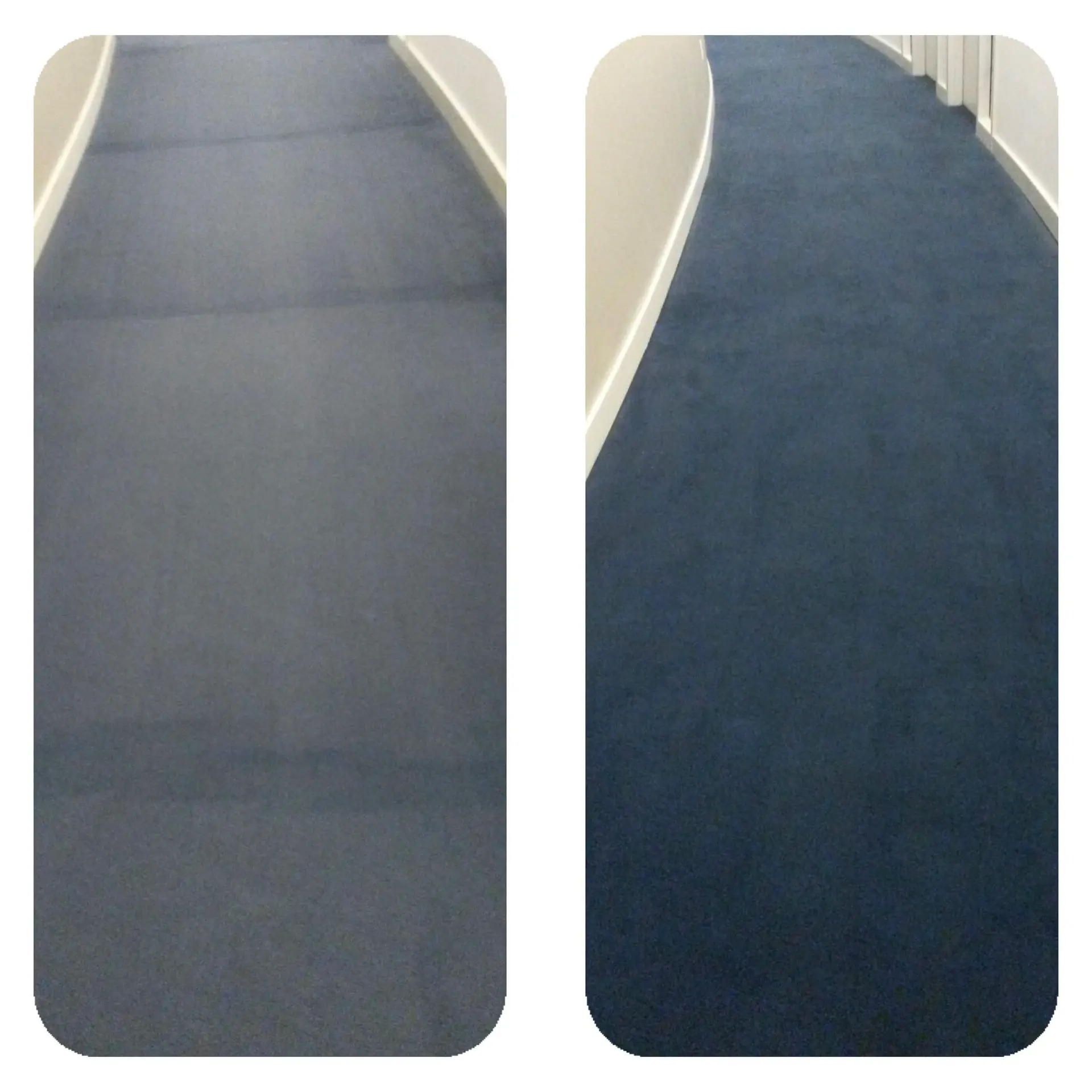
Professional carpet restoration can involve targeted recolouring of the affected area and blending it into the surrounding carpet. A small bleach spot may need a different approach from a broader sun-faded section. The carpet fibre, existing shade, condition and extent of the damage all matter, so suitability and likely results should be assessed rather than guessed.

Replacing carpet can mean more than buying new flooring. There may be uplift and disposal costs, fitting, furniture moves and disruption to tenants, guests, staff or day-to-day business. In a hotel, a larger replacement can also mean taking rooms out of service. Restoration, where suitable, may offer a faster, lower-waste way to improve the appearance without replacing sound carpet.
It is not the right answer for every floor. If the pile is badly worn, the fibres are damaged or restoration cannot give a suitable result, replacement may make more sense. BD365 gives an honest assessment rather than promising that every carpet can be saved. You can read more about the cost of fixing a bleach spot before making a decision.
Specialist colour restoration, with realistic advice
BD365 Carpet Colour Solutions specialises in carpet restoration, carpet dyeing, colour restoration and bleach spot repair for homeowners, landlords, letting and estate agents, hotels, businesses and professional cleaners.
We assess the carpet and match colour against a real sample to help the restored area blend with its surroundings. Our eco-friendly dyes are safe for kids and pets when used as directed, and our fast turnaround can help reduce disruption to homes and working properties.
BD365 is also used by Dr. Beckmann’s to help repair carpet colour damage. It is specialist work, not a cover-up with a marker.
Not sure what the pale patch is?
The shape and location can offer clues. A broad, gradual fade in a sunny spot may point to UV exposure. A more localised mark, especially after a cleaning product or spill, may suggest chemical colour loss. But neither appearance is conclusive, and both are colour problems rather than ordinary dirt.
Before you consider replacement, send BD365 a few clear photos for a free assessment. We can help you understand whether carpet recolouring or another restoration option may be suitable. We work nationwide across the UK and Europe.
- Phone: 0800 1931 365
- WhatsApp: 07561 700670
- Email: info@bd365.co.uk
A pale patch may have a surprising cause. But it does not automatically mean the whole carpet has to go.