The short version
A beer-line cleaning spill can leave two very different problems on a pub carpet: removable cleaner residue, or lasting colour and fibre damage. A pale patch may mean dye has been lost, not that the carpet is dirty. Secure the area, identify the product and get a proper assessment before deciding to replace the floor. BD365 provides carpet restoration services across the UK and Europe, with fast turnaround options that can be planned around pub trading hours.
This is a fictionalised scenario, created to explore a realistic type of incident. The images below show separate BD365 restoration examples, not this pub or this fictional spill.
One cellar, one cleaning job, one very long drip trail
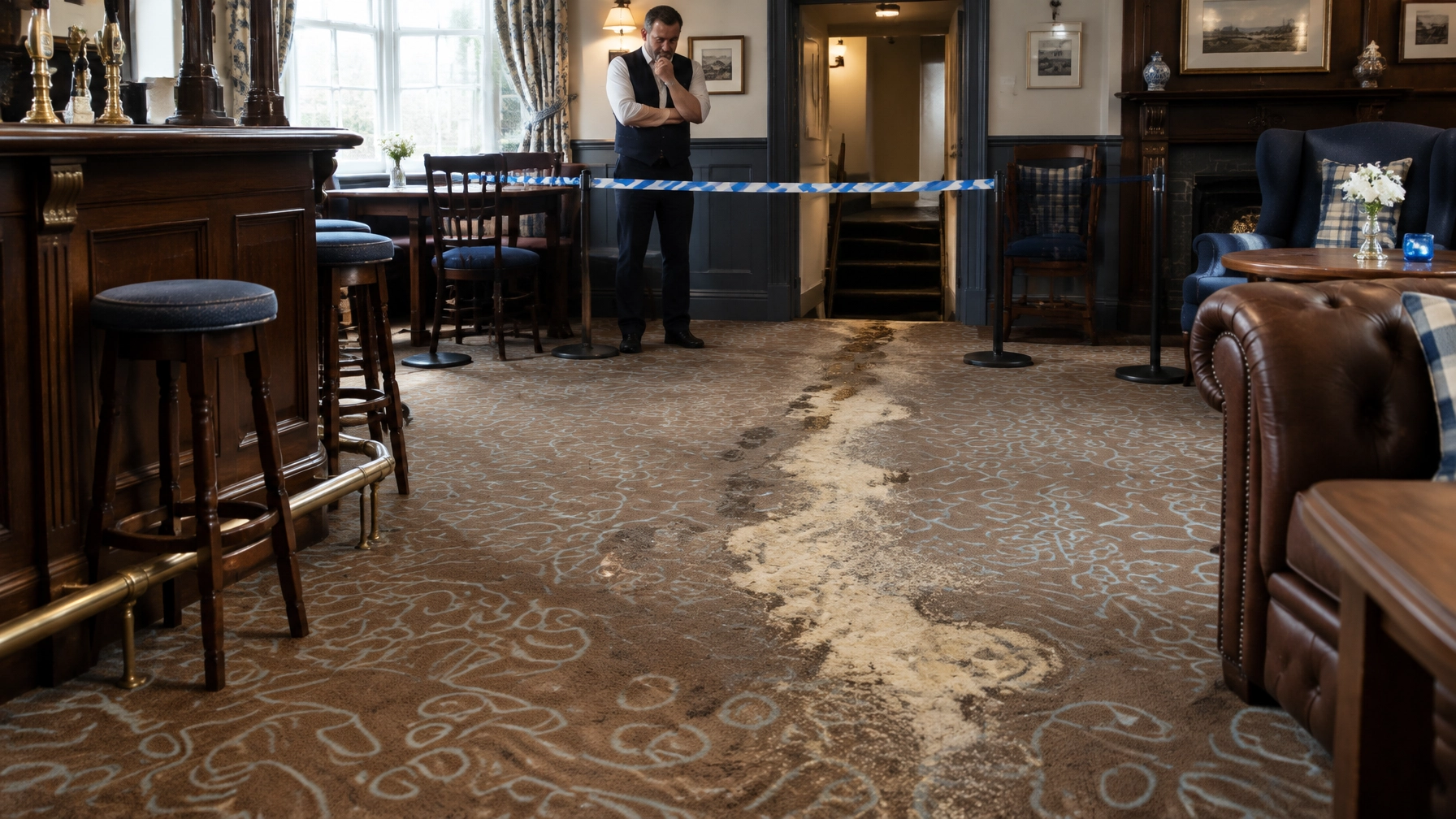
The weekly beer-line clean was meant to be routine. The cellar team had done it countless times. Then someone noticed a line of wet footprints leading past the bar and all the way into the snug.
The cleaner had travelled further than anyone expected. Down the cellar steps, across the bar area, along the route staff use during service, and onto the carpet. By the time the trail was spotted, a few places looked sticky and dark. Others, once dry, looked pale and oddly yellow.
Cue the group chat. “Is this a cleaning job or a new-carpet job?” “Can we keep the tables in place?” “How long are we supposed to close the snug for?”
Fair questions. Especially when the carpet is part of the pub’s first impression, and replacing it would mean moving furniture, arranging a refit and losing valuable trading space.
There is an important caveat, though. Beer-line cleaners vary. Some are strongly alkaline and formulations differ, so “caustic soda cleaner” alone doesn’t prove what has happened to a carpet. The product label and safety data sheet matter. So do the carpet fibre, dye and backing. A precise assessment is needed before anyone can say whether the mark is residue, colour loss, fibre damage or a combination.
Residue or colour loss? They are not the same problem
A dark, dull or sticky-looking track may involve leftover cleaning product or soil caught in residue. The IICRC notes that detergent or soap residue can attract soil and contribute to rapid re-soiling. A mark that looks dirty is not automatically permanent damage.
A pale patch tells a different story. If colour has been stripped or changed, the carpet may be missing dye. Pale can mean missing colour, not dirt. Ordinary cleaning can’t put lost colour back.
That difference matters because the answer to one problem may not suit the other. BD365 assesses the carpet and the incident details before recommending bleach spot repair, carpet dyeing or another option. The exact chemical should be identified first; caustic alkali should not automatically be described as bleach.
It’s also why reaching for a shop-bought spotter can make a confusing mark harder to assess. Products such as Vanish or Dr Beckmann spotters have different formulations. Some oxygen-based products can leave residue or, if used incorrectly, contribute to colour changes. The IICRC carpet care guidance discusses both issues. It is not a reason to assume every product causes damage, or to apply another product over an unknown chemical spill.
First priorities after a chemical spill
Protect people first. HSE’s Catering Information Sheet No 22 covers safe use of cleaning substances in hospitality. It highlights the need for staff training, suitable procedures for spillages and avoiding the mixing of cleaning products. GOV.UK also explains that stronger sodium hydroxide solutions can cause burns to skin and eyes; the risk depends on the amount, form and exposure.
For a pub team dealing with a spill:
- Keep guests and staff away from the affected route and follow your workplace chemical-spill procedure.
- Identify the exact cleaner and provide its label and safety data sheet to the responsible, trained person.
- Record the route and extent of the spill, then arrange an assessment before making flooring decisions.
This is not a guide to treating the carpet yourself. Don’t improvise with another cleaner or assume that a general carpet clean will resolve a chemical spill.
Why the pub carpet deserves a quick, sensible plan
The British Beer and Pub Association’s October 2026 release says the beer and pub sector generated £37.8 billion for the UK economy in 2025. Pubs alone contributed £29.8 billion in GVA and supported 849,600 jobs. The wider on-trade beer category was worth £13.8 billion in 2025, while industry figures put the number of UK pubs at around 44,650. (BBPA sector figures; on-trade beer report coverage; ICAEW hospitality profile.)
Those numbers are national, not a measure of one pub’s snug. But they underline how much these venues contribute, and why keeping them welcoming and open matters. A damaged section doesn’t always mean the whole carpet has reached the end of its life.
Full replacement can mean furniture moving, removal and disposal, refitting and a room out of use. In a pub, that can also mean losing a popular seating area during busy trading hours. If the carpet is suitable for restoration, a targeted repair may be a more practical option than turning one spill into a full refit.
BD365’s carpet restoration services include professional carpet dyeing, carpet recolouring, colour matching and restoration of suitable damaged areas. Where the assessment supports it, the work can be arranged to fit around quieter trading periods. That can avoid closing the snug for days or disrupting the whole space for a replacement installation.
Restoration for pubs, bars and other busy venues
For pub landlords and bar managers, the goal is straightforward: restore what can be restored, without overpromising. BD365 is trusted and used by Dr Beckmann’s and has specialist colour training in the UK from leading restoration experts. Its eco-friendly carpet restoration and dyeing techniques are safe for children and pets when used as intended. The company offers fast turnaround, with UK-wide and Europe coverage.
Hotels with bars, event and function venues, cleaning teams and cellar teams face similar challenges. A spill may cross multiple flooring types or run under furniture. Early photographs and the cleaner’s product details can help establish what needs assessing. The same restore-over-replace approach can also help estate and letting agents, property managers and landlords dealing with damaged floors between tenancies. See BD365’s information on carpet restoration for landlords.
Homeowners may recognise another version of the problem: a pale mark after using a store-bought stain spotter. If you’re searching “carpet color restoration”, that’s the US spelling of what UK customers usually call carpet colour restoration. Either way, where dye has been lost, the solution is colour work rather than simply more cleaning. Find out more about professional carpet dyeing and what bleach spot repair may cost.
Before and after: a second chance for marked carpet
These BD365 examples show separate commercial carpet restoration work. They are not photographs of the fictional pub incident, but they illustrate the kind of visible improvement colour repair can achieve on suitable carpets.

Hotel bleach repair example. The before image shows a pale damaged area; the after shows the repaired carpet.

Hotel corridor example of localised bleach spot repair.

Commercial patterned carpet restoration example.
Restore first. Replace only if it makes sense.
A trail of cleaner through a pub can look alarming, particularly when a pale line appears across a high-traffic room. But the first visible mark doesn’t tell the whole story. Some changes may involve residue; others may involve permanent colour loss or physical damage. The cleaner’s identity and a proper carpet assessment help distinguish them.
BD365 specialises in carpet restoration, carpet colour restoration and professional carpet dyeing, including suitable bleach spot repair. If the carpet is a good candidate, repair may help save the expense and disruption of a full replacement. If it isn’t, you should get an honest answer rather than a promise that every carpet can be rescued.
For a photo assessment, call 0800 1931 365, WhatsApp 07561 700670 or email info@bd365.co.uk. Before ordering a refit, find out whether the carpet can have a second round.