TLDR
Before hiring someone to fix a bleach spot on carpet, ask whether they specialise in bleach spot repair, understand different carpet fibres, can explain their colour matching process and have real before-and-after examples.
A bleach mark is usually colour loss, not a normal stain. Standard cleaning will not simply put the missing colour back. Professional carpet dyeing may restore the damaged area without the cost, waste and disruption of replacing the whole carpet.
BD365 Carpet Colour Solutions provides carpet restoration services for homeowners, landlords, hotels, businesses and professional cleaners across the UK. Send photos for a free initial assessment before you commit to replacement.
You spot it the moment the light catches the carpet.
A pale splash. A yellow patch. A strange white mark near the skirting board.
Perhaps it came from bathroom cleaner. Maybe a disinfectant bottle leaked. Or perhaps somebody had a small cleaning-related accident and decided not to mention it until now.
Either way, the question is the same:
“Can someone actually fix this bleach spot, or am I going to need a whole new carpet?”
The good news is that replacement is not always necessary. But choosing the right professional matters. Bleach damage is not an ordinary stain, and it needs more than a quick spray and a confident thumbs-up.
Here are the questions worth asking before you book.
First, understand what you are dealing with
Bleach usually removes or changes the colour within the carpet fibres. It does not simply sit on the surface like tea, wine or mud.
That is why carpet cleaning alone often cannot fix bleach spots on carpet. Cleaning may remove residue and improve the surrounding area, but it cannot magically return colour that has been stripped away.
Depending on the original carpet, bleach damage may appear white, cream, yellow, orange or pale. On darker carpets, the contrast can be especially dramatic.
The right solution may be specialist bleach spot repair, colour correction or professional carpet dyeing. However, suitability depends on the carpet fibre, condition, original colour and extent of the damage.
That brings us to the questions.
1. “How much experience do you have with bleach damage specifically?”
This is probably the most important question.
Some carpet cleaners also offer colour work. Others specialise in carpet restoration and deal with bleach marks every week. Those are not necessarily the same thing.
Ask:
- How often do you repair bleach spots?
- Do you specialise in carpet dyeing and colour restoration?
- Have you worked on carpets similar to mine?
- Do you repair localised chemical damage, not just ordinary stains?
You want someone who understands that bleach damage is colour loss. If the answer is simply, “We’ll give it a good clean,” that should make your professional alarm bells ring gently.
At BD365 Carpet Colour Solutions, bleach spot repair, carpet dyeing and colour restoration are specialist services. We assess the carpet before recommending the most sensible option.
2. “How will you match the colour?”
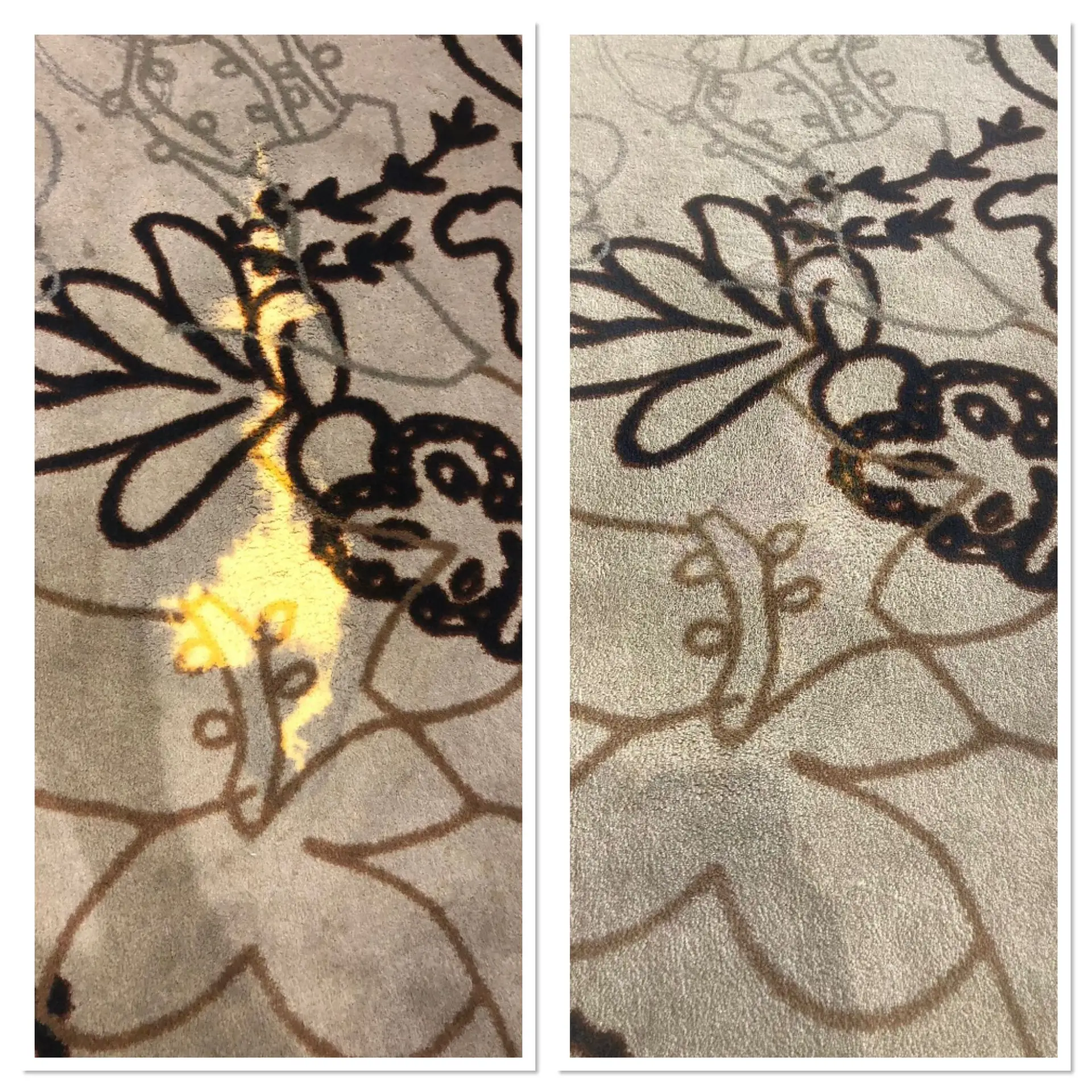
A carpet is rarely just one flat colour.
Even a carpet that looks beige may contain several subtle tones. Patterned carpets add another level of complexity. Sunlight, wear, cleaning and age may also have changed the colour over time.
Ask the technician:
- How do you assess the surrounding colour?
- Do you match the repaired area to the carpet as it looks now?
- Can you work with patterned or multi-toned carpets?
- Will you explain what result is realistically achievable?
Professional colour matching is about blending the repair into the carpet around it. It is not about finding a bottle labelled “brown” and hoping for the best.
A strong repair should look natural in normal lighting and from normal viewing distances. An honest professional will also explain if the result is likely to be a significant improvement rather than completely invisible.
3. “Will you assess the carpet fibre first?”
This is another essential question.
Carpets can be made from wool, nylon, polypropylene and other fibres. They do not all respond to colour restoration in the same way.
Ask whether the professional will assess:
- The likely fibre type
- The condition of the pile
- Whether the bleach has affected the fibre physically
- The original and current carpet colour
- Any previous cleaning or repair attempts
A carpet may be suitable for professional dyeing, suitable only for improvement, or unsuitable altogether.
That is why a proper assessment comes before a confident promise. If someone guarantees an invisible repair without seeing the carpet, the guarantee may be doing a lot of heavy lifting.
4. “What products and processes do you use?”
You do not need a chemistry lecture. You simply need a clear, sensible explanation.
Ask:
- Are the products designed for carpet fibres?
- How do you deal with any remaining chemical residue?
- Are the dyes suitable for my type of carpet?
- Are the products safe for children and pets once the work is complete?
- What aftercare advice will you provide?
Professional carpet restoration should use purpose-made products and controlled application techniques. Depending on the job, this may involve precision tools such as a syringe, airbrush or other specialist equipment.
The process should be careful and localised. It should not involve flooding the carpet with a random household dye and hoping nobody notices.
BD365 uses eco-friendly carpet restoration techniques designed to help suitable carpets last longer, while keeping safety and practical aftercare in mind.

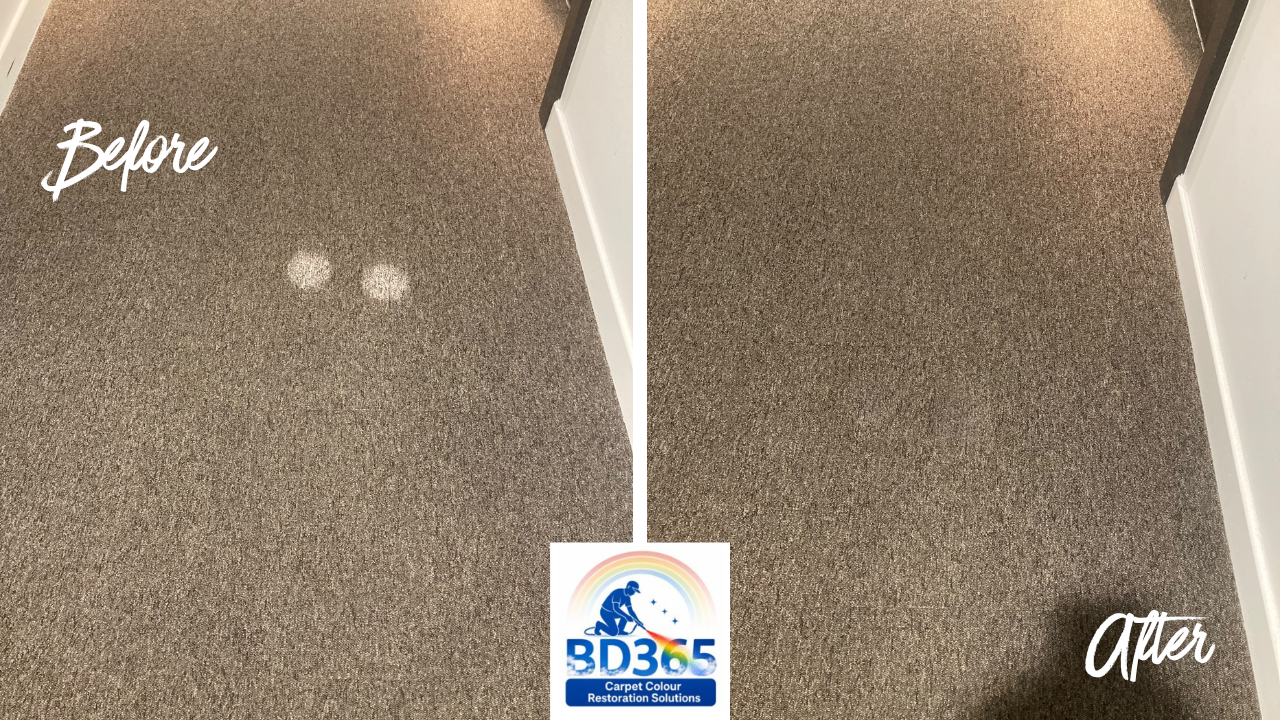
5. “Can you show me before-and-after examples?”
A reputable restoration specialist should be able to show evidence of previous work.
Look for examples involving:
- Bleach spots
- Chemical spills
- Faded areas
- Dark or strongly coloured carpets
- Patterned carpets
- Hotel, office or rental property carpets
A gallery full of spotless carpets is lovely, but it does not tell you much about their ability to repair damage.
You want to see the messy “before” images too. Those are the useful ones. They show whether the professional has dealt with the kind of pale, awkward, very-visible mark currently glaring at you from the floor.
For commercial clients, ask for examples from hotels, offices, corridors or other high-traffic areas if relevant.
You can view more examples of carpet colour restoration before and after work from BD365.
6. “Will you tell me honestly if restoration is suitable?”
This question separates careful professionals from enthusiastic salespeople.
Carpet restoration can be an excellent alternative to replacement. But it is not suitable for every carpet.
Replacement may be the more sensible option if the carpet is:
- Threadbare or badly worn
- Physically melted or damaged
- Heavily contaminated
- Near the end of its useful life
- Unsuitable for dyeing
- Damaged across a very large area
A professional should be willing to say, “I do not think restoration is the best option here.”
At BD365, we assess the fibre, colour, condition and type of damage before advising. Sometimes restoration is worth exploring. Sometimes further testing is needed. Sometimes replacement is the honest answer.
That honesty can save you money.
7. “How long will the repair take?”
Turnaround time matters, especially in busy homes, rental properties and commercial spaces.
Ask:
- How long will the appointment take?
- Will the area need time to dry or settle?
- When can people walk on it normally?
- Do you offer appointments suitable for hotels or businesses?
- Can multiple damaged areas be assessed together?
A small, localised repair may be completed quickly. Larger areas, complex patterns and multiple spots can take longer.
For a hotel manager or facilities team, the right restoration service may also help avoid closing a room, corridor or office area for a lengthy replacement project.
8. “What exactly is included in the quote?”
A clear quote should explain what you are paying for.
Ask whether the price includes:
- Assessment of the damaged area
- Preparation
- Colour matching
- The repair itself
- Any required testing
- Travel or access charges
- Aftercare guidance
- VAT, where applicable
Be wary of quotes that are vague, unusually cheap or based only on the sentence, “It’s just a little spot.”
The size of the mark is only one factor. Fibre type, colour complexity, access, location and the number of damaged areas can all affect the work involved.
BD365 provides initial photo assessments so customers can receive honest guidance before deciding whether to proceed. You can also read more about how carpet restoration costs are assessed.
9. “What happens if I have already tried to fix it?”
Be honest. No judgement.
Perhaps somebody used a marker. Maybe a household dye was applied. Perhaps the area was scrubbed until it became a slightly different texture.
Professionals need to know what has already been used because DIY attempts can make colour correction harder. Markers may leave ink. Household dyes may create uneven colour. Scrubbing may disturb the pile or spread residue into the surrounding fibres.
Do not try to hide the evidence. Tell the technician:
- What caused the original bleach mark
- When it happened
- Which products were used
- Whether the area has been scrubbed
- Whether any dye, paint or marker has been applied
The more accurate the information, the more useful the assessment will be.
For more examples of common mistakes, see the bleach spot repair errors BD365 has seen on Reddit.
10. “Can you assess it from photos first?”
This is especially useful if you are comparing several companies.
Send:
- A clear close-up of the bleach spot
- A wider photograph showing its position in the room
- Photos of every affected area
- A natural-light image where possible
- Your postcode or location
- Details of the carpet fibre, if known
- Information about the cause and any previous treatments
Avoid filters and heavy flash. Your phone is clever, but it should not be allowed to turn a grey carpet into mysterious champagne.
BD365 serves customers across the UK, including homeowners, landlords, property managers, hotels, offices, venues and professional cleaning teams. A photo assessment can help establish whether carpet restoration, bleach spot repair or professional carpet dyeing is worth exploring.
Restore first. Replace only when necessary.
Replacing a carpet involves more than buying new flooring. There may be fitting costs, uplift, disposal, furniture moving, room closures and considerable disruption.
It also creates waste when the rest of the carpet may still have years of useful life left.
That is why restore-over-replace is worth considering. Suitable carpet restoration can:
- Reduce replacement costs
- Minimise disruption
- Extend the life of the existing carpet
- Reduce unnecessary waste
- Help landlords avoid avoidable replacement bills
- Support more sustainable property management
You may see this service described online as carpet color restoration. In the UK, we use the spelling carpet colour restoration. Whatever you call it, the aim is the same: improve the appearance of damaged carpet without automatically sending the whole thing to landfill.
Your bleach spot repair checklist
Before hiring anyone, ask:
- Do you have specific experience with bleach damage?
- How will you match the colour?
- Will you assess the carpet fibre?
- Are your products suitable for children and pets?
- Do you use eco-friendly restoration techniques?
- Can you show before-and-after examples of similar repairs?
- Is my carpet genuinely suitable for restoration?
- What result should I realistically expect?
- How long will the work take?
- What is included in the quote?
- What could change the final price?
- What should I avoid after the repair?
If the answers are clear, realistic and specific, you are probably asking the right person.
Send BD365 a photo before replacing the carpet
A bleach spot can look catastrophic when you are standing over it. But a pale mark does not automatically mean a full-room replacement.
BD365 Carpet Colour Solutions specialises in bleach spot repair, carpet dyeing, professional carpet dyeing and carpet restoration services for domestic and commercial properties across the UK.
Send a few clear photos for a free initial assessment. We will explain whether restoration looks suitable, whether further testing may be needed, or whether replacement is likely to be the better option.
Send photos for a free carpet restoration assessment or contact BD365 via WhatsApp.
No pressure. No false hope. Just honest advice before you replace a carpet that may still have plenty of life left in it.