TLDR: Bleach spots are considered "damage" by UK tenancy deposit schemes, not "fair wear and tear." Replacing a whole carpet for a few spots is expensive and often unnecessary. BD365 specialises in professional bleach spot repair that restores the original colour, costs a fraction of a replacement, and ensures you get your security deposit back.
The heart-sinking moment happens in a flash. A bottle of cleaning product slips, a splash of bathroom bleach hits the hall carpet, or a "hack" to remove a stain goes horribly wrong. Suddenly, you’re staring at a bright white or yellow "ghost" on your floor.
If you’re a tenant, your mind immediately jumps to one place: your security deposit.
In the UK, a single bleach spot can lead a landlord to claim hundreds of pounds for a full carpet replacement. But here is the secret the property industry won’t tell you: you don't always have to replace the carpet to satisfy the deposit schemes.
At BD365 Carpet Colour Solutions, we specialise in professional bleach spot repair that makes these "unfixable" marks disappear. In this guide, we’ll show you how to handle the situation, what the law says about your deposit, and why restoration is the smartest move you can make before handing back the keys.
Why Bleach Spots Are a Deposit Nightmare
In most rental agreements, "fair wear and tear" is expected. This includes things like slight fading from sunlight or the natural thinning of carpet fibres in high-traffic areas over several years.
Bleach is different.
Because bleach is a chemical that physically removes the colour from the carpet fibres, it is almost always classified as avoidable damage. This means if you leave a bleach spot behind when you move out, your landlord has a legal right to claim a deduction from your deposit to rectify it.
The "Betterment" Rule
Here is where it gets tricky. In the UK, landlords cannot practice "betterment." This means they can't use your mistake to upgrade their property at your expense. If you damage a five-year-old carpet, they can’t necessarily charge you for a brand-new, top-of-the-line replacement.
However, they can charge you for the loss of value or the cost of a "reasonable" remedy. If they argue that a patch or a dye job won't work, you could be on the hook for a significant chunk of a new carpet.
The DIY Danger: Why "Fixing It Yourself" Usually Fails
When panic sets in, many tenants turn to Google. You’ll find "hacks" suggesting you use felt-tip pens, acrylic paint, or even hair dye to cover the spot.
Please, don't.
- Wrong Chemistry: Carpet fibres are often nylon or wool. Hair dye is designed for human hair; it won't "take" to carpet the same way and will likely wash out or turn a strange shade of purple or green.
- Permanent Mess: If you use a permanent marker or paint, you are adding a foreign substance to the carpet. While we can fix a bleach spot (which is a lack of colour), it is much harder to fix a bleach spot that has been covered in oily ink or crusty paint.
- The Professional Sniff Test: Landlords and inventory clerks are trained to look for these "dodgy" repairs. If they spot a poorly hidden mark, they are more likely to insist on a full replacement because the "repair" is seen as further damage.

How BD365 Saves Your Floor (and Your Cash)
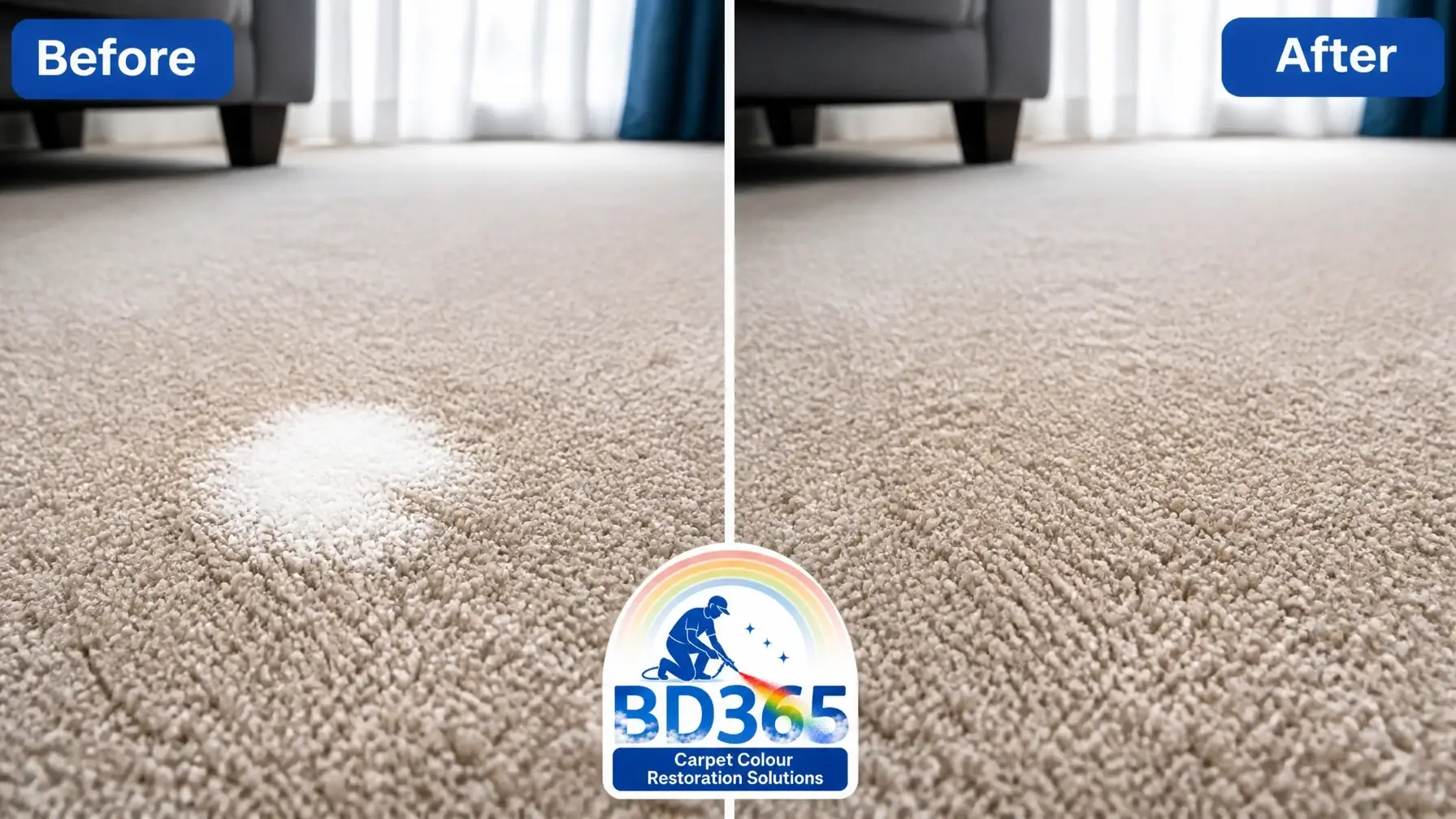
At BD365, we don't just "cover up" the spot; we re-dye it. Bleach doesn't actually "stain" a carpet, it removes the blue, red, or yellow pigments that make up your carpet's specific colour. Our experts use a scientific approach to add those exact pigments back in.
1. Expert Colour Matching
Every carpet colour is a unique blend. A "beige" carpet might actually be a mix of 70% yellow, 20% red, and 10% blue. We use precision tools and years of experience to recreate the exact shade of your carpet, ensuring the repair is invisible to the naked eye.
2. Deep Fibre Penetration
Unlike a pen or a surface stain, our professional dyes are designed to penetrate deep into the carpet fibre. Once set, the colour is permanent, light-fast, and can be walked on or cleaned just like the rest of the carpet.
3. Cost vs. Replacement
Replacing a single room’s carpet in the UK can easily cost between £300 and £800 when you factor in the carpet itself, underlay, gripper rods, and the labour for fitting. A professional bleach spot repair from BD365 is a fraction of that cost.
Furthermore, if you are a landlord or property manager, repairing a spot takes a couple of hours. Replacing a carpet involves moving furniture, taking a room out of commission for a day, and dealing with the waste of an otherwise perfectly good carpet.
The Sustainable Choice
We are big believers in "Restore where possible, Replace only when necessary." In 2026, we all know the environmental impact of sending huge rolls of synthetic carpet to landfill. By choosing bleach spot repair, you’re keeping a perfectly functional carpet in the room and out of the ground.

What to Do Immediately After a Bleach Spill
If you’ve just spilled bleach, follow these steps to give us the best chance of a perfect repair:
- Blot, Don't Rub: Use a white paper towel to soak up as much liquid as possible. Rubbing will fray the fibres and make the damage look worse.
- Neutralise: Mix a tiny bit of dish soap with cold water and blot the area. This helps stop the chemical reaction.
- Do NOT use "Stain Removers": Most supermarket stain removers are acidic and can react with the bleach, potentially damaging the fibres beyond repair.
- Call the Professionals: The sooner you call BD365, the better. We can often give you a quote based on a simple photo of the damage.
Frequently Asked Questions
Will the repair wash out when the carpet is cleaned?
No. We use professional-grade dyes that bond with the carpet fibres. Once the dye has cured, you can steam clean the carpet as usual without worrying about the spot reappearing.
Can you fix bleach spots on wool carpets?
Yes, but wool is more delicate than synthetic fibres like nylon. Bleach can actually "eat" wool fibres if left too long. We recommend professional assessment as soon as possible for wool carpets.
Is the dye safe for my pets and kids?
Absolutely. Our dyeing process uses eco-friendly products that are non-toxic and completely safe for your family once dry.
Does it work on patterned carpets?
Yes! Our technicians are skilled in detailed work. We can restore colour to specific parts of a pattern to ensure the design remains consistent. Take a look at our hotel corridor repairs to see this in action.

Final Thoughts: Don't Let a Spill Spoil Your Move
Moving house is stressful enough without worrying about a £500 deduction for a 2-inch bleach mark. Whether you are a tenant looking to secure your deposit, or a homeowner who wants to restore the beauty of a luxury rug, BD365 is here to help.
We pride ourselves on being the UK’s leading experts in carpet colour restoration. We’ve saved thousands of carpets from the skip and thousands of pounds for our clients.
Ready to save your carpet (and your deposit)?
Contact BD365 today for a free, no-obligation quote. Send us a photo of your bleach spot, and let’s get your floor back to looking like new.