TLDR: Is bleach damage on a wool carpet fixable?
Often, yes , although it depends on the fibre condition, the size of the mark and how deeply the bleach has affected the carpet.
Bleach removes or changes colour. It is not a normal stain that carpet cleaning can simply lift away. On wool and other natural fibres, it may also weaken the pile, so DIY experiments can make an expensive problem worse.
The good news? A bleach spot does not automatically mean full replacement.
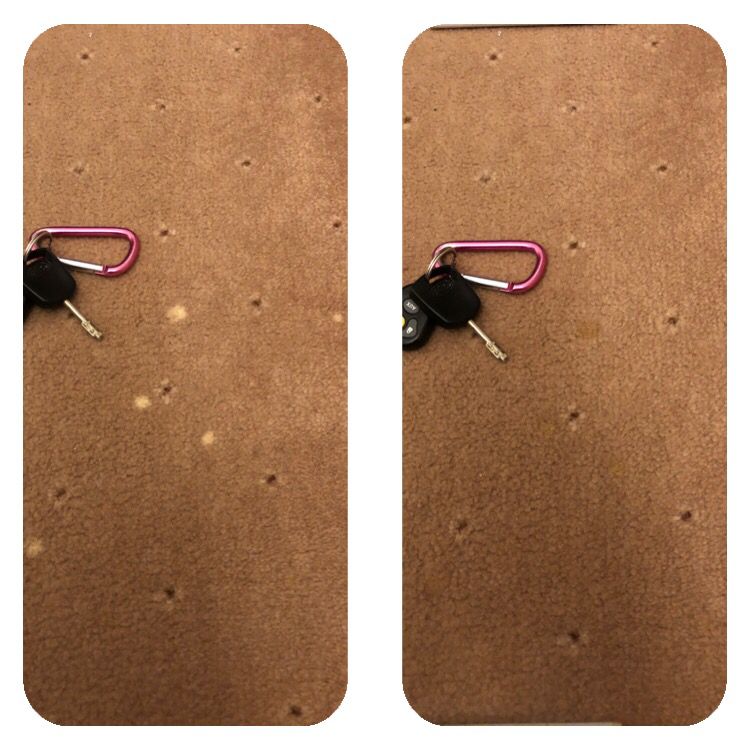
Professional carpet dyeing, bleach spot repair and colour restoration may allow a suitable wool carpet to be saved, usually with less cost, waste and disruption than replacing the whole room.
BD365 Carpet Colour Solutions provides honest assessments and UK-wide support for homeowners, landlords, hotels, offices, businesses and property managers. Send us clear photos before you start pricing up a new carpet.
The Reddit debate: “Wool? That’s game over.”
A recent Reddit-style debate about a bleach spot on a real-wool carpet produced the usual split in opinion.
One side said: “It’s wool. Replace it.”
The other side said: “Find a matching piece and patch it.”
And, naturally, someone suggested a marker, a household dye or another miracle solution that probably belongs nowhere near a premium carpet.
The truth is more useful than either extreme.
A bleach mark on wool is serious. But “serious” is not the same as “impossible”. In many cases, the carpet can be assessed for professional restoration before anyone reaches for the flooring catalogue.
That is particularly important with high-end wool carpets. Replacing one can involve far more than buying a new roll. There may be specialist underlay, professional fitting, furniture removal, disposal costs, room downtime and the difficulty of matching the new carpet to adjoining areas.
So, before declaring the carpet doomed, it is worth asking a better question:
Is the wool still in good enough condition to restore?

Why bleach is different from an ordinary stain
A coffee spill adds colour to carpet fibres. Dirt sits on the surface or works its way into the pile.
Bleach behaves differently. It can strip, alter or oxidise the existing colour. That is why a bleach mark may appear white, yellow, orange, pink or noticeably lighter than the surrounding carpet.
Cleaning can remove residue. It cannot magically put the original pigment back.
This is the key distinction between carpet cleaning and bleach spot repair:
- Cleaning deals mainly with soil, residues and some stains.
- Restoration deals with colour loss or colour change.
- Professional dyeing rebuilds colour where the carpet and fibre are suitable.
Wool needs extra care because it is a natural protein fibre. Strong chemicals can affect more than appearance. They may leave the pile brittle, rough, yellowed, felted or weakened.
That is why a wool carpet should not be treated as a blank canvas for trial-and-error chemistry.
Can wool carpet actually be dyed?
Yes, suitable wool carpets can often respond well to professional carpet dyeing.
That does not mean every carpet is a perfect candidate. A proper assessment considers:
- The type and blend of fibre.
- Whether the bleach is still affecting the carpet.
- The size and shape of the damaged area.
- The original colour and pattern.
- The age and general condition of the pile.
- Whether the carpet has become brittle or physically damaged.
- How visible the repair is likely to be in the room’s lighting.
If the fibres remain structurally sound, a specialist may be able to carefully rebuild the missing colour and blend it with the surrounding pile.
If the bleach has caused major physical damage, dyeing alone may not be appropriate. A localised patch or replacement may be considered instead. If the carpet is already heavily worn or there are widespread damaged areas, complete replacement could genuinely be the better option.
The important point is that the decision should come after assessment, not after panic.
What professional wool carpet restoration involves
At BD365 Carpet Colour Solutions, we do not treat bleach damage like a standard cleaning job.
The process is tailored to the carpet in front of us. It generally involves:
-
Assessing the fibre and damage
We look at the carpet’s condition, colour, pile and the likely cause of the mark. -
Dealing with chemical residue
Any active chemical damage needs to be addressed before colour restoration can be considered. -
Preparing the area safely
The carpet is prepared using an approach suitable for its fibre and condition. -
Matching the colour
This is where experience matters. Wool carpets can contain subtle undertones that are easy to miss under artificial light. Our specialists consider the surrounding colour rather than simply aiming for “beige”, “brown” or “grey”. -
Applying colour with control
The restoration is built up carefully and blended into the surrounding carpet. It is not a case of pouring dye onto the mark and hoping for the best. -
Checking the result
The repaired area is reviewed for colour, texture and overall appearance. We also explain what result is realistic before work goes ahead.
A good restoration should look at home in the carpet, rather than announcing itself every time the light changes.

Why DIY is especially risky on wool
We understand the temptation.
You see a pale mark. You search online. Ten minutes later, you are considering a carpet pen, fabric dye, hair dye or a cleaning product with a very confident label.
Please resist the urge to turn a premium wool carpet into a science experiment.
DIY colour correction can create several problems:
- The colour may be too dark, too bright or the wrong undertone.
- The repair may look worse in daylight than it did indoors.
- Scrubbing can roughen or felt the wool pile.
- More chemicals may deepen the fibre damage.
- A product that works on one fibre may behave very differently on another.
- An amateur repair can make future professional restoration more difficult.
This is not about making the problem sound complicated for the sake of it. Wool is valuable, and colour matching is precise work. A professional assessment is usually much cheaper than correcting a failed DIY attempt : or replacing the carpet because the repair has become more obvious.
Restoration versus replacement: which makes financial sense?
For one isolated bleach spot, replacing the entire carpet can be a remarkably expensive reaction to a localised problem.
Professional restoration may help you avoid:
- The cost of new carpet.
- Underlay and fitting costs.
- Disposal and waste charges.
- Moving furniture and clearing rooms.
- Disruption in a home or business.
- Lost room availability in a hotel or serviced property.
- Difficult conversations over deposits or damage claims.
For landlords and property managers, restoration can provide a practical middle ground between accepting a damaged carpet and billing for a full replacement.
For hotels and offices, it can also reduce downtime. A localised repair may be completed far more quickly than arranging a new carpet, moving furniture, closing a room or managing contractors.
There are no universal guarantees. Every carpet is different. But the cost of fixing a bleach spot is often considerably lower than replacing an otherwise usable carpet.
The sustainability argument is just as strong
A good wool carpet is designed to last.
Throwing it away because of one bleach spot means discarding all the unaffected material as well. That creates avoidable waste and replaces a repairable problem with a full manufacturing, transport and fitting project.
Choosing carpet restoration can help:
- Extend the useful life of the carpet.
- Reduce the amount sent to landfill.
- Avoid unnecessary use of new materials.
- Lower the environmental impact of replacement.
- Preserve a high-quality floor covering that still has plenty of life left.
Restoration is not about pretending every carpet can be saved. It is about checking before replacing.
That principle works for a family home, a boutique hotel, a rental property, an office or a large commercial portfolio.

When replacement may really be the right answer
We are restoration specialists, but we are also realistic.
Replacement may make more sense when:
- The carpet has widespread bleach damage.
- The fibres are brittle, melted, shredded or severely weakened.
- The pile is already worn beyond practical restoration.
- There is extensive staining and damage across the room.
- A patch cannot be matched successfully.
- The carpet is unsuitable for dyeing.
- You were already planning a complete flooring change.
At BD365, we assess first and advise honestly. Sometimes the answer is professional colour repair. Sometimes it is patching. Sometimes replacement is the sensible route.
The goal is not to sell restoration at any cost. The goal is to help you make the best decision for the carpet, the property and your budget.
What to do if the wool carpet has just been damaged
Do not add more cleaning products. Do not scrub the area. Do not test several internet remedies around the mark.
Instead, take clear photographs and note what caused the damage, if known. A close-up, a wider room shot and an image in natural light can help with an initial assessment.
You can send photos to BD365 for a free assessment, contact us directly, or read our guide to bleach spots on wool carpets.
The verdict: fancy fibre does not always mean finished carpet
So, is bleach damage on a wool carpet game over?
Not necessarily.
Wool deserves caution, not a death sentence. If the fibres are still sound, professional carpet dyeing or bleach spot repair may restore the appearance without replacing the whole carpet.
The Reddit answer is therefore:
Do not assume wool means replacement. Do not assume dyeing means a guaranteed miracle. Get the carpet assessed by a specialist.
BD365 Carpet Colour Solutions specialises in carpet restoration, colour matching, carpet dyeing and bleach spot repair for domestic and commercial properties across the UK.
Before you rip up a good carpet, send us a few photos. We will tell you whether restoration is worth exploring, whether testing is needed or whether replacement is likely to be the better option.