TLDR
A tiny bleach drip can look harmless at first. Then the light patch becomes more obvious, the splash turns out to be larger than expected, or a DIY “quick fix” creates an even bigger mark.
Bleach does not leave a normal stain. It removes or changes the colour in the carpet fibre. Cleaning will not simply wash the original colour back.
Professional bleach spot repair, carpet dyeing and carpet restoration can often rescue an otherwise sound carpet. This is usually far more cost-effective, less disruptive and more sustainable than replacing an entire room or corridor.
BD365 Carpet Colour Solutions provides specialist assessments and nationwide UK coverage for homeowners, landlords, hotels, property managers, offices and commercial spaces.
The Reddit story usually starts with three words
“It’s only tiny.”
Someone notices a pale drip beside the bathroom door. A small white dot near the skirting board. A faint orange splash on a dark hallway carpet.
At first, it seems too minor to worry about.
The furniture hides most of it. A rug covers the rest. Perhaps it will fade into the background.
Then daylight hits it.
Or the coffee table moves.
Or a guest spots it in a hotel room.
Suddenly, the “tiny” bleach spot is the first thing anyone sees.
This is a familiar Reddit-style carpet dilemma. The damage looks small in a photograph, but much larger in real life. Sometimes there are several tiny splashes rather than one neat mark. Sometimes the surrounding carpet is in excellent condition, making the colour loss stand out even more.
And sometimes, after a few questionable home experiments, the small bleach spot becomes a very confident-looking blotch.

Why a small bleach spot can look bigger than it is
Bleach damage is visually dramatic because it creates contrast.
A dark brown, navy, charcoal or patterned carpet may lose colour and show a pale white, yellow, cream or orange patch. Even if the affected area is only a few centimetres wide, the eye goes straight to it.
There are several reasons the damage can appear to grow:
1. The original splash may be larger than the visible spot
Liquids do not always land in a perfect circle. A tiny drip can splatter across several fibres. It can also travel into the pile before drying.
What looks like one dot may actually be a collection of small marks around it.
2. Chemical residue may continue affecting the fibres
If bleach or another strong cleaning chemical remains in the carpet, it can continue changing the colour. This is particularly concerning when the spill has reached deeper into the pile or backing.
The result may look like a pale mark that gradually develops more noticeable edges.
3. The rest of the carpet changes around it
Carpets collect everyday soil. High-traffic areas become slightly darker. Sunlight can fade exposed sections. Furniture can protect some areas while leaving others brighter.
The bleach spot does not necessarily need to spread for it to become more noticeable. The surrounding carpet simply develops a different appearance.
4. A “quick fix” can create a second problem
This is where many online threads take a turn.
A marker is suggested. Then fabric dye. Then hair dye. Then someone recommends a cleaning product from the cupboard.
The internet is wonderfully inventive. It is less reliable when your expensive carpet is involved.
A mismatched colour can leave a dark smudge. Over-application can stiffen or mark the fibres. Scrubbing can roughen the pile and make the area reflect light differently.
The original bleach spot may have been repairable. The new colour and texture problem can make the restoration more complicated.
Bleach is not a normal stain
This is the important distinction.
A normal stain adds something to the carpet. Coffee, wine, mud and food leave unwanted colour or residue behind.
Bleach damage does the opposite. It removes or changes the carpet’s original colour.
That is why ordinary carpet cleaning cannot fix it. Cleaning may remove dirt around the damaged area, but it cannot replace pigment that has been stripped from the fibre.
The National Carpet Cleaners Association explains that bleach can permanently lighten carpet and recommends professional help rather than risky DIY colour repairs.
It is also why a bleach spot should not automatically be treated as a replacement emergency.
The colour may be gone. The carpet itself may still be structurally sound.
The expensive mistake: replacing the whole carpet too early
Replacing a single room is rarely just the cost of a new carpet.
There may also be:
- Carpet and underlay
- Uplift of the existing flooring
- Disposal charges
- New gripper rods or door bars
- Professional fitting
- Furniture moving
- Room closures or downtime
- Matching challenges between adjoining areas
- Disruption for residents, guests, staff or customers
For a homeowner, that can turn a small accident into a substantial unexpected bill.
For a landlord, it may create a deposit dispute or delay a new tenancy.
For a hotel manager, it can mean taking a room or corridor out of service.
For a business, it can mean moving furniture, closing off an area and explaining why a perfectly good carpet is being removed because of one pale splash.
The BD365 guide to bleach spot repair costs explains why localised restoration is often a fraction of full replacement. The final price depends on the carpet fibre, damage, colour, access and scale of the work, but the principle is simple:
Do not price the whole carpet until you have checked whether the damaged area can be restored.
What professional bleach spot repair changes
Professional restoration focuses on the damaged colour rather than treating the carpet as a write-off.
At BD365 Carpet Colour Solutions, we assess the carpet before recommending a solution. We consider:
- The likely fibre type
- The original colour and pattern
- The size and shape of the damage
- Whether the carpet is faded or worn
- Whether the chemical damage is localised
- How visible the area is
- The result that can realistically be achieved
Where suitable, specialist colour work can rebuild or refresh the affected area. Careful colour matching helps the repair blend into the surrounding carpet rather than sitting on top of it like an obvious patch.

This is not the same as pouring a bottle of dye onto the carpet and hoping for the best.
It is skilled restoration work. The application has to suit the carpet, the existing colour and the condition of the pile. On patterned carpets, the aim is to respect the overall visual effect rather than create one flat block of colour.
The result will depend on the carpet. Some repairs blend extremely well. Some are a strong visual improvement. Some carpets are not suitable for dyeing at all.
That honest assessment matters.
Why restoration is often the smarter option
It can save money
Repairing one localised area is usually more economical than paying for a complete room, especially when the rest of the carpet has plenty of life left.
It reduces disruption
A professional repair may be completed far more quickly than arranging uplift, delivery and fitting. That matters in busy homes, hotel rooms, offices and rental properties.
It supports sustainability
Keeping a usable carpet in service avoids unnecessary disposal and reduces demand for a completely new floor covering.
Restoration is not about saving every carpet at any cost. It is about avoiding waste when the carpet is still worth saving.
It protects presentation
A pale bleach mark can make a high-end room look neglected. A carefully restored carpet can help return the space to a more consistent, finished appearance.
It offers a realistic route for property professionals
Landlords, property managers and insurance companies often need a practical answer. A specialist assessment can help establish whether localised colour repair is appropriate before a full replacement is approved.
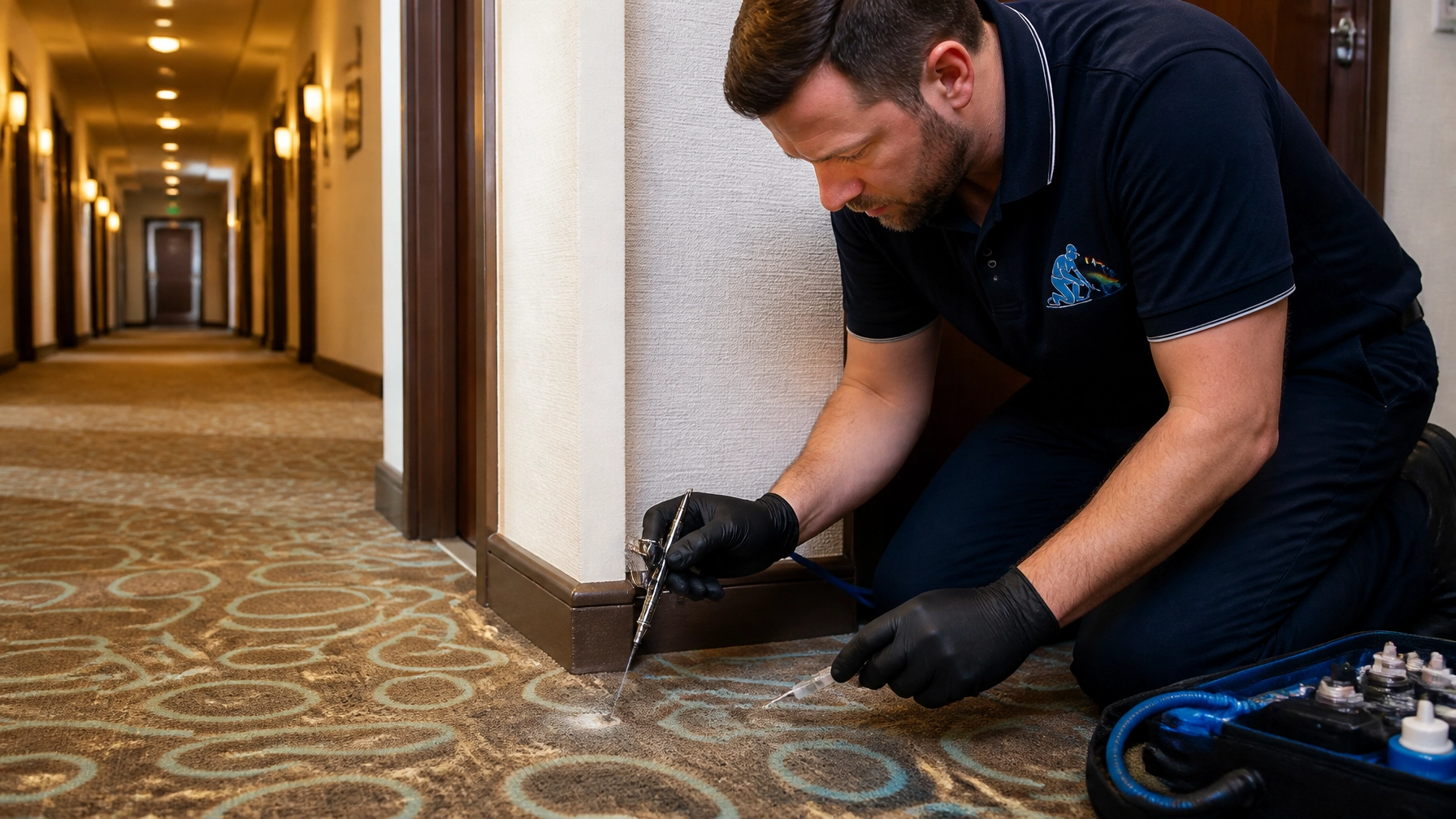
Before and after: the difference is visual
The best way to understand carpet restoration is to see what changes.
In a hotel or residential setting, the carpet may still be sound. The pattern may still be attractive. The pile may still be perfectly usable.
The problem is simply that a few pale chemical marks interrupt the design.

Professional carpet restoration is designed to reduce that interruption. It can help the repaired area sit naturally within the wider carpet, rather than drawing attention every time someone walks past.
That visual impact can be significant. Guests notice presentation. Tenants notice damage during inspections. Homeowners notice the same mark every time they enter the room.
When replacement may genuinely be better
Restoration is not magic, and BD365 will not pretend that every carpet can be rescued.
Replacement may be the more sensible option when:
- The carpet is already threadbare or heavily worn
- The damage is widespread
- The fibres have been physically melted or badly damaged
- There are multiple large areas of colour loss
- The carpet is unsuitable for professional dyeing
- The floor covering was due for replacement anyway
That is why BD365 starts with assessment rather than a hard sell. The aim is to give you an honest view of what is possible.
The sensible next step
If you have discovered a “tiny” bleach spot, resist the urge to turn it into a weekend science project.
Avoid adding more products. Avoid aggressive scrubbing. Take clear photographs in natural light, including a close-up and a wider image showing where the damage sits.
Then send them to BD365 Carpet Colour Solutions for a free first assessment.
The team provides specialist bleach spot repair, carpet dyeing and carpet restoration advice for homes, hotels, landlords, offices, venues and property portfolios across the UK.
You can send photos through BD365’s photo assessment service, read the carpet restoration FAQs or contact the team on:
- Freephone: 0800 1931 365
- WhatsApp: 07561 700670
- Email: info@bd365.co.uk
Nationwide UK coverage means help is available whether the spot is in a family living room, a rental property, a hotel corridor or a busy commercial building.

A tiny bleach spot does not automatically deserve a giant replacement bill.
Sometimes, the carpet does not need replacing. It needs its colour restored by someone who knows exactly what they are looking at.