
TLDR
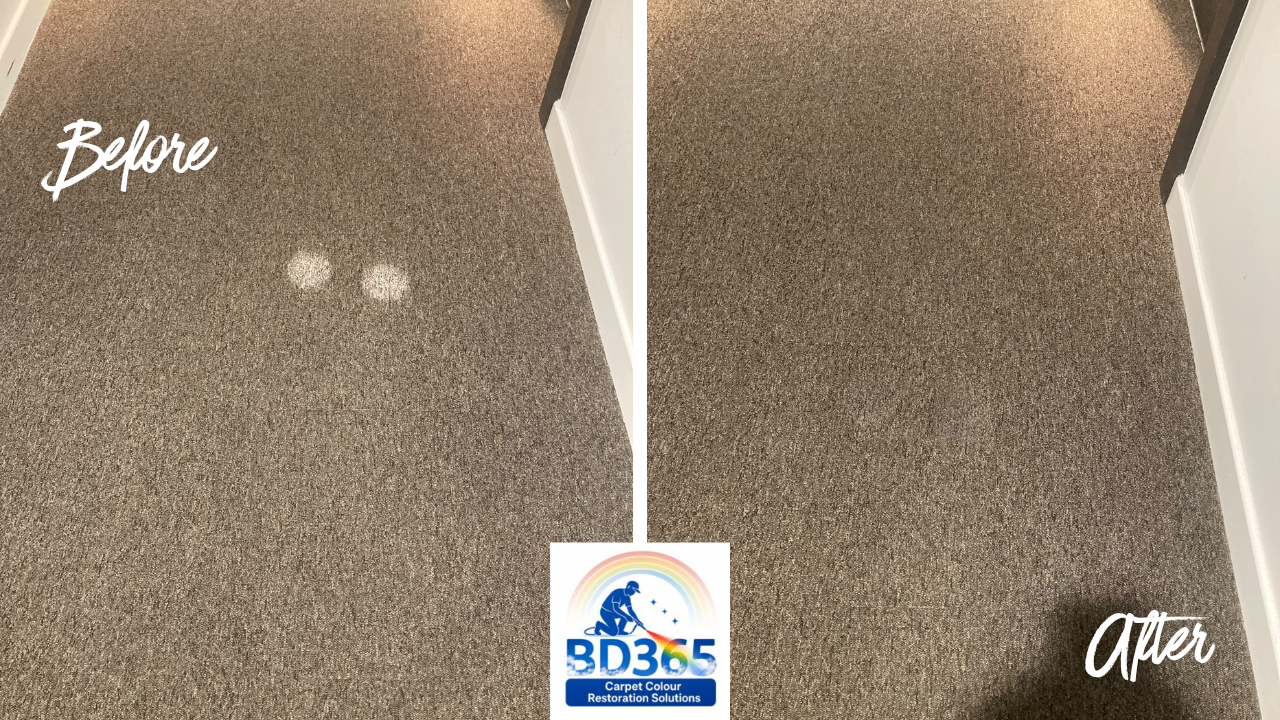
A bleach spot is colour loss, not dirt. Cleaning will not make it disappear, and arguing over whether it was “already there” will not get your rental property ready for its next viewing.
For letting agents, landlords and estate agents, the answer is clear evidence, a fair assessment and fast action. Compare the check-in and check-out photos, avoid charging for damage you cannot prove, and consider professional bleach spot repair, carpet dyeing or carpet restoration before replacing an otherwise usable carpet.
BD365 Carpet Colour Solutions provides specialist, eco-friendly carpet restoration across the UK, with fast turnaround for rental properties, homes, hotels and businesses. Send photos for a free assessment before ordering a replacement.
The nightmare begins with one sentence
“The tenant says the bleach spot was already there.”
It is the sentence that can turn a straightforward end-of-tenancy inspection into a long email chain, a deposit dispute and a delay before the property can go back on the market.
The tenant says the mark was visible at check-in.
The landlord says the carpet was clean and undamaged.
The check-in photo shows half the room, but not the corner where the pale patch now sits.
And suddenly, everyone is looking at a blurry inventory image like it is evidence in a courtroom drama.
The problem is not simply the carpet. It is evidence, fairness and speed.
First, identify the real problem: bleach removes colour
A bleach spot is not an ordinary stain sitting on top of carpet fibres.
Bleach, disinfectant, toilet cleaner, mould remover and some aggressive cleaning products can strip or alter the carpet’s original colour. That is why the damaged area may look white, yellow, orange or noticeably paler than the surrounding carpet.
Cleaning can remove dirt.
It cannot put missing colour back.
This is also why store-bought spotters can sometimes create a much bigger problem. Products such as Vanish or Dr. Beckmann may be useful in the right situation, but if they are used on an unsuitable carpet, left too long or mixed with other chemicals, they can contribute to colour loss or bleaching.
So if someone says, “I got bleach on my carpet and it has stained,” the important question is not which cleaner will remove it. The question is whether the carpet has lost colour and whether professional restoration is suitable.
Read more about the difference between a bleach spot and a regular stain.
What deposit evidence actually needs to show
In a deposit dispute, the key issue is usually whether the landlord or agent can show that the property was in a better condition at check-in than at check-out.
A useful evidence bundle should include:
- The signed or acknowledged check-in inventory.
- Clear, dated check-in photos.
- A check-out report with close-up and wider images.
- A description of the carpet’s condition at both inspections.
- A professional assessment confirming that the mark is consistent with chemical or bleach damage.
- A reasonable quote or invoice for the proposed remedial work.
- Information about the carpet’s age and overall condition.
The check-in photo does not need to be perfect. But it needs to show the relevant area clearly enough to support the claim.
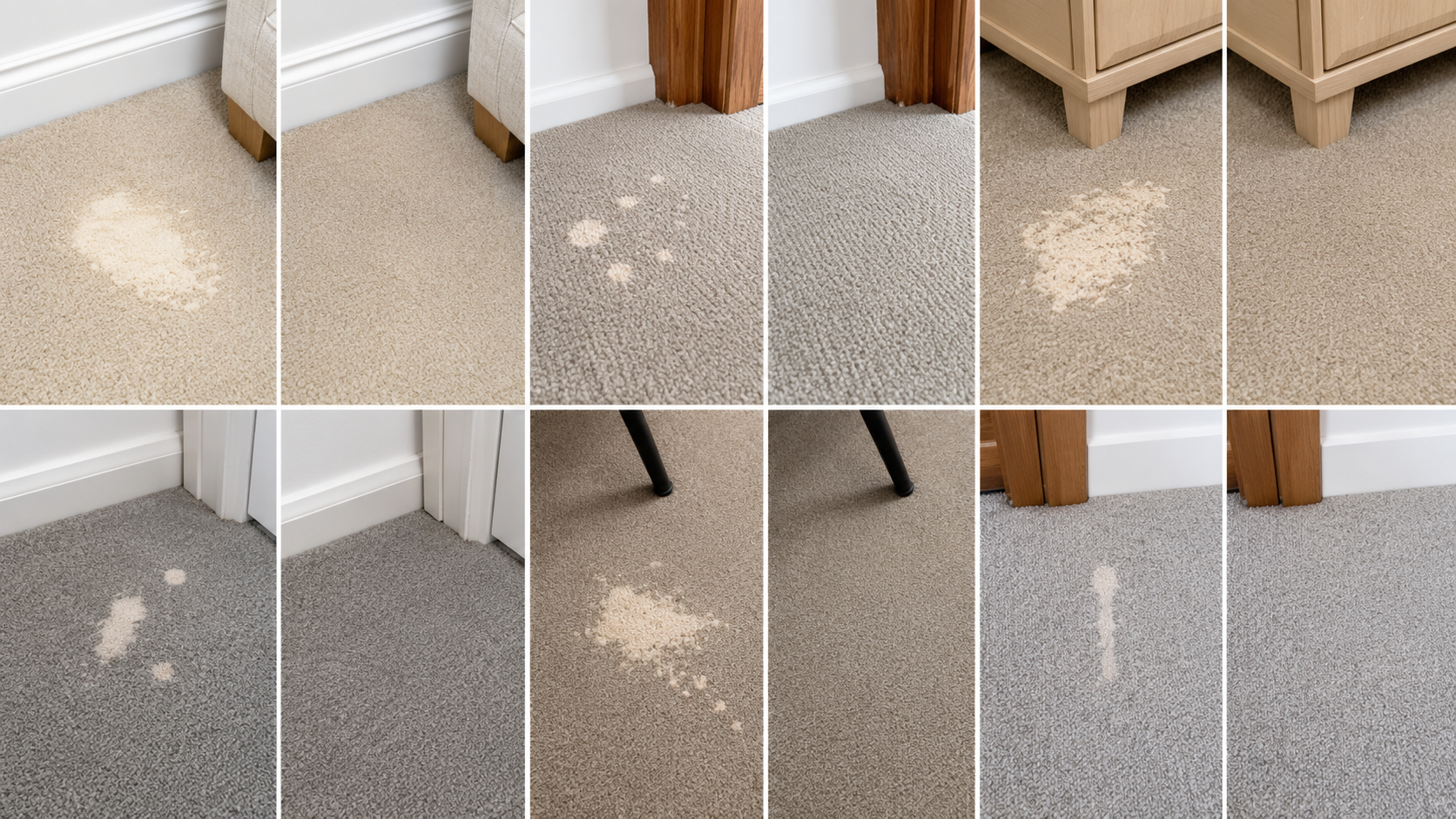
A wide-angle photograph of a living room may prove that there was a carpet in the room. It may not prove that a small bleach mark was absent beside the sofa.
That distinction matters.
If the check-in image clearly shows no pale patch and the check-out image clearly shows new colour loss, the landlord’s position is stronger. If the area is hidden, badly lit or not photographed at all, the deduction may be difficult to justify.
The GOV.UK guidance on tenancy deposit disputes confirms that both sides may be asked to provide evidence through the deposit protection scheme’s dispute resolution process.
A professional restoration quote can help settle the argument
A professional restoration assessment does not magically prove who caused the damage.
It does, however, help establish:
- What the mark appears to be.
- Whether it is consistent with bleach or chemical colour loss.
- Whether restoration is possible.
- What a reasonable repair is likely to cost.
- Whether full replacement is genuinely necessary.
That last point is important.
Landlords and agents have a responsibility to mitigate their loss. Replacing an entire carpet when a localised repair would return it to a reasonable condition may look excessive. It can also create a betterment concern, particularly if the carpet is several years old.
A professional bleach spot repair is often the more proportionate solution. It tackles the actual damaged area rather than turning one disputed mark into a full-room replacement bill.
The letting agent’s end-of-tenancy checklist
A reliable process can prevent many disputes before they start.
At check-in
- Photograph each carpeted room from several angles.
- Include close-ups of entrances, hallways and high-risk areas.
- Move or photograph around furniture where practical.
- Record existing marks, fading, wear and stains in plain language.
- Make sure the tenant has an opportunity to review the inventory.
- Store the original, high-resolution photographs securely.
At check-out
- Use similar angles to the check-in photographs.
- Take both room-wide images and close-ups.
- Photograph the mark beside a recognisable feature, such as a doorway or skirting board.
- Record whether the damage appears to be staining, physical wear or colour loss.
- Avoid relying on one cropped image with no room context.
- Obtain an independent assessment before recommending replacement.
This approach is not about “winning” against a tenant. It is about creating a fair comparison.
Good inventories protect landlords from unsupported claims. They also protect tenants from being charged for damage that was already present.
Restoration can keep the property moving
For agents, the cost of a carpet problem is not limited to the repair invoice.
A damaged carpet can delay:
- Professional photography.
- Viewings.
- Check-in dates.
- New tenant marketing.
- Handover to an owner.
- The return of a property to short-term or serviced accommodation use.
Full recarpeting can involve measuring, ordering, delivery, fitting, furniture removal and disposal. It may also create colour-matching problems if the same carpet is no longer available.
By contrast, specialist carpet restoration can often be arranged as a targeted intervention. BD365 assesses the carpet first, then advises whether carpet dyeing, colour correction or bleach spot repair is suitable.
The result may be a faster and more cost-effective route to getting the property viewing-ready.
It is also the more sustainable option when the carpet still has useful life left in it. Restoring a good carpet avoids unnecessary disposal and reduces the demand for new materials.
The DIY disaster nobody wants in the inventory photos
There is always one well-meaning attempt to “sort it out before the inspection”.
It may involve:
- More bleach.
- A strong bathroom cleaner.
- A supermarket stain remover.
- A marker pen.
- Fabric dye.
- A scrub brush and a great deal of optimism.
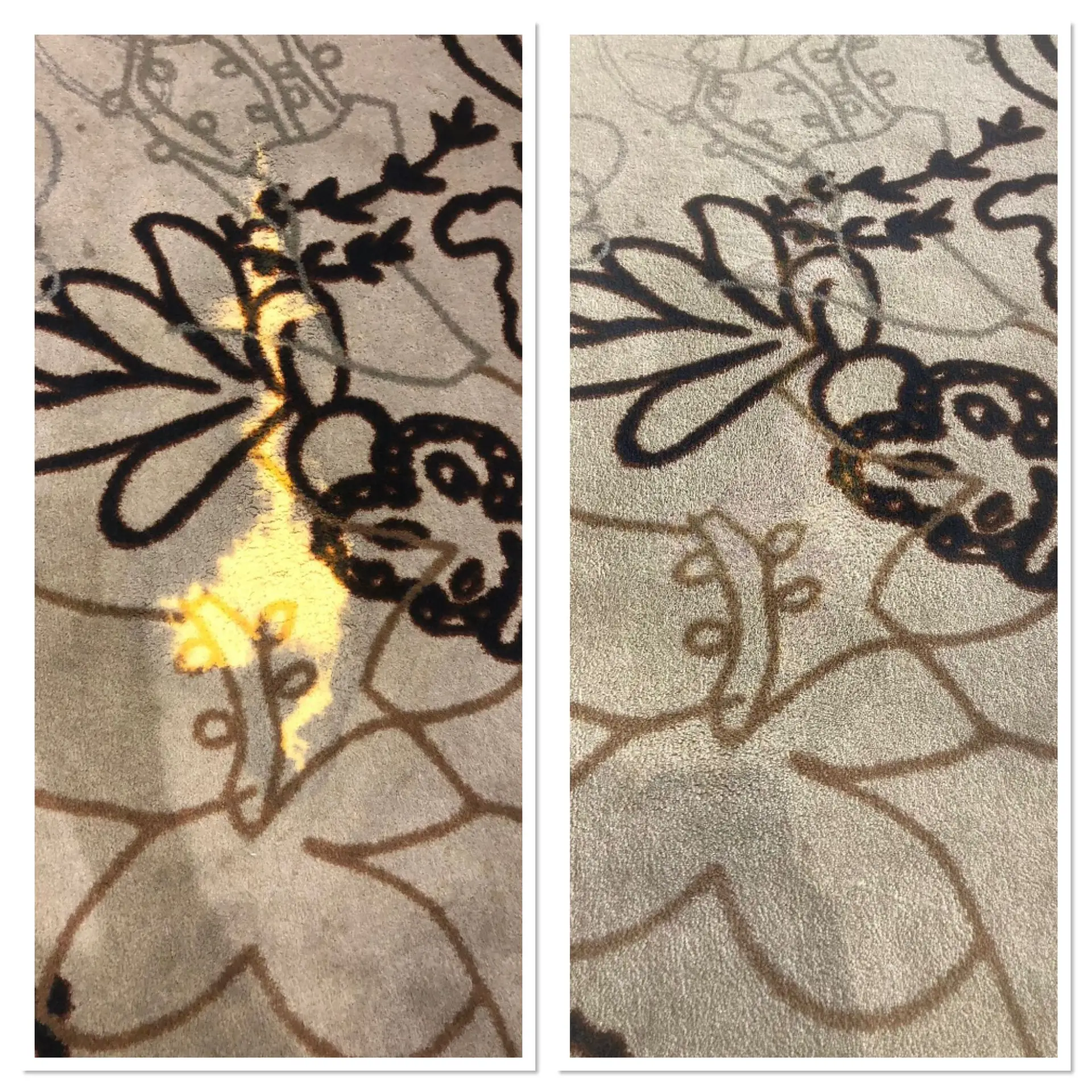
Unfortunately, DIY colour correction can create halos, harsh edges, uneven shades and additional chemical damage. It can also make it more difficult for a professional to assess what happened originally.
For letting agents and landlords, the best advice is simple: photograph the area, record what is known and avoid applying further products before an assessment.
Professional restoration uses colour-matching expertise and specialist techniques. BD365’s eco-friendly approach is designed to be safe for homes with children and pets when used as intended, while delivering realistic advice rather than promising that every carpet can be made perfect.
A quick hotel and commercial parallel
The same issue appears in hotels, offices and serviced accommodation.
A housekeeping report may record a “stain” after a guest checks out. A later inspection may reveal that it is actually chemical colour loss caused by cleaning products, disinfectant or a spill.
That can lead to:
- Guest complaints.
- Arguments over damage charges.
- A room being taken out of service.
- Delays between bookings.
- Unplanned flooring replacement.
Hotels and commercial property teams benefit from the same process: clear condition reports, consistent photographs, professional assessment and targeted restoration where suitable.
BD365 also supports commercial carpet restoration for hotels, offices, venues and property portfolios across the UK.
When replacement genuinely is the right call
Restoration is not always the answer, and an honest assessment matters.
Replacement may be more sensible when:
- The carpet is heavily worn or structurally damaged.
- The fibres have melted, become brittle or lost their texture.
- The damage covers a large proportion of the room.
- There is widespread staining, odour or contamination.
- The carpet is already at the end of its useful life.
- A suitable colour match cannot be achieved.
- The client was planning a refurbishment anyway.
BD365 specialises in carpet restoration, but restoration should make practical and financial sense. The team assesses the fibre, colour, condition and extent of damage before recommending the next step.
Sometimes that means repair. Sometimes it means replacement.
The fastest next step for an agent or landlord
Before ordering a new carpet, send clear photographs for a free photo assessment.
Include:
- A close-up of the bleach spot.
- A wider image showing the room.
- A photograph in natural light, if possible.
- Any check-in and check-out images.
- The carpet’s approximate age and fibre type, if known.
- Your postcode and whether the property is residential or commercial.
BD365 can advise whether bleach spot repair, carpet dyeing or wider colour restoration is worth exploring.
Call 0800 1931 365.
WhatsApp photos to 07561 700670.
Email info@bd365.co.uk.
Or use the free photo assessment form.
BD365 provides UK-wide coverage and fast turnaround for letting agents, landlords, estate agents, homeowners, hotels and businesses.
Because when the tenant says, “It was already there”, the best response is not a heated email.
It is clear evidence, a fair repair plan and a carpet that looks ready for the next tenant.
Restore where possible. Replace only when necessary.