TLDR
That pale patch in the bedroom, hallway or living room may look minor in person, but professional property photography can make it impossible to miss. Flash glare, wide-angle lenses, empty rooms and strong colour contrast all make bleach damage stand out on Rightmove, Zoopla and OnTheMarket listings.
If you are thinking, “I got bleach on my carpet and it has stained”, do not panic , but do not try to disguise it with a marker, furniture or another supermarket stain remover either. Professional bleach spot repair, carpet dyeing and carpet restoration may restore the colour before your photographer arrives.
BD365 Carpet Colour Solutions provides honest, nationwide UK support for estate agents, letting agents, landlords, property managers, hotels and businesses. Send a few photos for a free assessment before you replace the carpet.
The photographer is booked for Thursday. The carpet has other ideas.
The property is nearly ready.
The walls are fresh. The windows are clean. The cushions have been plumped within an inch of their lives. The photographer is booked for Thursday morning.
Then you notice it.
A pale patch in the bedroom. A small white splash in the hallway. A yellowish mark beside the sofa. Perhaps it came from bleach. Perhaps it appeared after a cleaning product was used. Perhaps somebody tried to remove a stain and accidentally removed the carpet colour instead.
Cue the familiar search:
“I got bleach on my carpet and it has stained. What do I do?”
For an estate agent or letting agent, this is not just a flooring issue. It is now a marketing issue.
That small patch will appear in every wide shot, every room photograph and possibly every viewing video. It may even become the most memorable feature of the listing , and not in a charming “period detail” sort of way.
Why carpet damage photographs worse than it looks
A bleach spot can look manageable when you are standing over it. Property photography is less forgiving.
1. Flash creates glare
Camera flash and bright room lighting bounce off the lighter fibres. A bleached area can reflect more light than the surrounding carpet, creating a bright, almost glowing patch.
In person, the colour difference may seem subtle. In a photograph, it can look like someone has dropped a dinner plate of white paint on the floor.
2. Wide-angle lenses show more floor
Professional property photographers use wide-angle lenses to make rooms feel spacious. That is excellent news for the room. It is less excellent news for a pale patch hiding near the centre of the carpet.
More floor in the frame means more opportunity for the damage to be seen.
3. Empty rooms remove the distractions
Furniture can break up the view of a carpet during an ordinary viewing. Once the room is cleared for photography, the floor becomes a large, uninterrupted area.
A pale mark that was partly hidden under a bed or coffee table suddenly has nowhere to hide.
4. Dark and patterned carpets exaggerate contrast
Bleach removes or changes colour. On navy, charcoal, brown, burgundy or patterned carpets, the contrast can be especially obvious.
Even a small splash can look much larger when surrounded by darker fibres or a repeating pattern. It is also harder for a viewer to work out what they are seeing, which can make the mark feel more suspicious.
5. Online viewers zoom in
Potential buyers and tenants do not just scroll past listings anymore. They zoom in, compare rooms and inspect details on large screens.
They may not know that the pale area is bleach damage. They may simply think:
- “Why does that carpet look strange?”
- “Is there damp?”
- “Has the room been poorly maintained?”
- “Will I need to replace the flooring?”
That uncertainty can reduce viewing requests, encourage lower offers or contribute to a longer void period.
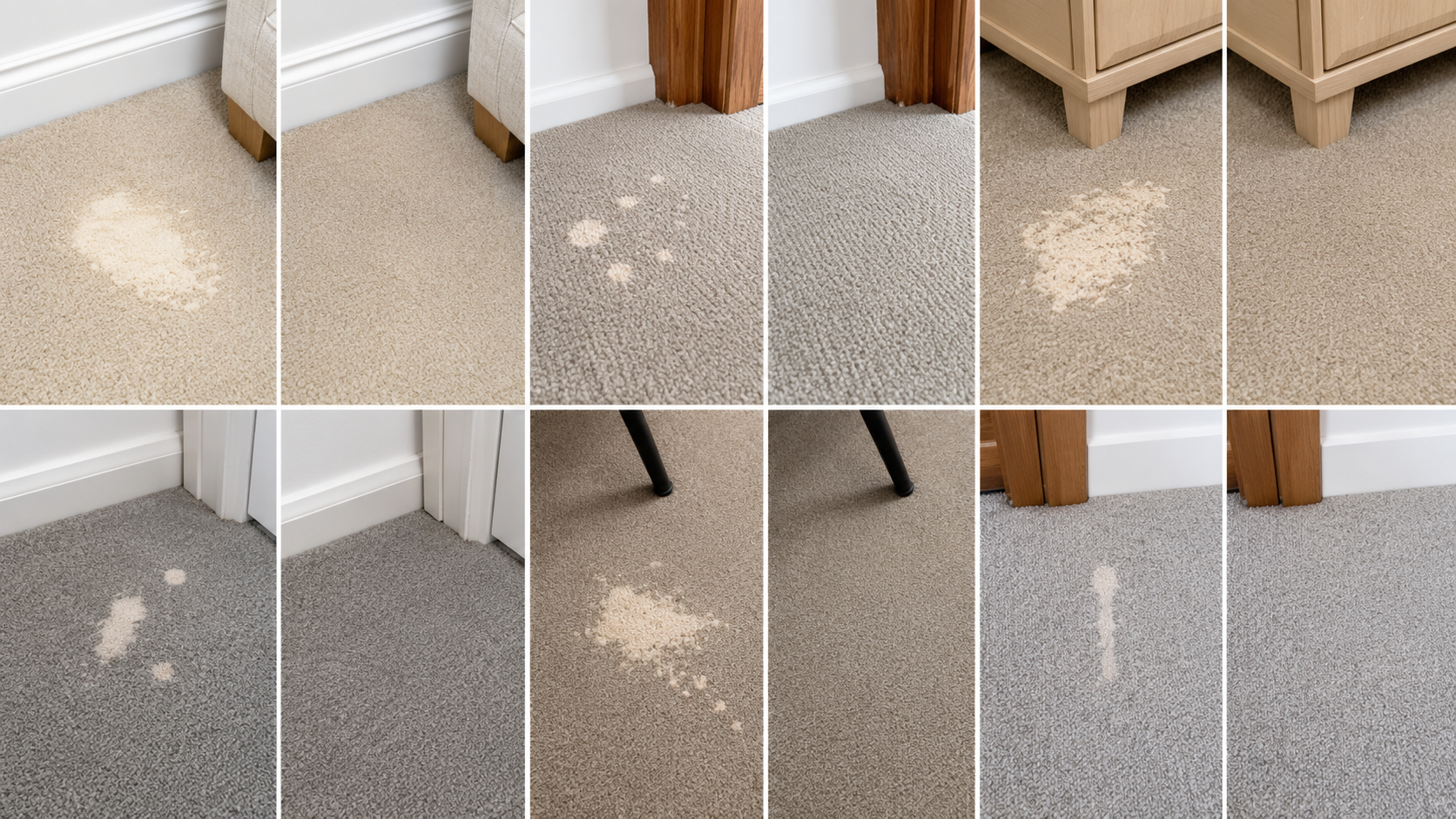
Cropping, hiding and retouching: tempting shortcuts that create bigger problems
When the photographer is arriving soon, several quick fixes can seem appealing.
Crop the floor out
Sometimes a room can be photographed from a different angle. But if the carpet is a significant part of the room, repeated cropping can make the listing feel unnatural.
It also does not solve the problem for viewings.
Hide the patch behind furniture
A strategically placed chair can be useful for staging. It should not be used to conceal a known defect.
The furniture may move during a viewing. A buyer or tenant may ask to inspect the floor. If they discover the patch after seeing carefully arranged photographs, confidence can drop quickly.
Photoshop the damage away
Normal exposure and colour adjustments are part of professional photography. Removing a real carpet defect is different.
Editing the photograph but not repairing the carpet creates a mismatch between the listing and the property. That can lead to:
- Disappointed viewers
- Questions about the accuracy of the listing
- Renegotiation after an offer
- Delayed lets
- Complaints from incoming tenants
- Difficult conversations between agents, landlords and applicants
In short, it is not an honest marketing solution. It is postponing the awkward conversation until the viewer is standing in the room.
Let the new tenant find it
This is not a strategy. It is simply passing the problem along.
If the carpet can be restored before marketing, doing so keeps the listing truthful and gives the property its best chance of making a strong first impression.
The honest fast fix: restore before the marketing shoot
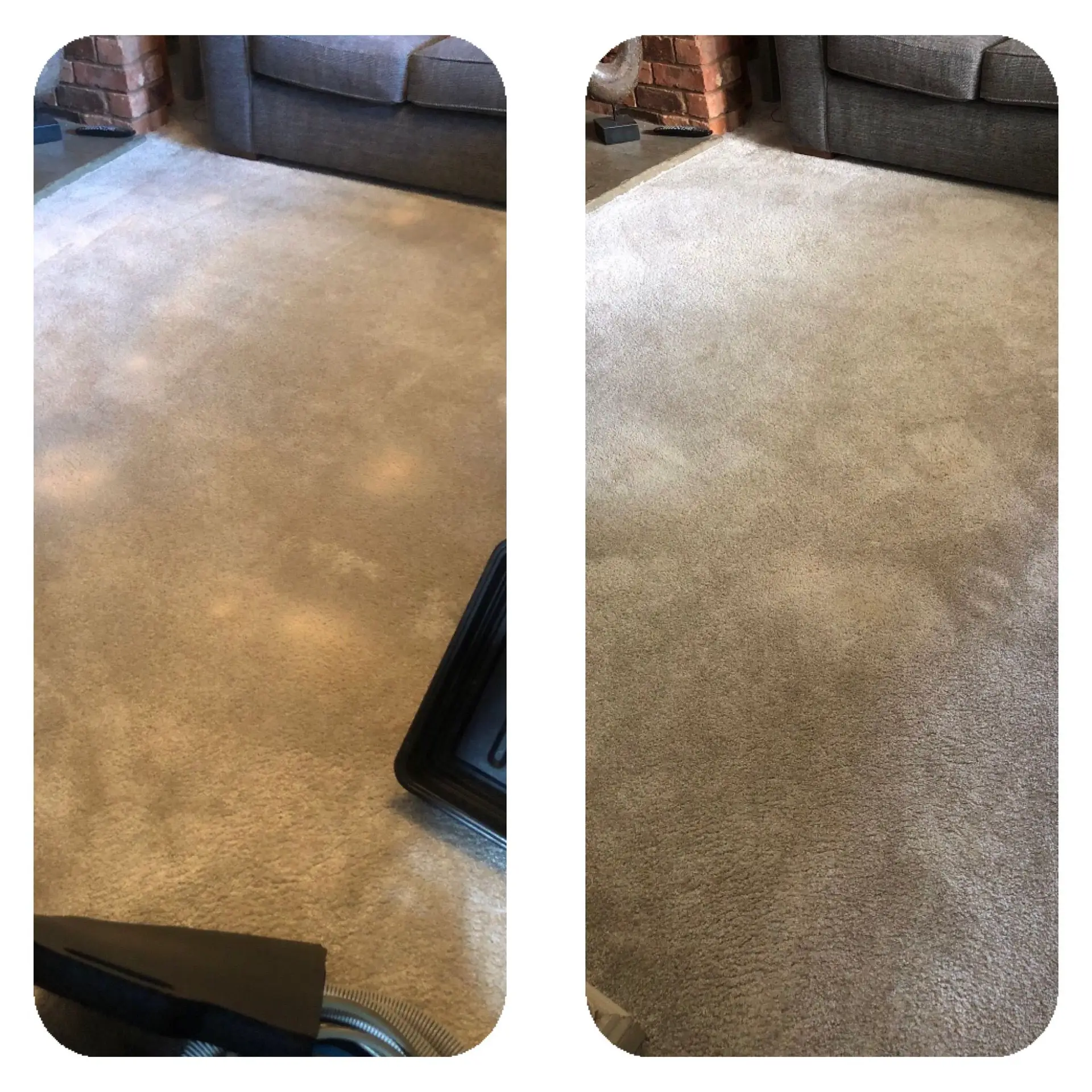
Where the carpet fibre, colour and condition are suitable, professional restoration can be much quicker and less disruptive than full replacement.
BD365 Carpet Colour Solutions specialises in:
- Bleach spot repair
- Professional carpet dyeing
- Carpet colour restoration
- Faded area restoration
- Localised chemical damage repair
- Residential and commercial carpet assessments
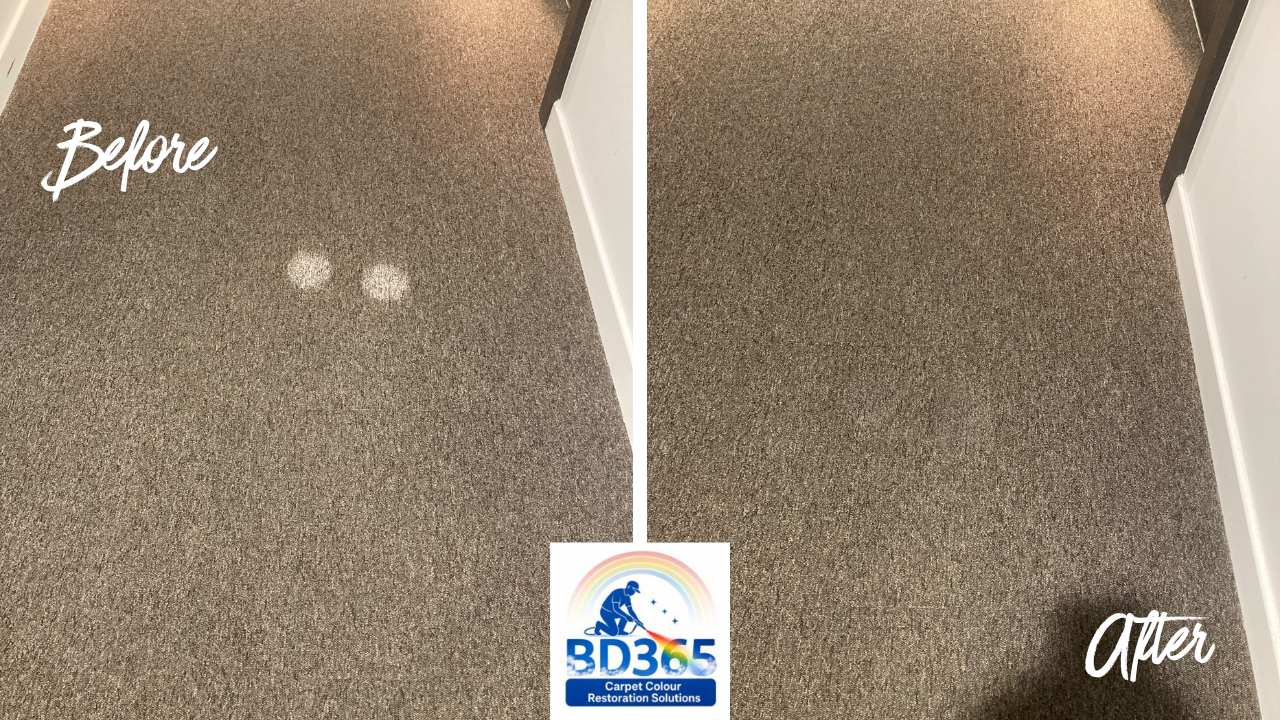
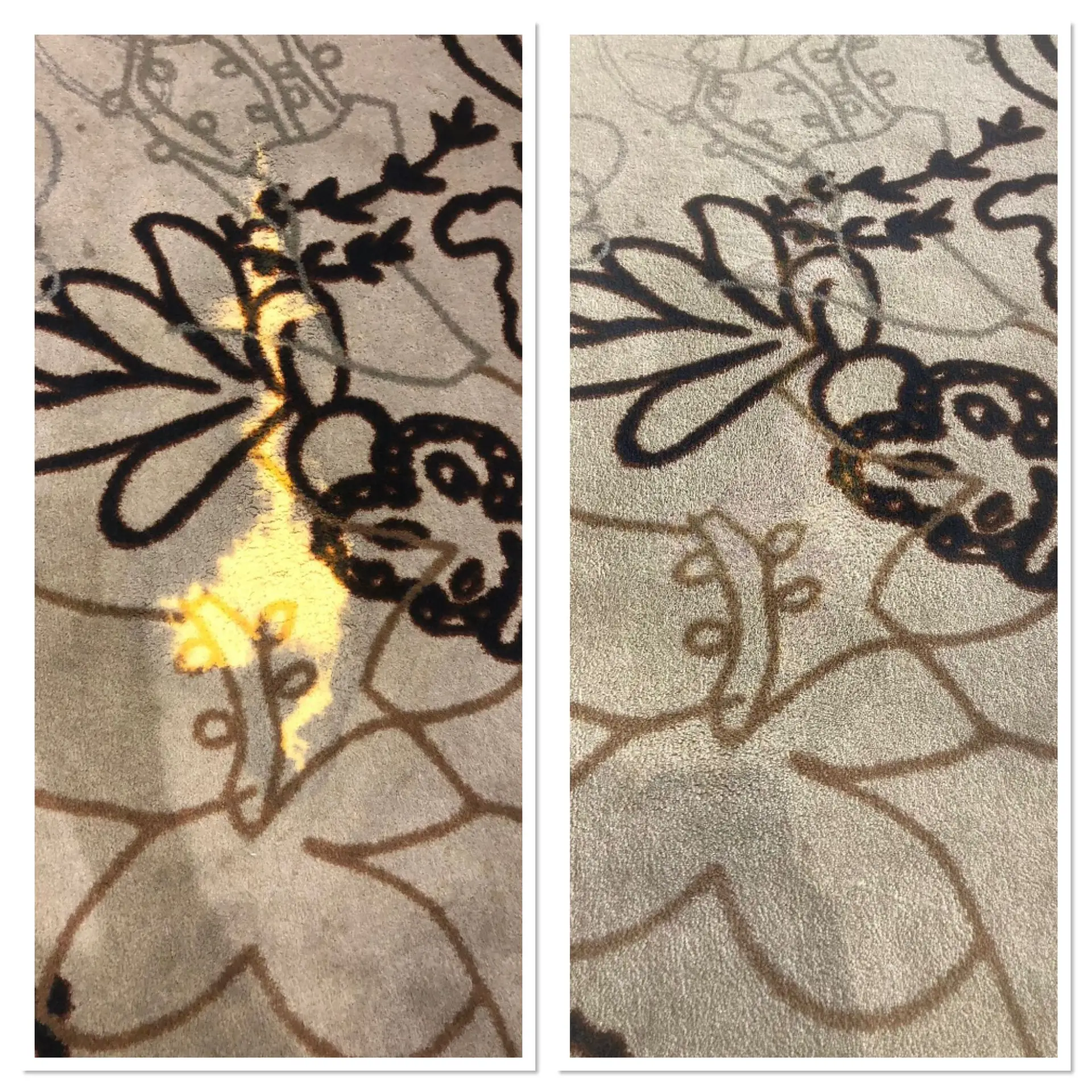
The process is designed to rebuild or correct missing colour rather than simply clean the carpet again. Our technicians use precision tools, including syringes and airbrushes, to apply colour carefully to the affected fibres and blend it into the surrounding carpet.
This matters particularly on:
- Dark carpets
- Patterned carpets
- High-end rental properties
- Hallways and staircases
- Staged living rooms
- Bedrooms photographed from above or across the room
The aim is not to promise that every repair will be completely invisible. The result depends on the fibre, pile, age, colour, wear and extent of the damage. The aim is to give you an honest assessment and the best realistic improvement before the listing goes live.
Our colour restoration process is also designed to be eco-friendly and suitable for homes, rentals and commercial environments where reducing unnecessary replacement matters.
Send photos for a free assessment before booking a new carpet. A close-up and a wider room photograph are usually helpful.
Please do not make the DIY disaster larger
A small bleach spot can become a much more complicated colour correction job after a few well-intentioned experiments.
Common DIY attempts include:
- Marker pens
- Permanent pens
- Shoe polish
- Fabric pens
- Hair dye
- Household paint
- DIY carpet dye
- Repeated scrubbing
- Supermarket stain spotters
Products sold under names such as Vanish or Dr Beckmann may be useful for some stains and fabrics, but they are not automatically safe for every carpet fibre or colour. Used incorrectly, left on too long or applied repeatedly, some stain spotters can lighten carpet or cause further colour loss.
That is when the question changes from “Can this bleach spot be repaired?” to “Can the bleach spot and the marker pen halo be repaired?”
If you have already tried something, do not panic. Simply tell BD365 what was used when you request an assessment. If you have not tried anything yet, stop adding products. Do not attempt to colour-match the patch with something from the stationery cupboard.
The same problem affects hotels and commercial properties
This is not only an estate agency problem.
Hotel rooms, serviced accommodation, show homes, marketing suites, offices and venues rely heavily on photographs. A pale patch in a hotel bedroom can appear in booking images. A mark in a corridor can feature in a commercial brochure. A damaged carpet in a serviced apartment can undermine an otherwise polished presentation.
The commercial consequences can include:
- Lower guest confidence
- Negative comments during inspections
- Room downtime
- Delayed marketing
- Unnecessary replacement costs
- Disruption to furniture and operations
BD365 assesses carpet colour damage for hotels, offices, venues, serviced accommodation and property management teams across the UK. Where restoration is suitable, it may allow a business to keep usable carpet in place while improving the appearance quickly.
When replacement is genuinely the right call
Restore-over-replace is often sensible, but it is not a rule that applies to every carpet.
Replacement may be the better option when:
- The carpet is threadbare or badly worn
- The fibres are physically melted, brittle or damaged
- There are extensive bleach marks across the room
- The carpet has heavy staining as well as colour loss
- The carpet is contaminated or unhygienic
- The fibre is unsuitable for dyeing
- A matching patch or replacement section is unavailable
- You were already planning a full refurbishment
BD365 gives honest advice. If restoration is unlikely to achieve an acceptable result for marketing photographs or a property handover, we will say so.
For a broader guide to likely costs, read How Much Does It Cost to Fix a Bleach Spot on Carpet?.
A quick checklist before the photographer arrives
If you have spotted a pale patch, take these steps:
- Stop using cleaning products on the area.
- Take a clear close-up photograph.
- Take a wider photograph showing the patch in the room.
- Avoid filters and heavy flash.
- Note what caused the damage, if known.
- Contact a specialist before moving furniture or commissioning new photography.
- Arrange restoration, replacement or honest disclosure before the listing goes live.
A repair before the shoot can be cheaper than a delayed listing, a second photography session or a difficult renegotiation later.
Keep the marketing shoot honest with BD365
A pale patch does not have to sabotage the listing.
BD365 Carpet Colour Solutions provides specialist bleach spot repair, carpet dyeing and carpet colour restoration for estate agents, letting agents, landlords, property managers, homeowners and commercial clients nationwide across the UK.
Send photographs for a free photo assessment:
- Free photo assessment
- Freephone: 0800 1931 365
- WhatsApp: 07561 700670
- Email: info@bd365.co.uk
Restore the carpet where possible. Replace it when necessary. But do not let a clever crop or a suspiciously perfect photograph make the viewing experience less honest.