TLDR
A Schedule of Dilapidations lands on the desk, someone has written “replace the entire floor covering”, and a few localised bleach marks have suddenly become a five-figure problem. For estate agents, letting agents, landlords, facilities teams and commercial tenants across the UK, BD365 offers honest assessments for carpet dyeing, bleach spot repair and carpet restoration before a serviceable carpet is ripped out. Our UK-wide team can help establish whether colour matching and restoration could reduce the bill, shorten the handover period and avoid unnecessary waste.
The email nobody wants at the end of a lease
The lease is ending. The property needs handing back. The tenant’s agent is trying to close the file without drama.
Then the Schedule of Dilapidations arrives.
One line catches everyone’s attention:
“Replace entire carpeted floor throughout.”
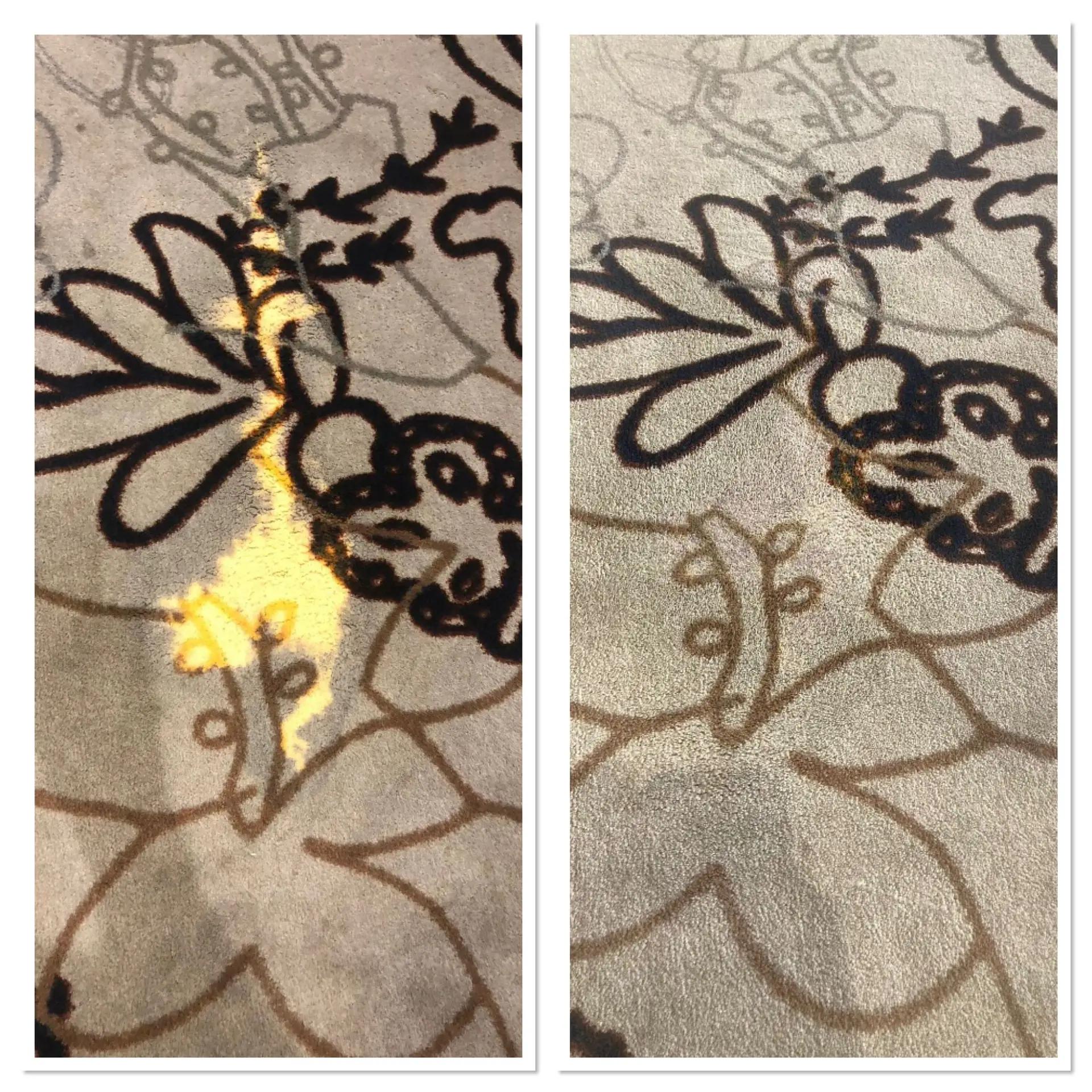
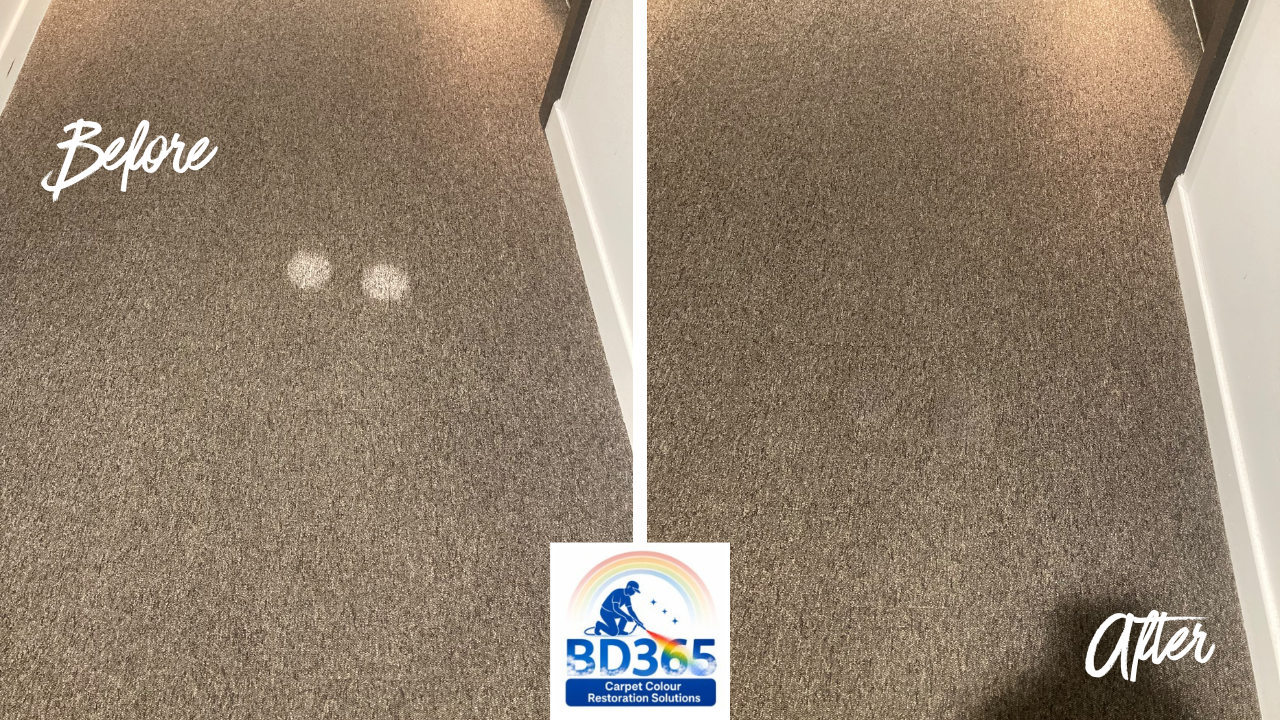
The reason? A handful of pale marks near the kitchenette. A yellow patch by the toilet entrance. A few orange flecks in the corridor. Perhaps some fading beside a glazed office frontage.
The landlord’s agent says the whole carpet must go.
The tenant’s agent says the damage is localised and the carpet is otherwise serviceable.
Somewhere in the middle, everyone is asking:
“I got bleach on my carpet and it has stained. Does that really mean we have to replace the whole floor?”
In many cases, the answer is not as simple as “yes”.
That does not mean chemical damage can be ignored. Bleach marks are generally damage rather than fair wear and tear. However, full replacement is not automatically the only reasonable remedy.
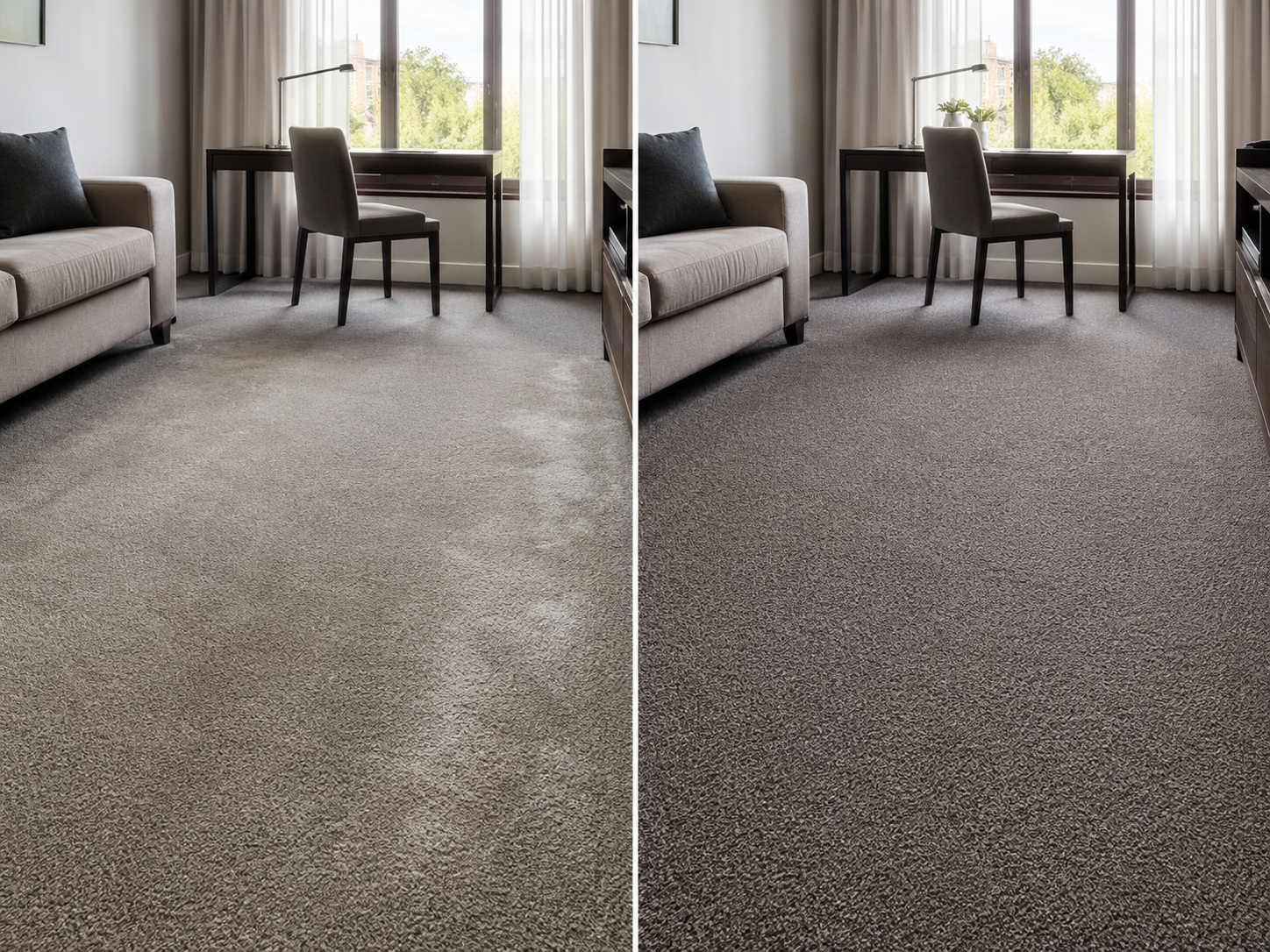
Before the carpet is uplifted, disposed of and replaced, it is worth checking whether professional carpet restoration could provide a proportionate alternative.
Why commercial and rental carpets get bleach marks
Bleach damage in a business premises rarely comes from someone deliberately pouring bleach across the floor. More often, it is the result of routine cleaning, rushed housekeeping or one small accident.
Common causes include:
- Disinfectant or toilet cleaner dripping from a cleaning trolley
- Mop buckets being carried across carpeted corridors
- Chemical spills near washrooms and kitchen areas
- Cleaning contractors using unsuitable products
- Disinfectant overspray
- Previous DIY cleaning attempts by a tenant or occupier
- Hair dye, marker pen or other household products in rental accommodation
- Sun fading beside windows and glazed office frontages
Hotels, serviced apartments and office buildings can be particularly vulnerable. Cleaning teams move quickly. Products are transported from one area to another. A small splash can go unnoticed until the carpet dries.
Then there are the well-meaning stain removers.
Supermarket spotters such as Vanish and Dr Beckmann can contain oxygen-based bleaching agents. These are designed to break down stains, but they can also affect carpet colour when used on an unsuitable fibre, left in contact for too long or applied incorrectly.
Vanish’s own product information states that its fabric spray contains oxygen-based bleaching agents and should not be used on carpets or upholstery. Some Dr Beckmann stain-removing products also list oxygen-based bleaching agents.
“Colour safe” on a laundry product does not automatically mean carpet safe.
Once the colour has been stripped, another round of cleaning will not bring it back.
Bleach damage is colour loss, not dirt
This is the part that causes much of the confusion.
A normal stain adds something to the carpet. Coffee, mud, grease and food leave material behind. Cleaning is designed to remove that material.
Bleach and chemical damage work differently. They can strip, alter or oxidise the original dye in the carpet fibres.
That is why the damaged patch may appear:
- White or cream
- Yellow
- Orange
- Pale pink
- Noticeably lighter than the surrounding carpet
Cleaning can remove residue and soil. It cannot simply wash missing colour back into the fibres.
Our guide on why steam cleaning does not remove bleach spots explains the distinction in more detail. Cleaning and colour restoration are separate services.
This matters during a dilapidations claim. A carpet cleaner may be able to improve the general appearance of the floor, but a chemical mark may still remain because the problem is pigment loss rather than dirt.
The dilapidations argument: damage, wear and tear, and betterment
A Schedule of Dilapidations is a list of alleged breaches of the lease. It may include repair, reinstatement, decoration and cleaning items.
The lease is the starting point. It determines what the tenant agreed to maintain and what condition the property must be returned in.
A localised bleach mark will often be treated as damage rather than ordinary wear and tear. Traffic lanes, general ageing and minor fading may be expected after years of occupation. A toilet cleaner splash is a different matter.
But liability for damage does not automatically equal the cost of installing an entirely new floor.
The landlord’s proposed works and the landlord’s actual recoverable loss are not always the same thing. The RICS guide to commercial dilapidations explains that landlords should not profit from dilapidations payments and that the claim cannot exceed the loss in value caused by the breach.
That is where betterment becomes important.
If a landlord replaces an old, serviceable carpet with a brand-new, higher-specification floor covering, the tenant may question whether the full cost reflects the actual damage. Other relevant questions include:
- How old was the carpet?
- Was it already approaching the end of its useful life?
- Are the marks localised or widespread?
- Does the damage genuinely affect the property’s letting value?
- Is the landlord planning a wider refurbishment anyway?
- Would a professional repair or partial remedy restore presentation?
- Does the lease expressly require replacement rather than repair?
These are matters for the parties’ surveyors and, where necessary, legal advisers. BD365 does not provide legal advice or dilapidations valuations. We can, however, assess the carpet itself and provide practical information about whether restoration may be suitable.
Why restoration may be the sensible commercial option
For an agent or property manager, restoration is not about cutting corners. It is about choosing the remedy that matches the problem.
If the carpet is structurally sound, professional bleach spot repair or colour restoration may help you:
Avoid unnecessary replacement
There is little sense in removing an otherwise usable carpet because of several small areas of colour loss.
Reduce the reinstatement bill
Restoration may cost less than full replacement, particularly where the marks are localised and the existing carpet is difficult or expensive to match.
Deal with discontinued carpet ranges
Commercial carpets are often discontinued by the time a lease ends. Finding an exact replacement can be difficult. Dyeing or colour correction may be a more practical route than replacing an entire connected area.
Shorten the handover period
Full replacement involves uplift, disposal, ordering, delivery, fitting and furniture movement. Restoration may reduce downtime and help a property return to market sooner.
Reduce disruption
Hotels, offices, rental properties and managed buildings cannot always afford rooms or corridors to be out of use while flooring works take place.
Reduce waste
Keeping suitable carpet in service avoids sending large quantities of flooring to disposal. Restoration supports a more sustainable restore-over-replace approach.
BD365 specialises in professional carpet restoration, carpet dyeing, bleach spot repair and colour matching for homes, rental properties, offices, hotels and commercial premises across the UK.
The DIY fixes that turn a small mark into a bigger claim
When a tenant sees a pale patch, the temptation is understandable: make it disappear before the inspection.
That is when the trouble often escalates.
Please be cautious with:
- More household bleach
- Bathroom or toilet cleaner
- Strong disinfectant
- Vanish or Dr Beckmann products not intended for carpet
- Permanent marker pens
- Hair dye
- Fabric dye
- Repeated scrubbing
- Unapproved “carpet repair” kits
A marker pen may disguise a pale mark from a distance while leaving an obvious dark ring close up. Hair dye can create a completely different colour problem. More bleach generally creates more colour loss. None of these approaches provides useful evidence of a professional repair.
If the carpet is likely to be inspected as part of a handover, it is better to document what happened and seek an honest assessment before applying another product.
Our carpet restoration FAQs explain what information helps us assess bleach damage, colour loss and commercial carpet concerns.
When replacement really is the right answer
Restoration is not suitable for every carpet. Sometimes replacement is the honest and practical recommendation.
Replacement may be more appropriate where the carpet has:
- Perished or damaged backing
- Failed seams
- Severe water damage
- Widespread staining or contamination
- Threadbare or heavily worn areas
- Extensive physical damage
- A fibre that is unsuitable for dyeing
- Damage across most of the floor
- A condition that no longer supports a good presentation standard
A successful colour repair cannot rebuild a carpet that is physically failing.
At BD365, we assess the fibre, colour, pile condition, age, damage pattern and overall appearance before recommending restoration. Some repairs blend extremely well. Others are a significant improvement rather than completely invisible. If replacement is likely to be the better option, we will say so.
Get a carpet assessment before signing off replacement
If a Schedule of Dilapidations includes full carpet replacement, or if a landlord, tenant or agent is arguing about a chemical mark, photographs are a useful first step.
Send:
- A clear close-up of each damaged area
- A wider image showing the mark in the room, corridor or office
- Photos taken in natural daylight where possible
- Details of what caused the damage
- Any products already used
- The carpet’s location and postcode
- The fibre type, if known
Use BD365’s free photo assessment section before anyone commits to a replacement bill.
You can contact us on:
- Freephone: 0800 1931 365
- WhatsApp: 07561 700670
- Email: info@bd365.co.uk
A full-floor replacement may ultimately be justified. But a few bleach spots should not automatically turn into a five-figure flooring project without checking the alternatives.
Restore where possible. Replace where necessary. And get an honest carpet assessment before the paperwork becomes an invoice.