TLDR
Autumn condensation brings mould around windows, radiators and bathroom frames. A quick spray of bleach-based mould remover can then leave a pale trail on the carpet below. If you are searching, “I got bleach on my carpet and it has stained”, the important answer is this: bleach usually removes carpet colour rather than adding a normal stain.
For estate and letting agents, fast carpet dyeing, bleach spot repair and colour restoration can often make a property viewing-ready without replacing a whole room. BD365 Carpet Colour Solutions provides specialist restoration nationwide across the UK, helping landlords, agents, homeowners, hotels and businesses restore carpets rather than send them to landfill.
The autumn message every agent dreads
It often starts with a tenant’s message:
“There’s black mould around the window. I bought a £3 supermarket mould spray and cleaned it. Now there’s a pale trail on the carpet underneath.”
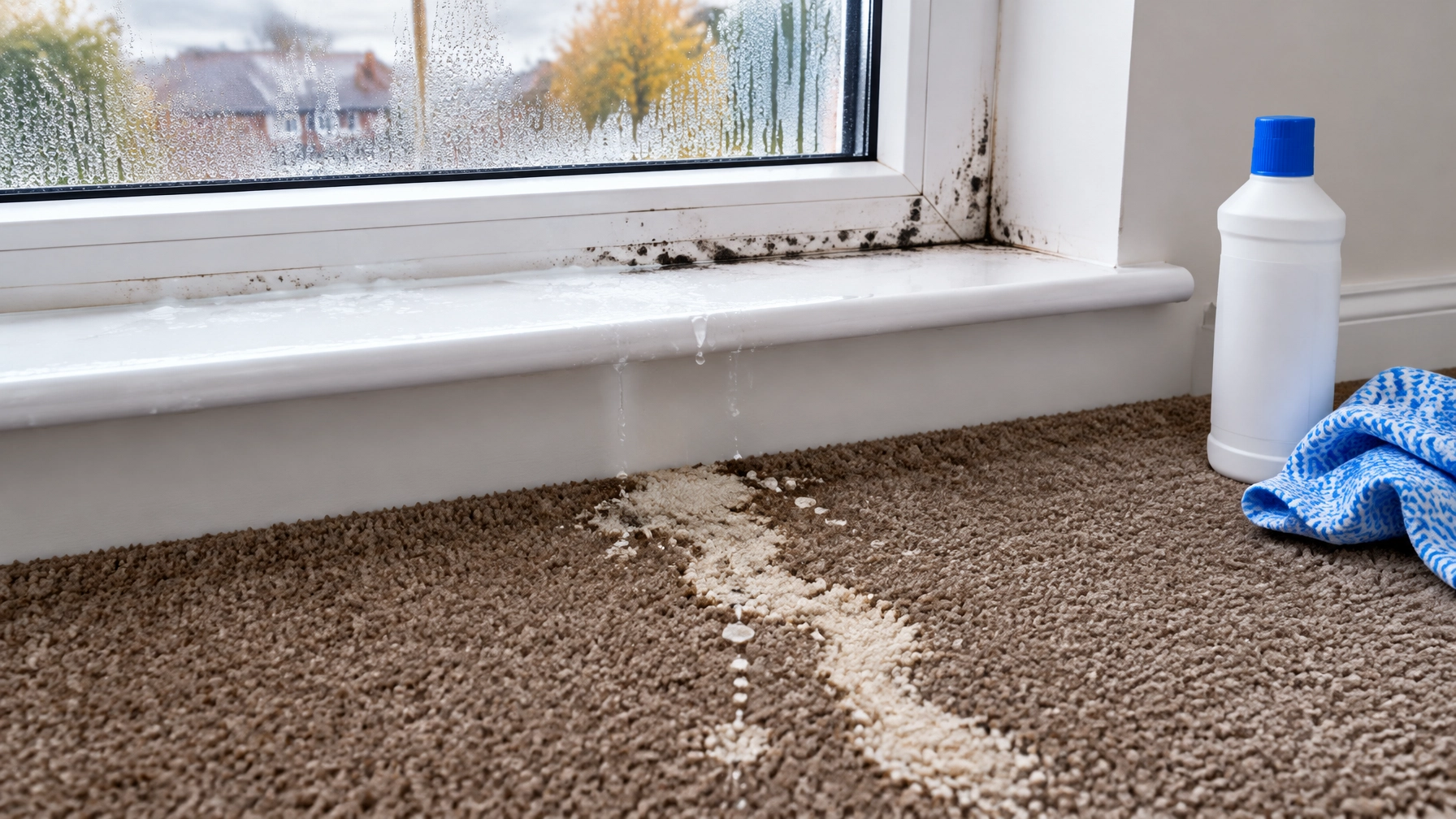
The tenant may have been trying to solve a genuine condensation problem. They may have sprayed the windowsill, window frame or the wall around a radiator. The product has dripped, splashed or travelled as overspray onto the carpet.
Then comes the second message:
“I got bleach on my carpet and it has stained. Can it be cleaned?”
Usually, this is not a conventional stain. It is colour loss.
That distinction matters when you are preparing a rental property for a new tenant, carrying out an autumn inspection or trying to protect the asking price. More cleaning may not solve the problem. In some cases, it can make the pale area larger.

Why mould remover bleaches carpet
Some mould and mildew removers contain sodium hypochlorite, the active chemical commonly associated with chlorine bleach. The product is designed for suitable hard surfaces. It can kill mould and remove dark marks from materials such as tiles, plastic and sealed surfaces.
Carpet is different.
Sodium hypochlorite can oxidise the dye in carpet fibres. In simple terms, it removes the colour rather than lifting dirt from the surface. Once the pigment has gone, cleaning cannot simply put it back.
The affected area may look:
- White or cream
- Yellow or orange
- Pale pink
- A lighter version of the original shade
- Like a narrow drip trail below the windowsill
- Like a soft halo where the liquid spread
Repeated scrubbing can create a wider faded patch. It may push chemical residue further into the pile, roughen the fibres and spread the edge of the damage.
The same risk applies to other products that were never intended for carpet, including:
- Limescale remover
- Toilet cleaner
- Strong bathroom disinfectant
- Patio or outdoor mould sprays
- Some concentrated mildew treatments
Never mix bleach-based products with limescale remover, toilet cleaner, vinegar or other household chemicals. Dangerous fumes can be released. Keep people and pets away from the area, ventilate safely and follow the product label.
The second wave: Vanish, Dr Beckmann and “one more try”
After the mould spray has caused a pale mark, the tenant or cleaner may try to correct it with a shop-bought carpet spotter.
This is where the situation can become confusing.
Products such as Vanish Oxi-Action Carpet & Upholstery and Dr Beckmann Carpet Stain Remover use oxygen-based cleaning chemistry. They are not the same as chlorine bleach, and the carpet-specific versions are designed to remove stains when used as directed.
However, “oxygen-based” does not mean every carpet is automatically colour-safe.
Carpet fibre, dye stability, age, previous fading and the amount of product used all matter. Vanish advises using the correct carpet and upholstery products rather than laundry versions. Dr Beckmann’s guidance also includes testing for colour fastness on an inconspicuous area.
The fair advice is:
- Use only a product specifically intended for carpets.
- Follow the label exactly.
- Test colour fastness first.
- Do not soak or aggressively scrub.
- Stop if the colour changes.
- Tell the restoration specialist what has already been used.
A laundry stain remover, fabric product or repeated application of oxygen-based spotter can leave a second, unevenly lightened area. It may also make accurate colour matching more difficult.
Why it appears just as the weather turns
This problem is seasonal because autumn and winter create the perfect conditions for condensation:
- Windows stay closed for longer.
- Laundry is dried indoors.
- Warm air meets cold glass.
- Moisture collects on frames and sills.
- Mould appears around windows and behind furniture.
- Radiators and nearby walls become cleaning targets.
By the time an agent carries out an autumn tenancy inspection, the mould may have been treated several times. The carpet damage can look like a pale line, a group of drips or a large splash beneath the sill.
It is also highly visible in property photographs. A room can be clean and otherwise well presented, but a bright bleach mark near a window can distract viewers immediately.
What does bleach spot repair cost?
These are guide prices, not fixed quotes. The final cost depends on the carpet fibre, original shade, size and location of the damage, access and the complexity of the colour match.
| Type of restoration | Guide price |
|---|---|
| One small bleach spot | £80–£150 |
| Several spots or splashes | £150–£250 |
| Larger or complex colour restoration | £300+ |
| Full room carpet replacement | Approximately £600–£1,600 |
A pale windowsill trail may be priced differently from one isolated spot. A patterned carpet, wool carpet, heavily faded carpet or difficult-to-access stair may require more assessment and colour-matching work.
For more context, see BD365’s guide to the cost of fixing a bleach spot on carpet.
Why restoration can protect the property budget
If the carpet is otherwise sound, localised bleach spot repair or broader colour restoration may be a much more practical option than replacement.
Restoration can avoid:
- Carpet uplift
- New fitting costs
- Replacement underlay
- Gripper rod and door-bar work
- Furniture moving
- Disposal fees
- Room downtime
- Delays caused by sourcing a discontinued carpet
- Unnecessary landfill waste
For agents, this can help return a property to a presentable standard before viewings. For landlords, it may reduce the temptation to charge for a full replacement when a targeted repair could be suitable. It also gives the property a more sustainable restore-over-replace solution.
BD365 specialises in professional carpet dyeing, bleach spot repair and colour restoration. The aim is not to hide the mark with a temporary pen or patch of household dye. It is to assess the carpet properly and rebuild the missing colour where the fibre and condition make that possible.

Practical checklist for estate and letting agents
When a tenant reports a pale carpet mark below a mouldy window, take a measured approach.
- Photograph the damage in natural daylight.
- Take one close-up and one wider room photograph.
- Photograph the windowsill, frame and surrounding area.
- Ask what caused it and when it happened.
- Record the names of all products used.
- Ask whether the area has been scrubbed or treated more than once.
- Do not authorise full carpet replacement based on one phone photograph.
- Do not ask the tenant or cleaner to keep experimenting.
- Request a photo assessment and quote for the property file.
- Keep the product packaging or photograph the ingredients where possible.
A proper record is useful for inspections, deposit discussions, insurance files and owner approval. It also helps a restoration specialist judge whether the damage is likely to be colour loss, residue, physical fibre damage or a combination.
You can use BD365’s free photo assessment to get an initial view before committing to replacement.
The hotel and commercial version of the same mistake
The residential example has a direct parallel in hotels, serviced accommodation and commercial buildings.
A housekeeping team treats mould around a bathroom window or radiator with a spray. The bedroom carpet is close to the frame. A few drips land unnoticed. The room is then cleaned, photographed or released for booking.
Later, a pale mark appears in the guest’s room photograph.
Now the issue affects more than the carpet. It can mean:
- A room being taken out of service
- Delayed check-in
- A poor impression in booking images
- Guest complaints
- Replacement costs across several rooms
- Disruption to housekeeping schedules
Where the carpet is suitable, commercial carpet colour restoration may be quicker and less disruptive than replacing a complete room or corridor. BD365 works with hotels, offices, landlords, professional cleaners and property managers across the UK.
When replacement genuinely is the right call
Restoration is not a promise that every carpet can be saved. Replacement may genuinely be the better option where:
- The backing has perished.
- Seams have failed.
- The carpet has suffered significant water damage.
- The fibres are melted, brittle or physically breaking down.
- The carpet is threadbare or heavily worn.
- The fibre is unsuitable for the required colour work.
- The affected area is larger than the carpet’s remaining useful life justifies.
- The carpet is already due for replacement for another reason.
BD365’s approach is honest assessment. Sometimes that means dyeing or colour repair. Sometimes it means patching. Sometimes it means replacement.
Restore before you replace
A £3 mould spray can create a much larger property-management problem when it reaches the carpet. But a pale trail beneath a window does not automatically mean the whole room needs a new floor.
Stop scrubbing. Record what happened. Take clear photographs. Get an expert opinion before approving a replacement.
BD365 Carpet Colour Solutions provides professional carpet dyeing, bleach spot repair and colour restoration nationwide across the UK. Our restore-over-replace approach can save money, reduce disruption and keep serviceable carpets in use for longer.
Request a free photo assessment, view the bleach spot cost guide, or contact BD365 directly.
