The short version
A splash of mulled wine can leave a red residue on carpet. Bleach may lighten that red, but it can also strip the carpet’s own colour, leaving a pale halo behind. Salt and white wine won’t undo the stain, and nothing can simply clean colour back into fibres once bleach has taken it out. BD365 provides carpet restoration services nationwide across the UK, including specialist bleach spot repair and carpet colour restoration, so you can explore restoring the carpet before replacing it.
The Bonfire Night carpet incident
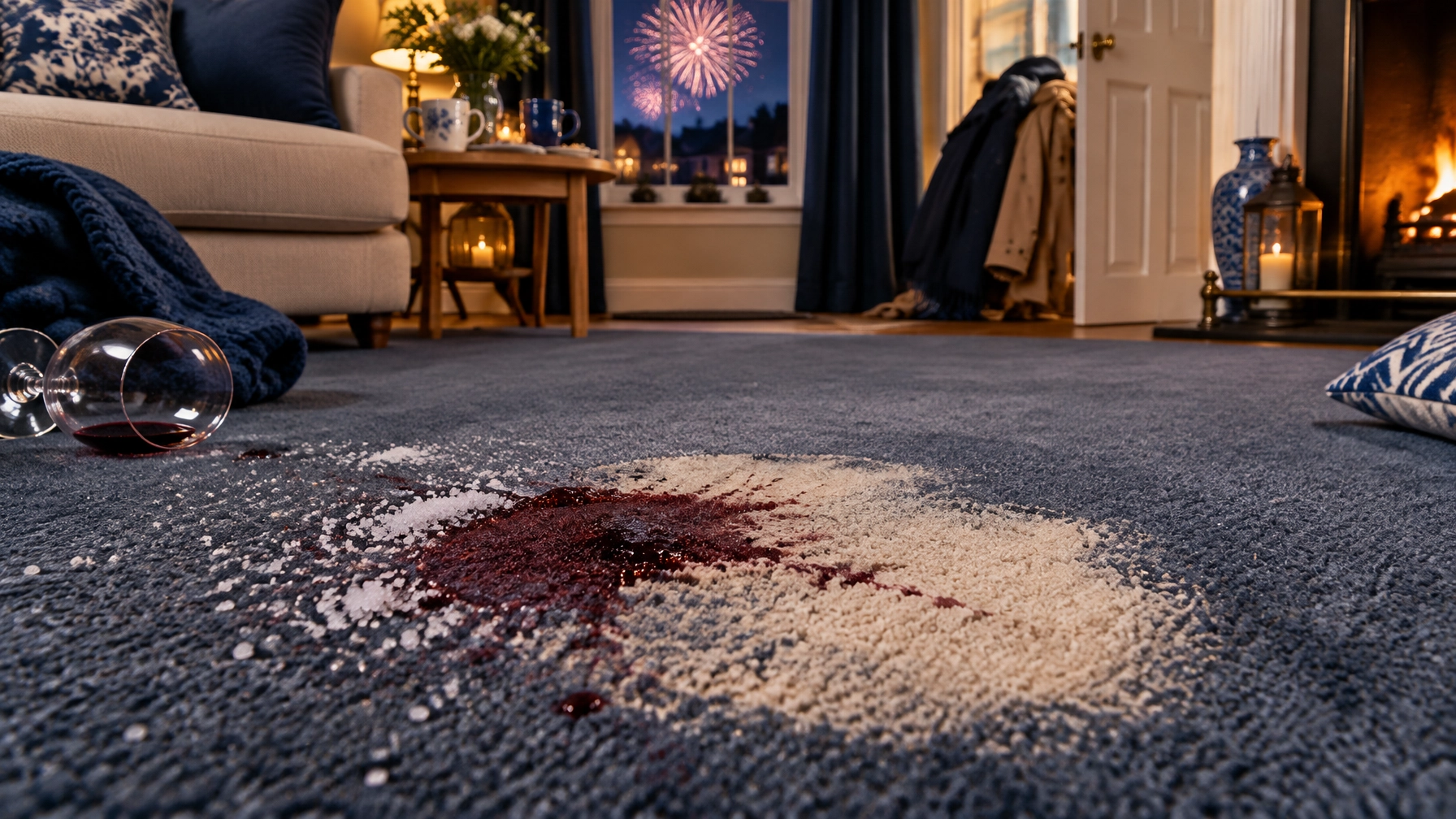
It starts with a door opening, a gust of cold air and someone carrying a steaming mug of mulled wine indoors. An elbow brushes the doorframe. Or a guest catches the edge of the doormat. The mug tips, and a red splash lands on the living-room or hallway carpet.
Cue the familiar panic-search. Somewhere in a Reddit-style comment thread, someone says: “Just hit it with bleach. It strips red out of anything.”
The red seems to fade. A small victory, perhaps? Then the carpet dries, and the pale halo appears. The original problem, wine residue, has been joined by a second one: lost carpet colour.
Mulled wine can make the clean-up feel especially urgent. It is hot, spiced and often sugary. The liquid can spread into a wider area, while sugar may leave a tackier residue. Heat can also help the spill grab the pile more quickly. And if salt has already been scattered over it, there may now be a pale, crusty-looking salt ring around the red mark, followed by bleach applied in a panic.
That’s two different problems, not one stubborn stain. The wine is something left on the carpet. Bleach can damage the colour that is part of the carpet.
Salt and white wine aren’t a reset button
The old “white wine and salt undo red wine” story sounds wonderfully convenient. Sadly, convenience and evidence are not the same thing.
A Guardian report on wine-stain research describes salt and white wine as poor performers in tests on stained fabrics. Salt may absorb some liquid, but it does not reliably remove the red pigments. It can also leave residue of its own. A failed salt rescue can mean a larger, crusty ring to deal with, not a clean carpet.
Prompt, careful blotting is a more sensible first response to a fresh wine spill. Good Housekeeping UK advises blotting rather than rubbing, since rubbing can spread the mark.
But there’s an important limit: cleaning may lift wine residue; it cannot put carpet dye back after colour has been lost. White wine cannot reverse bleach damage. Neither can salt.
Why the red fades, and the carpet goes pale
Bleach does not selectively remove red wine from a coloured carpet. It can alter or destroy the carpet’s existing dye as well. The result may look white, yellow, orange or simply paler than the surrounding area.
The IICRC carpet care tip sheet warns that chlorine bleach can cause moderate to complete colour loss in most textiles. It notes that dyeing or patching may be needed to correct the damage.
Some shop-bought spotters, including certain oxygen-based formulations sold for carpet stains, can also cause colour loss if used incorrectly or left behind. This does not mean every product from a familiar brand will bleach every carpet. Formulations and fibres differ. But products such as Vanish or Dr Beckmann stain spotters are not a colour-restoration service, and a bottle labelled for stains is not automatically suitable for every carpet. Find out more about why a carpet can turn white after bleach and the difference between a bleach spot and a regular stain.
If the mug has just gone over
Keep it simple and avoid turning a spill into a chemistry experiment. These are immediate steps, not a repair method:
- For wine residue, blot and lift it with plain water or a proper carpet spotter, working from the edge inward. If bleach has already been applied, don’t add another product.
- Stop applying bleach. Never mix bleach with anything. Ventilate the area and keep guests, children and pets away from wet chemicals.
- Photograph the damage and get a specialist colour assessment. Include a close-up and a wider view of the carpet.
If you’re unsure whether you’re looking at red residue, colour loss, or both, don’t guess. A proper assessment can help clarify what the carpet needs.
One more Bonfire Night risk: the sparkler
Sparklers belong outside, well away from carpets, coats and drinks. They can reach extremely high temperatures, often quoted at around 1,000–2,000°C, though the exact temperature varies. RoSPA says a sparkler can be around 20 times hotter than boiling water and advises keeping them away from faces, clothing and other people. Put used sparklers straight into a bucket of cold water.
A dropped or waved sparkler indoors can scorch or melt carpet fibres, sometimes leaving a pale-looking or discoloured mark of its own. So: mulled wine stays in the mug, sparklers stay outdoors, and neither gets a bottle of bleach as a follow-up.
Hotels and venues: a quiet mark can mean a costly room closure
In hotel bars and function rooms, a red spill may land during a busy event night and go unnoticed in dim lighting. The pale bleach mark might not show until the lights come up, a guest checks out or a deep clean lifts the residue around it.
That can turn a small-looking patch into a bigger operational headache. Replacing carpet may mean moving furniture, closing a function room or taking rooms out of service. That downtime can mean lost revenue, not just a flooring bill.

BD365 provides hotel carpet repair and hotel carpet restoration for commercial spaces, including specialist dyeing and colour assessment. The hotel repair pictured below shows the kind of localised bleach damage that can be assessed for restoration rather than automatically triggering a full replacement.

For a hotel, venue or facilities team, the aim is practical: assess the carpet, understand the damage and minimise disruption where a repair is suitable. BD365 is trusted and used by Dr Beckmann’s, offers specialist colour training in the UK from leading restoration experts, and provides fast turnaround. Its eco-friendly dyeing techniques are designed to be safe for children and pets.
Estate and letting agents: the November checkout surprise
After a fireworks gathering in a shared house, HMO or student rental, a mark may not come to light until the November check-out. An inspection reveals a pale patch, the tenant remembers the red spill, and the deposit conversation begins.
Before treating every colour change as a reason to replace the carpet, consider whether the rest of it is still in good condition. Professional carpet dyeing may be an option for suitable fibres and damage. BD365 provides carpet restoration for landlords, letting agents and property managers, with photo assessments to help establish whether repair is worth exploring.
Restoring a carpet rather than replacing it can reduce cost, avoid unnecessary waste and keep serviceable flooring out of landfill. The result depends on the carpet, its condition and the damage, so an honest assessment matters. See how much it may cost to fix a bleach spot and visit the BD365 FAQs for more guidance.

For cleaning companies: know where cleaning ends
Extraction can lift wine residue. It cannot put colour back into fibres bleached by chlorine or an oxidising spotter. If cleaning reveals a pale patch, that does not necessarily mean the wine remains; it may be lost carpet dye. A specialist colour assessment can help establish whether bleach spot repair or carpet recolouring is suitable.
Restore first, replace only if needed
At BD365 Carpet Colour Solutions, our work includes bleach spot repair, professional carpet dyeing and broader carpet colour restoration for homes and commercial properties. We specialise in matching colour and restoring carpets affected by spills, bleach and fading.
If the spill has left both red residue and a pale halo, the useful question isn’t “What else can I pour on it?” It’s “Which part is residue, and which part is colour loss?” Cleaning and colour restoration solve different problems.
To discuss a carpet restoration assessment, call 0800 1931 365, message us on WhatsApp, or email info@bd365.co.uk. If the carpet is suitable, restoring it may save money, avoid disruption and spare a perfectly serviceable floor from replacement.