The short version
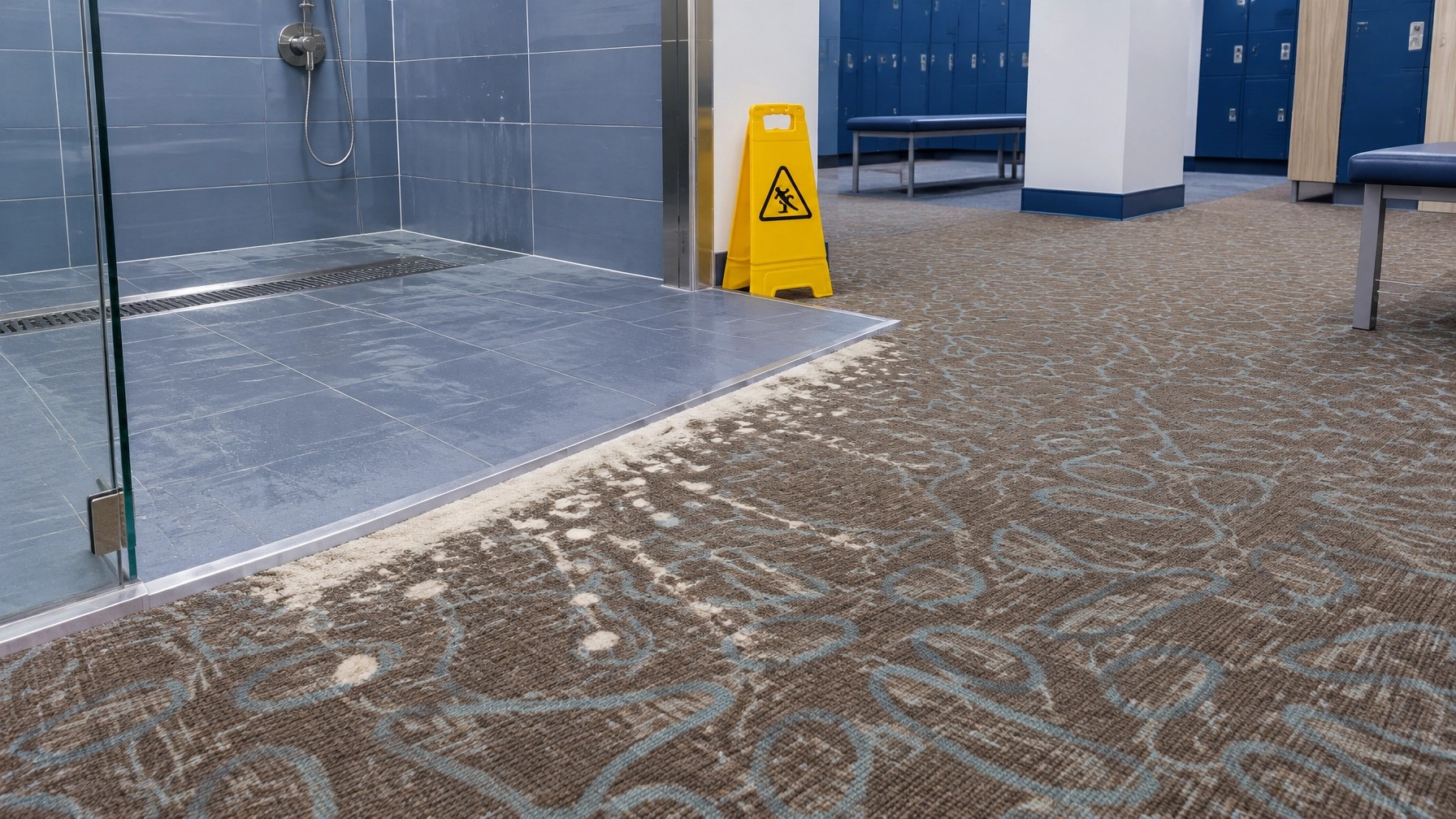
A pale band on changing-room carpet can be the calling card of a nightly bleach rota. A mop carries residue from the tiled shower area over the threshold, then wet trainers, flip-flops and gym bags spread the marks further. Bleach removes carpet colour; it does not leave ordinary dirt that cleaning can wash away. BD365 provides professional carpet dyeing, bleach spot repair and colour restoration across the UK, helping gyms and leisure clubs restore suitable carpets in place rather than replace them.
“Our gym’s changing-room carpet has gone patchy white along the edge of the showers.”
It sounds like a mysterious stain. But if the carpet sits beside a wet room, the overnight cleaning rota may be the real culprit.
The mop crosses the threshold
Picture the last clean of the night. A member of staff mops the tiled shower area with a bleach solution. The mop is wet, the bucket is close by, and the carpet begins just beyond the tiles.
One drip becomes a pale dot. A mop head crosses the threshold and leaves a short, uneven trail. A few wet flip-flops scuff through it. By morning, the room is empty again.
No one sees the damage happen. Members simply notice that the carpet looks odd. Then, weeks later, the pale edge is impossible to miss.

Why the carpet goes pale
Bleach solutions are intended for appropriate hard, non-porous surfaces, such as tiles or vinyl, when used according to the product label. Carpet is different: it is a porous textile. If bleach reaches its fibres, it can strip or alter the dyes.
The IICRC carpet care tip sheet warns that chlorine bleach can cause moderate to complete colour loss on most textiles. The area may turn white, yellow or another pale shade, depending on the carpet and its original colour.
Dilution matters, but it is not a guarantee that carpet dyes are safe. Even a correctly diluted solution can discolour them. A weaker solution may change the severity or speed of the damage; it does not make bleach a carpet treatment.
That pale band is usually dye loss, not dirt. A standard clean can remove soil around it, but it cannot clean missing colour back into the fibres. To improve the appearance, the colour has to be professionally restored where the carpet is suitable.
This is why we distinguish bleach damage from a regular stain. A stain adds something to the carpet; bleach can take colour away. Read more in our guide to the difference between a bleach spot and a regular stain.
It is not one neat spot
In a gym, the mop and bucket can carry bleach residue beyond the shower tiles. Then the traffic does the rest. Damp trainers, flip-flops and gym bags move through the area, making scattered drips look like scuffs or little pale tracks.
That pattern can be a useful clue. A single round mark might suggest a one-off spill. A band along the carpet edge, dotted with smaller marks, may point to repeated transfer at the threshold.
The same kind of colour loss can also follow the use of some store-bought stain spotters. Products and formulations vary, and some cleaning agents can affect carpet colour if they are unsuitable for the fibre or used incorrectly. That does not mean every branded spotter will bleach every carpet. It does mean that a light patch after cleaning is not necessarily dirt left behind. Our guide explains why carpet can turn white after bleach cleaner.
A small patch, a very public problem
Changing rooms are often the first and last spaces members use. A pale, patchy carpet can be seen hundreds of times a day, and the gym may hear about it in reviews, feedback or social posts.
January can make the timing worse. New members arrive, facilities get a closer look, and a tired-looking changing room can undermine an otherwise excellent first impression.
Replacing carpet is rarely just a flooring decision. There may be fitters to schedule, old carpet to lift, equipment or furniture to move, and a room to close while work takes place. That means cost, disruption and potentially lost revenue.
Where the carpet remains in good condition and is suitable for treatment, professional carpet dyeing or carpet colour restoration may offer a faster, less disruptive alternative. BD365 assesses gym carpet repair needs and carries out colour work in place where appropriate. The right solution depends on the carpet fibre, condition, pattern and extent of damage, so we assess before recommending anything.
Hotels, pools and leisure facilities face the same rota problem
Hotel leisure-club changing rooms and pool or spa corridors have the same vulnerable boundary: hard flooring where water and cleaning chemicals are used, carpet just beyond it, and regular foot traffic passing between the two.
A pale edge can affect the guest experience and make an otherwise well-presented leisure area look neglected. Full replacement can mean room closures and disruption to hotel operations. That is why hotel carpet repair and hotel carpet restoration are worth considering before ordering new flooring.
The before-and-after examples below show BD365 restoration work on hotel corridor carpets. They are examples of repair results, not a promise that every carpet or bleach-damaged area will respond in the same way.


A quick note for home gyms and cleaning teams
Homeowners with a pool room, spa area or home gym can encounter the same problem wherever bleach is used on a nearby hard floor and carpet begins at the edge. Keep cleaning chemicals away from carpeted areas and keep children and pets away from wet chemicals.
For cleaning companies, an extraction clean can remove soil, but it cannot put colour back into fibres where dye has been lost. If a carpet looks pale after cleaning, a specialist colour assessment is a sensible next step, not a reason to blame the cleaning team.
Safe cleaning matters too
Carpet damage is only one concern when bleach is used. In enclosed changing rooms, ventilation and safe handling matter for staff and members alike. The HSE guidance on COSHH and cleaners highlights the need to assess cleaning substances, use suitable controls, provide protective equipment where required and keep workplaces well ventilated.
Never mix bleach with descalers or any other cleaning product. The CDC’s bleach guidance also advises ventilation and following the product label. Cleaning staff should be trained on the products they use and the precautions set out in the relevant COSHH assessment and safety information.
What to do when you spot a pale band
If you think the nightly rota is affecting the carpet, pause and get the right people involved. Do not try to dye or chemically treat the carpet yourself.
- Stop the bleach rota from reaching the carpet and review the cleaning process with the responsible manager.
- Keep members and staff away from wet chemicals; ventilate the area and follow product-label and site safety procedures.
- Photograph the marks close-up and take a wider picture showing the shower threshold and affected carpet.
- Arrange a specialist colour assessment before planning a clean, repair or replacement.
Restore where possible, replace when necessary
BD365 Carpet Colour Solutions specialises in carpet restoration, professional carpet dyeing, bleach spot repair and carpet colour restoration. Our team has specialist colour training in the UK from leading restoration experts, and we’re trusted and used by Dr Beckmann’s.
We use expert colour matching to assess whether a damaged area can be improved and explain what result is realistic. Our eco-friendly dyeing techniques are safe for children and pets once the work is complete, and we aim for a fast turnaround to help reduce disruption. Where a carpet is suitable, restoration can keep serviceable flooring in use and out of landfill.
You may also see the term carpet recoloring used by US searchers. The principle is the same: restoring colour rather than treating dye loss as dirt. To understand pricing, see our guide to the cost of fixing a bleach spot on carpet, or browse our FAQs.
For a UK-wide assessment, call 0800 1931 365, message us on WhatsApp, or email info@bd365.co.uk. Send a close-up and a wider photo, and we’ll help you work out whether restoration is worth exploring.
The short version? If your changing-room carpet has gone pale along the shower edge, the mop may have carried bleach further than anyone realised. Stop the transfer, protect the people using the room, and get a specialist assessment before replacing a carpet that may still have plenty of life left.