TLDR
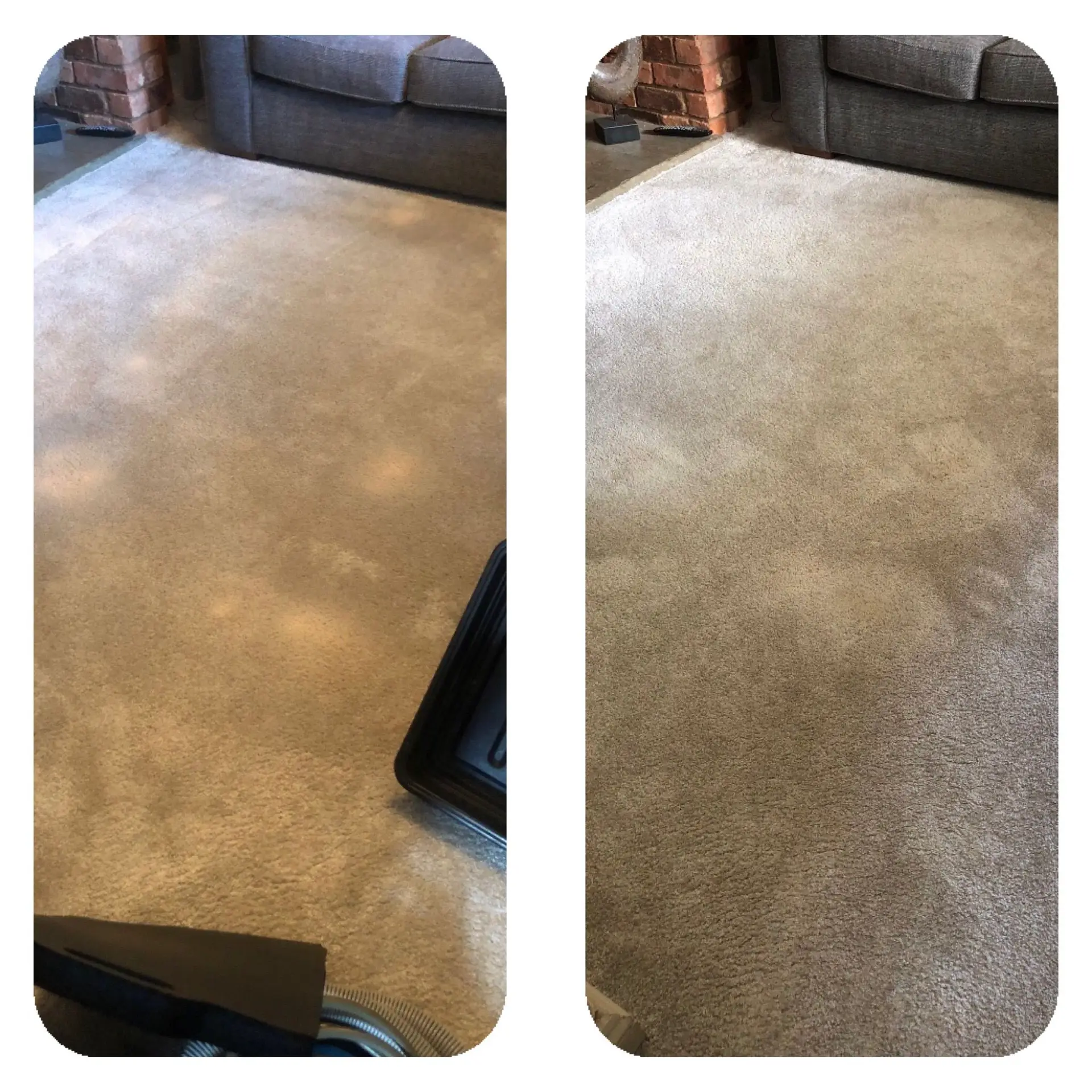
If a carpet has pale furniture outlines, faded walkways or lighter areas near windows, the problem may be colour loss rather than dirt. Sunlight, repeated foot traffic and furniture placement can make a carpet look years older than it really is. Cleaning can remove soil, but it cannot replace pigment that has faded from the fibres.
For letting agents, estate agents and landlords, professional carpet colour restoration can improve a property before marketing, reduce end-of-tenancy disputes and avoid the delay and waste of full replacement. BD365 Carpet Colour Solutions provides specialist carpet dyeing, carpet sun damage repair and carpet restoration services across the UK, with free photo assessments available nationwide.
Hotel managers, business owners and homeowners can also restore suitable carpets for less disruption and often less cost than replacement.
Why does my carpet look older than it is?
A carpet can still be structurally sound while its colour looks tired and uneven.
The most common signs include:
- Pale rectangles where furniture or rugs have been moved
- Darker or lighter outlines around sofas, beds and cabinets
- Faded strips beside windows and patio doors
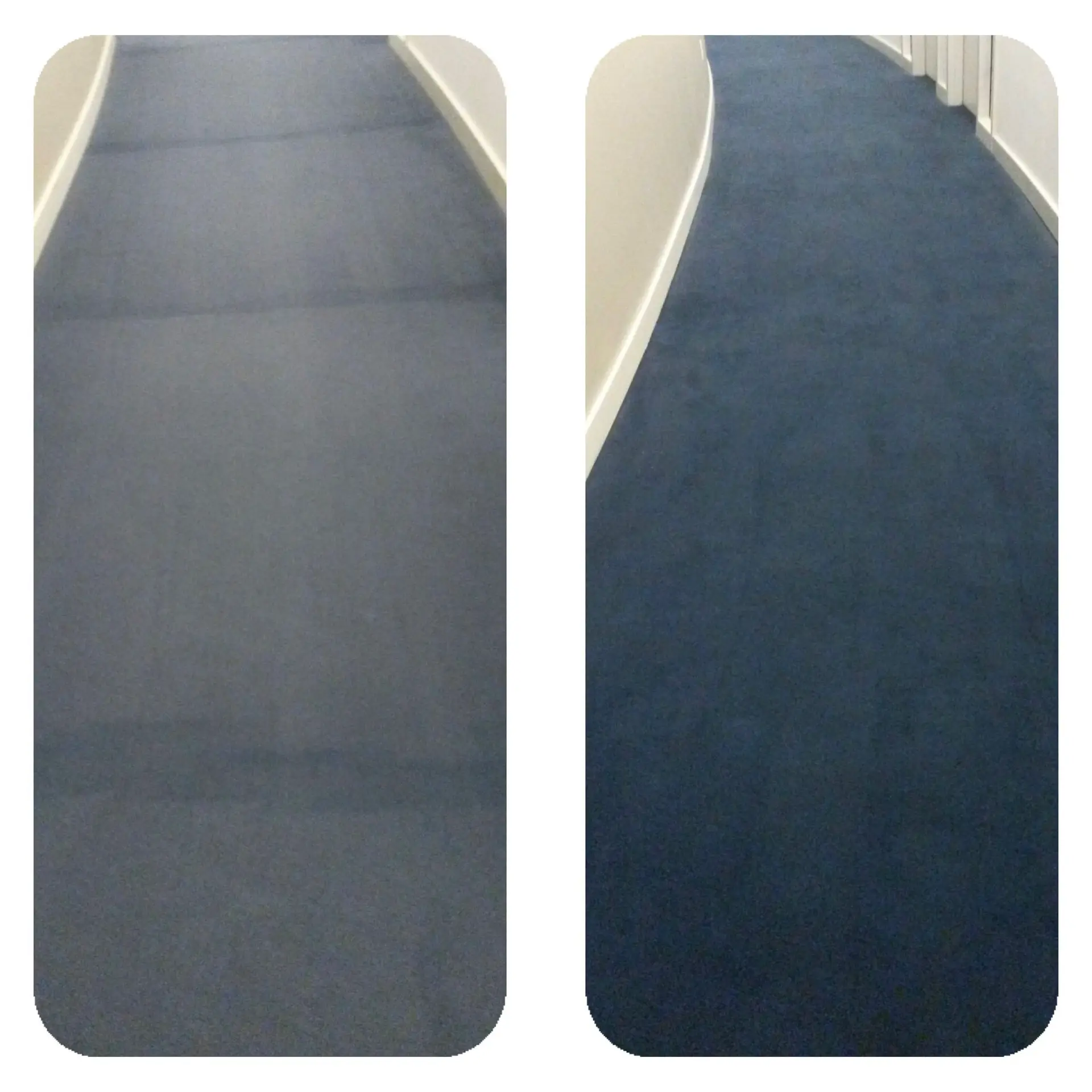
- Grey or washed-out walkways through halls and rooms
- Uneven colour across large open areas
- Carpet that looks worn in property photographs but feels reasonably firm underfoot
These changes are often caused by a combination of sunlight, foot traffic, pile direction and gradual colour loss.
For a property being prepared for viewings, this uneven appearance can be a real problem. A carpet may be clean, but still look neglected in photographs. Prospective tenants and buyers often notice patchy flooring immediately.
Furniture shadows are usually a sign of uneven fading
When furniture sits in one place for years, it protects the carpet underneath from some of the light reaching the exposed areas.
When the furniture is moved, the contrast becomes visible.
The previously covered section may look darker, while the surrounding carpet appears pale. In other cases, a pale rectangle may be left where a rug or item of furniture has caused uneven exposure, cleaning or pile compression.
This is not usually a simple stain. It is a change in the carpet’s colour and appearance.
Sunlight contains ultraviolet radiation that can gradually alter carpet dyes. Strong exposure through large windows can create sharp lines across a room. The result can look like a shadow, even though the real issue is uneven fading.
It is also worth separating true colour loss from pile shading. Some marks change when viewed from a different direction because the carpet fibres are lying differently. This optical effect is sometimes called shading, pooling or watermarking. Resources such as Floor Detective’s guide to carpet shading explain why some apparent colour changes are caused by pile direction rather than dye loss.
A professional assessment can help establish which problem you are dealing with.
Faded walkways are not always dirty
High-traffic areas often look grey, flat or lighter than the rest of the carpet.
Some of that appearance may be caused by:
- Trapped soil
- Flattened pile
- Repeated vacuuming in one direction
- Fibre wear
- Genuine colour loss
- Previous cleaning products or chemical exposure
A professional carpet clean may improve a dirty walkway. Grooming may improve the appearance of flattened fibres. However, cleaning cannot put colour back into fibres where sunlight or chemicals have removed it.
That is the key difference.
If the carpet is clean but still has a washed-out path through the room, carpet colour restoration may be more appropriate than another cleaning treatment.
Why cleaning will not fix colour loss
A regular stain adds unwanted material to the carpet. Cleaning attempts to remove it.
Fading is different. The original colour has been weakened, changed or removed from the carpet fibres. There may be no dirt left to extract.
This is why repeated scrubbing can sometimes make a faded area more noticeable. It may disturb the pile, spread product residue or create a larger halo around the original problem.
The same principle applies to chemical damage.
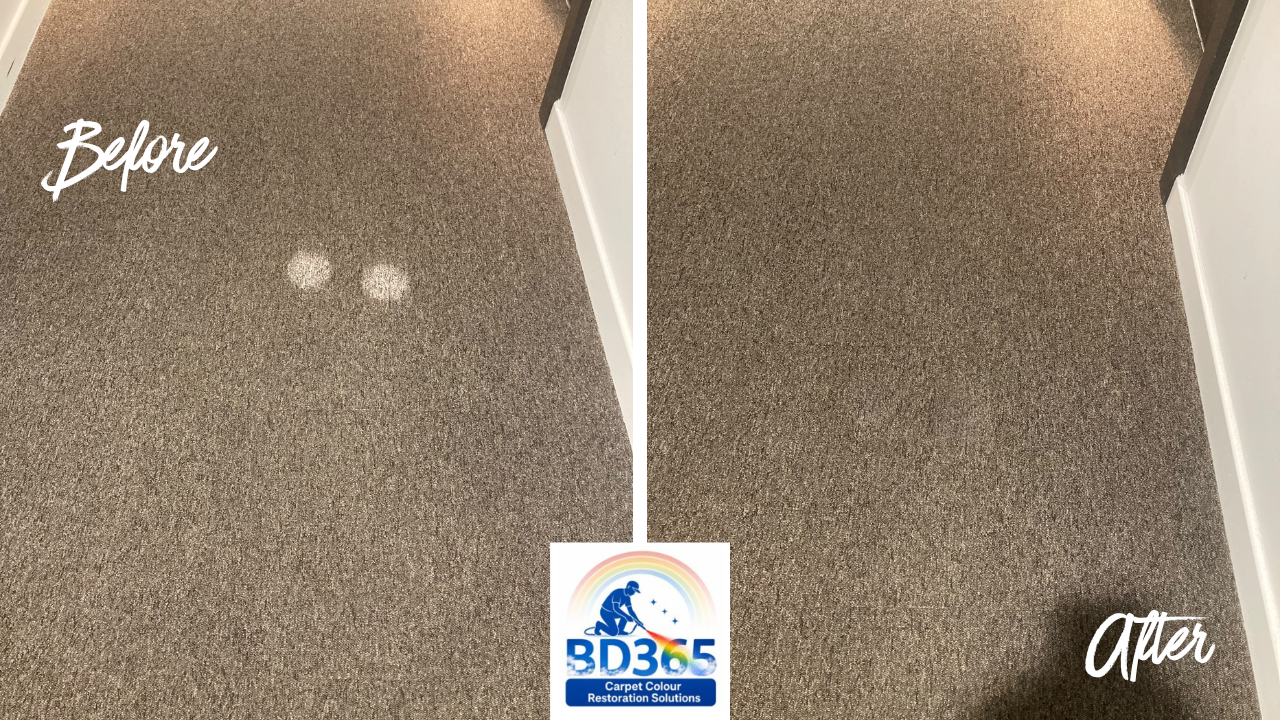
If you are searching for, “I got bleach on my carpet and it has stained”, the mark may not be a conventional stain at all. Bleach and some cleaning chemicals can strip colour from the fibre. A white, yellow, orange or pale patch is often a sign of colour loss.
BD365 explains the difference between these problems in its guide to bleach spots and regular stains.
Store-bought stain removers can sometimes make the problem worse
Many carpet problems begin with a well-intentioned attempt to remove a stain.
Products such as Vanish or Dr Beckmann may be suitable for particular uses when applied exactly as directed. However, some stain spotters contain oxygen-based or other active ingredients that can alter colour on sensitive carpets.
Problems are more likely when:
- The wrong product is used for the carpet fibre
- Too much product is applied
- It is left on the carpet for too long
- The area is repeatedly scrubbed
- Several products are combined
- A previous chemical spill has already weakened the colour
The result can be a pale patch, a lighter ring or a visibly bleached area rather than a cleaner carpet.
Always follow the instructions for the exact product. Vanish’s carpet product guidance includes important colour-fastness precautions.
If the carpet has become lighter after using a stain remover, stop adding products. Take clear photographs and arrange an assessment. Further DIY treatment can make colour matching more difficult.
A practical solution for letting agents and landlords
For letting agents, carpet colour loss often appears at the worst possible time: during check-out.
A room may otherwise be ready for cleaning and photography, but pale furniture marks or faded walkways can make it look tired. If a tenant has also used a strong spot cleaner, the original issue may have become more obvious.
This can create:
- Questions during the check-out inspection
- Deposit discussions
- Delays to marketing photographs
- A property that looks less appealing during viewings
- Pressure to replace an otherwise serviceable carpet
- Additional void-period costs
Professional carpet restoration for landlords offers another option. Where the carpet fibres are still in good condition, targeted colour correction may even out the appearance without removing the whole floor.
BD365’s letting-agent turnaround guide explains why localised restoration can be quicker than arranging a full replacement.
Restoration versus replacement costs
Every carpet is different, so BD365 provides bespoke quotes after assessing the damage. Published guide prices give a useful starting point:
- One small bleach spot: approximately £80–£150
- Multiple spots or splashes: approximately £150–£250
- Larger or more complex restoration: from £300+
- Average full-room replacement: approximately £600–£1,600
Replacement can also involve uplift, disposal, underlay, fitting, furniture moving and delays while materials are sourced.
Restoration is not suitable for every carpet. But if a good-quality carpet has localised colour loss, it is worth checking before budgeting for a full replacement.
How BD365 restores faded and uneven carpet colour
BD365 Carpet Colour Solutions specialises in professional carpet dyeing, bleach spot repair and carpet colour restoration.
The exact approach depends on the carpet fibre, colour, condition and cause of the damage. A typical restoration assessment considers:
- Whether the issue is dirt, pile shading, wear or colour loss
- The type and condition of the carpet fibre
- How extensive the fading is
- Whether the colour can be refreshed or evened out
- Whether the carpet is suitable for dyeing
- What result is realistically achievable
Restoration may involve carefully rebuilding colour across a localised area or correcting the contrast between faded and unfaded sections. Precision tools, controlled application and expert colour matching help create a more consistent finish.

BD365 uses advanced, eco-friendly restoration techniques designed to be safe for children and pets. The aim is to extend the life of a usable carpet, not to promise that every damaged floor can be made perfect.
Hotels and commercial properties
In hotels, offices and serviced accommodation, uneven carpet colour affects more than appearance.
A faded corridor or pale patch in a guest room can influence:
- Guest impressions
- Room presentation
- Inspection results
- Photography and marketing
- Maintenance budgets
- Downtime during refurbishment
Hotel carpet restoration can be particularly useful where a carpet is fitted across a large area and only certain sections have suffered sun damage, heavy traffic or chemical marks.
Targeted restoration may avoid closing an entire corridor or replacing carpet that still has plenty of usable life.

The sustainability case for restoring rather than replacing
Carpet replacement creates waste even when the carpet is still physically serviceable.
Choosing eco-friendly carpet restoration can help:
- Keep usable materials in place for longer
- Reduce carpet sent to landfill
- Avoid the manufacturing and transport of new flooring
- Reduce disruption to occupants, tenants or guests
- Lower the overall cost of dealing with localised damage
For an estate or letting agent managing several properties, these savings can add up. Restoration also supports a more responsible maintenance policy: repair what can be repaired, and replace only when it is genuinely necessary.
When replacement may be the better option
A responsible restoration company should also be clear about its limits.
Replacement may make more sense when:
- The carpet is threadbare or badly worn
- Fibres have melted or suffered structural damage
- Fading is extensive and uneven across the entire property
- The carpet is heavily contaminated
- The fibre is unsuitable for dyeing
- The carpet is already near the end of its useful life
BD365 provides an honest initial assessment rather than recommending restoration automatically.
Send photos before you replace the carpet
If you have pale furniture shadows, faded walkways, sun damage or a bleach mark, send clear photographs for a free assessment.
Include:
- A close-up of the affected area
- A wider image showing the room or corridor
- A photograph in natural daylight
- The likely cause of the colour change
- Any products already used
- Your postcode or location
BD365 provides carpet restoration services across the UK for letting agents, estate agents, landlords, homeowners, hotels and commercial businesses.
Call: 0800 1931 365
WhatsApp photos: 07561 700670
Email: info@bd365.co.uk
Free photo assessment: Send your photos to BD365
Before you replace a carpet that looks old, check whether it has simply lost colour. Restoration could make the room look fresher, help a property become viewing-ready and give a perfectly usable carpet a second chance.