TLDR
Some pet stain removers contain hydrogen peroxide or other oxygen-based oxidising ingredients. These can remove carpet colour as well as pet stains, leaving white, yellow, pink or orange patches behind.
Not every enzymatic cleaner is a bleach. Formulas vary, so always check the label. But if your carpet changed colour immediately after using a pet stain remover, stop applying more product. You may be dealing with colour loss, not a normal stain.
Professional bleach spot repair, carpet dyeing and carpet restoration can often bring the colour back without replacing the whole carpet. BD365 Carpet Colour Solutions provides expert, eco-friendly restoration across the UK, with fast turnaround times and free photo assessments.
The Reddit carpet-cleaning plot twist
Pet owners usually reach for stain remover with the best intentions.
There has been an accident. The dog has had a disagreement with the carpet. The cat has left a surprise beside the sofa. You find a product promising to tackle stains, odours and bacteria, spray generously, and wait for the magic.
Then the carpet dries.
And there it is.
A pale circle. A pink patch. An alarming orange mark. Sometimes, a strange yellow halo.
Reddit is full of these “I used a pet stain remover and now my carpet is bleached” stories. In one discussion, a homeowner reported their carpet turning orange-pink after using hydrogen peroxide. Other users have shared similar experiences after using oxygen cleaners, DIY peroxide mixtures and some pet stain products.
The natural response is usually:
“I’ll just put a bit more on and clean it again.”
Unfortunately, that can turn a small patch into a much larger one.

Why can a pet stain remover bleach carpet?
The word “cleaner” makes products sound harmless. But different products clean in very different ways.
Some use enzymes. Some use surfactants. Some use oxygen-based chemistry. Some combine several types of ingredients in one bottle.
Hydrogen peroxide and oxygen cleaners
Hydrogen peroxide is an oxidising agent. It works by breaking down organic compounds, which is why it can be useful against urine, vomit, food and other biological messes.
The problem is that carpet dye is also made from chemical compounds.
If the product is strong enough, left on for too long or applied to a vulnerable fibre, the oxidising action can affect the carpet’s original colour. Instead of simply removing the pet stain, it may also remove or alter the dye.
Oxygen boosters can create a similar issue. Ingredients such as sodium percarbonate release hydrogen peroxide when mixed with water. They may be marketed as gentler alternatives to chlorine bleach, but “oxygen-based” does not mean “risk-free for every carpet”.
Nature’s Miracle’s official UK/EU information for its Cat Set-In Stain Remover lists hydrogen peroxide as an ingredient and describes an active oxygen formula. That does not mean every Nature’s Miracle product is identical, or that every application will damage carpet. It does mean you should treat the exact formula with care and follow its label instructions.
Enzymatic cleaners are not all the same
This is where things get a little muddled online.
Enzymes themselves are not bleach. They help break down organic residues, which is useful for pet accidents. But some products described casually as “enzymatic” may also contain oxidising ingredients.
Other enzyme cleaners do not contain hydrogen peroxide at all.
For example, BioKleen’s Bac-Out pet stain and odour products list bacteria, enzymes and surfactants rather than hydrogen peroxide or oxygen bleach. That is why checking the exact bottle matters. Product names, ingredients and formulas can vary between ranges and countries.
Simple Solution and similar brands also offer different products, so do not rely on the front-of-bottle wording alone. Look at the ingredient list and directions for the precise product you are using.
“Colour safe” is helpful marketing language. It is not a guarantee that every dye, fibre, age or previous cleaning treatment will react perfectly.
A discreet patch test is always sensible. On an expensive wool carpet, luxury rug or hotel carpet, professional advice is even better.
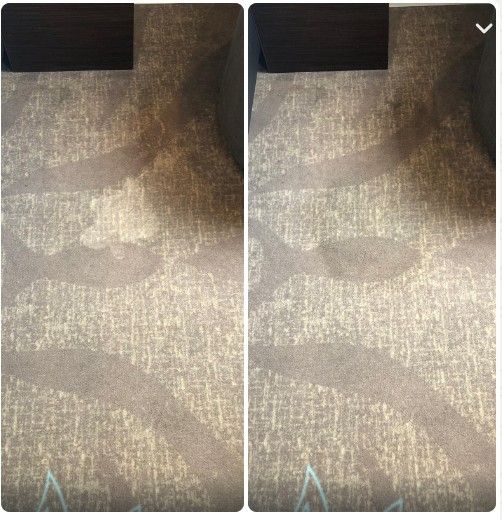
What does a bleached carpet patch look like?
A regular stain usually adds colour to the carpet. Coffee, red wine, mud and pet mess leave something behind.
A bleach spot does the opposite. It removes or changes the original colour.
Common signs include:
- A patch that is lighter than the surrounding carpet.
- White, yellow, pink or orange colouring.
- A sharp outline matching the spray or spill pattern.
- A halo around the original stain.
- No obvious sticky or greasy residue.
- The mark becoming more noticeable as the carpet dries.
- No improvement after ordinary cleaning.
The exact colour depends on the original carpet dye and fibre. A dark brown carpet may reveal a warm orange or yellow tone. A red carpet may become pink. A grey carpet may turn pale beige.
It is not always a neat white patch. Carpet chemistry enjoys keeping things interesting.

The DIY trap: “More cleaner will fix it”
This is the moment when many people accidentally make the damage worse.
They see a pale patch and assume there is still product or dirt to remove. So they spray again. Then they scrub. Then they add another cleaner. Then perhaps they try bicarbonate of soda, vinegar or a homemade peroxide mix.
Please resist the urge to create a chemistry experiment on the living-room floor.
If the original dye has been altered, more cleaning cannot put it back. It can:
- Spread remaining product into a larger area.
- Lighten more of the surrounding fibres.
- Leave a visible tide mark.
- Damage the carpet pile through aggressive scrubbing.
- Create residues that make professional restoration more difficult.
The safest next step is simple: stop applying products, blot gently if the area is still wet, take clear photographs and arrange an assessment.
Do not mix cleaning chemicals. Do not apply chlorine bleach to “even out” the colour. And do not reach for a felt-tip pen, hair dye or shoe polish. Reddit has tried these solutions too. The results are rarely worthy of a sequel.
Can professional bleach spot repair fix it?
Often, yes.
A bleach spot is not treated like a normal stain. It requires restoration rather than more cleaning.
At BD365 Carpet Colour Solutions, the first step is assessing the carpet fibre, the extent of the colour change and whether any active product remains. We then select the most suitable restoration approach.
Professional carpet dyeing may involve:
- Stabilising the affected area.
- Assessing the surrounding colour and tone.
- Creating a carefully matched dye blend.
- Applying colour to the damaged fibres.
- Blending the repair into the surrounding carpet.
The aim is not to paint over the patch. It is to restore the missing colour so the repaired area sits naturally within the existing carpet.
Our team specialises in bleach spot repair for homes, hotels, offices, rental properties and commercial spaces. We regularly work with difficult shades, patterned carpets, sun-faded areas and damage caused by household cleaning products.

Restoration is often better than replacement
A single damaged patch does not automatically mean you need a new carpet.
Replacing a whole room can involve:
- New carpet and underlay.
- Furniture moving.
- Professional fitting.
- Disposal of the old carpet.
- Business disruption for commercial properties.
- Matching problems with adjoining rooms or corridors.
Professional carpet restoration can be considerably more cost-effective, particularly when the rest of the carpet is in good condition.
It is also the more sustainable option. Restoring an existing carpet keeps usable materials in place and reduces unnecessary waste. For eco-conscious homeowners, landlords and businesses, that is a meaningful benefit.
For hotels and property managers, repair can also reduce room downtime. A small bleach mark in a guest room or corridor may be fixable without the disruption of a full replacement.
What should you do if your pet stain remover has changed the colour?
Keep it straightforward:
- Stop using the product.
- Do not scrub the area.
- Do not pour on another cleaner.
- Photograph the patch in good natural light.
- Photograph the product label and ingredients if possible.
- Send the images to a carpet restoration specialist.
The sooner the area is assessed, the easier it is to understand what has happened. In some cases, the issue may be residue or a temporary reaction. In others, the dye has genuinely been altered. Either way, guessing with more chemicals is rarely the best plan.
Send BD365 a photo for a free assessment
If your pet stain remover has left a white, yellow, pink or orange patch, do not panic : and do not replace the carpet just yet.
BD365 Carpet Colour Solutions provides nationwide UK coverage for professional carpet restoration, carpet dyeing and bleach spot repair. Our eco-friendly techniques are designed with homes, pets, children, hotels, offices and rental properties in mind. We offer expert colour matching and fast turnaround times, helping you restore rather than replace.
Send us a clear photo for a free assessment:
- Phone: 0800 1931 365
- WhatsApp: 07561 700670
- Email: info@bd365.co.uk
You can also learn more through our guides on the difference between a bleach spot and a regular stain, whether bleach stains can be removed and our frequently asked questions.
