TLDR: Is Professional Carpet Dyeing Safe?
Yes. Professional carpet dyeing can be a safe, low-odour and eco-friendly choice for homes, hotels and businesses with children and pets.
BD365 Carpet Colour Solutions uses eco-friendly, non-toxic dyeing techniques designed to be safe for kids and pets once the treated carpet is fully dry. The area should remain off-limits during the work and drying period, with sensible ventilation as advised.
Restoration also avoids the disruption, waste and extra materials involved in ripping out a perfectly usable carpet. That can mean less landfill waste, lower costs and no new underlay, adhesives or carpet fibres to bring into the room.
BD365 specialises in carpet dyeing, bleach spot repair and carpet restoration nationwide across the UK. So, before you reach for the replacement catalogue, it is worth asking whether your carpet can be saved.

The Big Family Question: Are Carpet Dyes Harsh?
It is a fair question.
You have probably seen warnings about strong cleaning chemicals, paint fumes and new furniture. If you have small children crawling around or pets who investigate everything with their noses, you do not want to introduce unnecessary chemicals into the room.
Professional carpet dyeing is very different from pouring household bleach, fabric dye or a mystery internet “hack” onto the carpet.
At BD365, the process uses eco-friendly, low-odour and non-toxic dyeing techniques. These are applied carefully to suitable carpet fibres to refresh colour, repair bleach marks or restore faded areas.
There may be some moisture during the work, and the room may need time to dry. That is why children and pets should not walk, crawl or lie on the treated carpet until the technician confirms it is ready.
Once fully dry, the restored area is designed for normal use, just like the rest of the carpet.
A sensible safety checklist
Before your family, guests or four-legged supervisors return to the room:
- Keep children and pets away while the work is taking place.
- Follow the technician’s drying and ventilation advice.
- Do not let pets lick or lie on a damp treated area.
- Keep windows open or use ventilation if advised.
- Mention allergies, sensitivities or special concerns before the appointment.
- Ask what aftercare products are suitable for your carpet.
This is not about panicking. It is about using common sense while a professional treatment dries.
Why Bleach Spot Repair Is Often Safer Than a DIY Fix
A bleach spot is not a normal stain. It is usually colour loss.
Bleach, toilet cleaner, disinfectant and some bathroom products can strip or change the dye in carpet fibres. That is why the damaged patch may look white, yellow, orange or strangely pale.
Scrubbing will not put the colour back. Nor will adding another random product from under the sink. In fact, DIY attempts can make the area more difficult to restore.
We have seen the usual suspects:
- Felt-tip pens.
- Hair dye.
- Fabric dye.
- Paint.
- More bleach.
- A stain remover described online as “a miracle”.
The internet has many talents. Carpet colour matching is not always one of them.
Professional bleach spot repair takes a more controlled approach. BD365 assesses the fibre, existing colour, condition and type of damage before advising whether restoration is suitable.
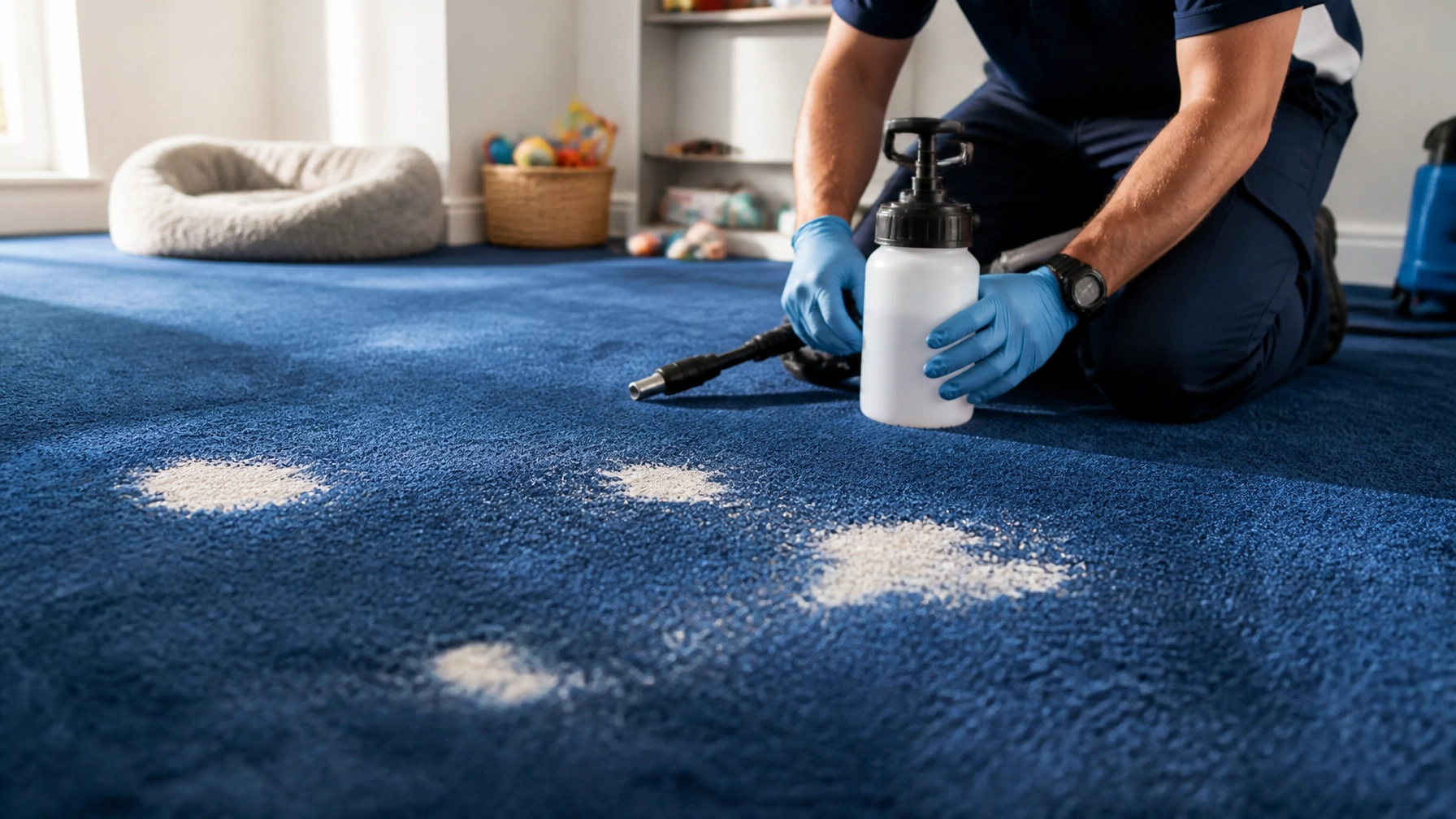
For small areas, precision tools such as fine applicators, syringes and airbrushes can help place colour exactly where it is needed. This is detailed work, not a case of sloshing dye over the entire room and hoping for the best.

Carpet Restoration Versus Replacing the Carpet
Let us imagine two options.
Option one: restore the existing carpet
Professional carpet restoration may:
- Repair localised bleach spots.
- Refresh faded or sun-damaged areas.
- Improve patchy colour.
- Extend the useful life of a good-quality carpet.
- Reduce waste.
- Cost less than a full replacement.
- Cause less disruption to your home or business.
Option two: remove and replace everything
A new carpet may involve:
- Buying new carpet fibres.
- Buying new underlay.
- Fitting and finishing.
- Moving furniture.
- Removing the old carpet.
- Disposal costs.
- Room downtime.
- Adhesives or other installation materials.
- Potential odours from new materials.
New carpet is not automatically unsafe. Many modern products are made to meet safety and emissions standards. However, new carpet, backing, underlay and adhesives can release odours or volatile organic compounds, often described as “off-gassing”. The level varies widely by product and installation method.
Good ventilation helps. Choosing lower-emission products helps too.
But if your existing carpet is structurally sound, restoring it avoids bringing a whole new flooring system into the room in the first place. That is one reason carpet restoration can be the more environmentally responsible choice.
You are not creating a brand-new carpet. You are giving the current one another chapter.
The Eco-Friendly Case for Restoration
Replacing a carpet because of one bleach spot can feel a little like replacing a sofa because of one coffee splash.
Sometimes it is necessary. Often, it is not.
Restoration keeps usable carpet in service for longer. That reduces the demand for new materials and avoids sending a large roll of carpet to landfill or disposal when only one section is damaged.
For eco-conscious homeowners, that matters. For hotel managers and business owners, it matters financially too. Replacing carpet across bedrooms, corridors, offices or venues can create a large bill and significant operational disruption.
A targeted repair may be a much more practical solution where the carpet is still in good condition.
BD365 provides carpet colour restoration for:
- Homeowners and families.
- Landlords and tenants.
- Letting agents and property managers.
- Hotels and serviced accommodation.
- Offices and commercial premises.
- Venues and event spaces.
- Professional cleaners and facilities teams.
- Insurance-related restoration assessments.
The service is available UK-wide, with clear photographs often providing a useful first assessment before any work is booked.

Does Carpet Dyeing Work on Every Carpet?
No. And this is where honesty matters.
Carpet dyeing and colour restoration can produce excellent results on suitable carpets. But not every fibre, colour or condition responds in the same way.
The outcome can depend on:
- Carpet fibre.
- Original colour.
- Depth and size of the damaged area.
- Pile condition.
- Previous cleaning or DIY treatments.
- Sun exposure.
- Whether the fibres are physically damaged.
- How closely the repaired area needs to match.
Some repairs blend extremely well. Others create a significant improvement without being completely invisible. A professional should explain what is realistic before you commit.
BD365 begins with an assessment rather than a hard sell. You can send clear photos through the BD365 photo assessment service, or contact the team via the BD365 FAQs page.
When Is Carpet Replacement Genuinely the Right Call?
Restoration is not always the answer. Sometimes replacement is the sensible option.
Replacement may be better if:
- The carpet is threadbare or badly worn.
- The pile is physically damaged, melted or breaking down.
- There is severe mould or contamination.
- Water damage has affected the backing or subfloor.
- The carpet is already near the end of its useful life.
- The damaged area is very large.
- The carpet is unsuitable for dyeing.
- You want to change the flooring for design or practical reasons.
- A suitable repair would not achieve the appearance you need.
A responsible restoration specialist should tell you when replacement is likely to make more sense. At BD365, the aim is not to promise that every carpet can be rescued. It is to help you make a sensible decision before spending money.
If you are dealing with a valuable wool carpet, read BD365’s guide to bleach spots on wool carpets before trying anything else.
What Should You Do Before Booking?
Take two or three clear photographs:
- A close-up of the bleach spot, stain or faded area.
- A wider photograph showing the damage in the room.
- A daylight image without filters if possible.
Also share:
- What caused the damage.
- When it happened.
- Any products already used.
- The carpet type, if you know it.
- Your postcode.
- Whether the property is domestic or commercial.
Do not add more chemicals while you wait for advice. The less interference, the better.
You can also read BD365’s guidance on how much bleach spot repair may cost.
The Family-Friendly Verdict
Professional carpet dyeing is not something to fear when it is carried out by a trained specialist using suitable products and sensible safety procedures.
For families, hotels and businesses, BD365’s eco-friendly, low-odour and non-toxic techniques offer a practical way to restore colour without immediately replacing the entire carpet. Children and pets should stay away during the work and until the carpet is completely dry. After that, the restored area is ready to return to normal use.
And environmentally speaking, restoring a sound carpet is often the better choice. You avoid unnecessary waste, reduce disruption and skip the added materials involved in a full replacement.
So, if your carpet has a bleach spot, faded patch or stubborn colour loss, do not panic. Do not reach for the hair dye. And do not order a skip just yet.
Send BD365 a few photographs for an honest UK-wide assessment. The carpet may have more life left in it than you think.
Contact BD365 Carpet Colour Solutions for professional carpet dyeing, bleach spot repair and carpet restoration.