TLDR
Yes, yellow, orange, rust and brownish marks on a white or cream carpet can still be bleach damage. In fact, this is one of the classic Reddit carpet mysteries.
Bleach does not always leave a neat pale-white patch. It can react with traces of iron, tannins, previous yellowing and the natural chemistry of the fibre. The result may develop as orange or rust while wet, then settle into a yellow tone as the carpet dries.
It is not a normal stain. The carpet colour has been chemically changed. Scrubbing, steam cleaning and supermarket sprays cannot put the missing colour back.
BD365 Carpet Colour Solutions specialises in professional bleach spot repair, carpet dyeing and colour restoration. We help homeowners, hotel managers, business owners, landlords and professional cleaners across the UK restore suitable carpets instead of replacing them. Send a photo for an honest assessment before reaching for the carpet samples.
The Reddit classic: “I spilled bleach, but the spot is orange”
A pale carpet should be simple, shouldn’t it?
You spill bleach. You expect a white mark. Perhaps a slightly lighter patch. Something obvious.
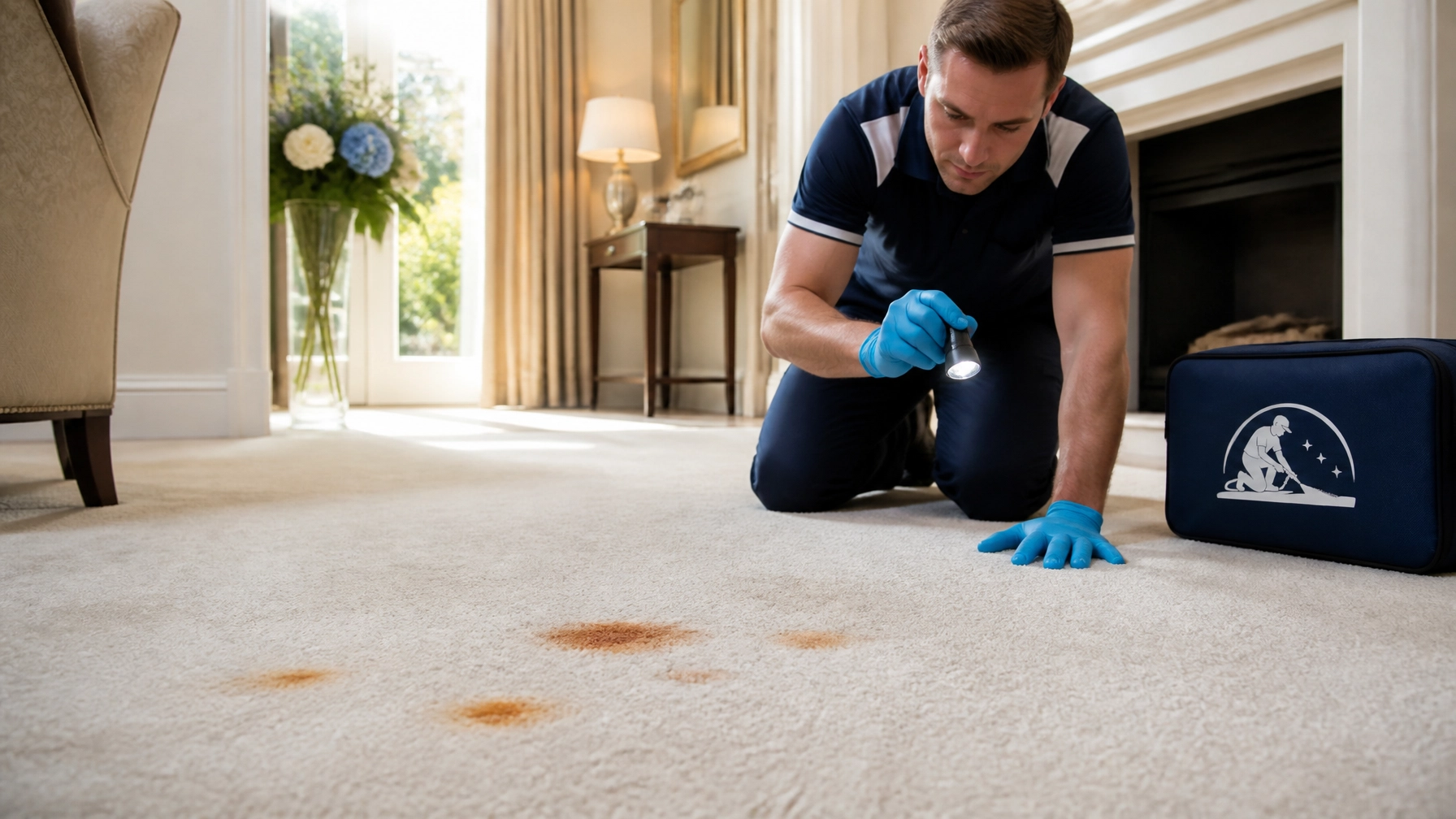
Then, a few hours later, you spot a strange yellow-orange bloom spreading across the carpet.
It may look like:
- A bright yellow patch.
- A rusty orange splash.
- A brownish halo.
- Several amber-coloured dots.
- An orange centre that becomes more yellow as it dries.
Cue the internet detective work.
“Is it rust?”
“Could it be tea?”
“Did the cleaner leave a stain?”
“Why is my white carpet turning orange?”
Sometimes it is difficult to believe, but bleach is still the likely culprit. Light carpets are not always chemically plain white. They may contain subtle dyes, optical brighteners, natural yellow tones or residues from previous use. Bleach can expose or change those components in surprising ways.
The carpet is not being dramatic. It is having a chemical reaction.

Why does bleach turn a white carpet yellow or orange?
Household bleach is a powerful oxidising agent. Its job is to break down colour.
That is why it can lighten hair. It is also why it can permanently alter carpet fibres.
When bleach reaches a carpet, it may attack the coloured compounds within the fibre. On a darker carpet, this often creates a pale or white mark. On a white or cream carpet, the reaction can be more confusing because there may be other tones and residues involved.
1. It removes some colours before others
A carpet described as “white” may contain a carefully balanced blend of subtle colour components. Cream carpets are even more obviously made from several tones.
Bleach may remove or weaken cooler colour components first. If blue or red tones are affected more quickly, warmer yellow tones can become more visible.
The result is a yellow or orange-looking area rather than a clean white mark.
2. It exposes the fibre’s natural warmth
Carpet fibres and backings are not always brilliant white underneath their finished appearance.
Some fibres have a natural warm, beige or yellow undertone. Other carpets use brighteners to create a cleaner, cooler appearance.
When bleach changes the dye or brightening treatment, the underlying warmth may suddenly show through. It is a little like removing a filter from a photograph. The original tone was there all along. You just could not see it properly.
3. Iron can create a rusty reaction
Tiny traces of iron may be present around carpet fittings, metal furniture, gripper rods, tracked-in soil or old water marks.
Bleach and other oxidising chemicals can make iron contamination more visible. That can create orange-brown or rust-coloured tones, especially where liquid has pooled or travelled.
This is one reason a bleach mark near a table leg or metal fitting may look particularly rusty.
The orange colour may involve both:
- Chemical colour loss in the carpet fibre.
- Iron oxidation or rust contamination in the affected area.
Removing surface rust, where possible, does not automatically restore the carpet colour underneath. If bleach has already stripped the fibre, the missing colour still needs professional restoration.
4. Tannins and old residues can “develop”
Tea, coffee, wood products, plant matter and some old spills contain tannins. Previous pet accidents and other residues may also leave behind compounds that are not obvious until the carpet is disturbed.
An oxidising product can change these residues. The area may appear darker, warmer or more orange as the reaction develops.
That is why some marks seem to change throughout the day. They may look orange when damp, then settle into a yellow or rusty shade once dry.
This colour shift is one of the reasons bleach damage is so often mistaken for a new stain.
It is not a stain that will wash out
This is the important bit.
A regular stain adds something to the carpet. Coffee, mud, wine or food leaves unwanted material behind. Professional cleaning may be able to remove or reduce it.
Bleach damage is different.
It changes or removes the carpet’s original colour. In simple terms:
- A regular stain is usually an unwanted addition.
- Bleach damage is usually colour subtraction or chemical alteration.
- Cleaning can remove residue.
- Cleaning cannot recreate the missing pigment.
That is why the yellow or orange mark can remain after the carpet has been professionally cleaned. The carpet may be perfectly clean. The colour is still wrong.
Our guide on the difference between a bleach spot and a regular stain explains the distinction in more detail.
Why scrubbing and steam cleaning make little difference
Scrubbing feels productive. Unfortunately, it is often just energetic disappointment.
A brush cannot scrub colour back into a fibre. It may also roughen the pile, spread any remaining chemical and make the affected area look larger or lighter.
Steam cleaning has the same basic limitation. It is designed to remove soil. It does not replace chemically altered colour.
In some cases, heat and moisture can also make a previously quiet reaction more visible. A yellow-orange halo may appear after cleaning because moisture has moved through the affected fibres.
As we explain in our article on why steam cleaning does not remove bleach spots, cleaning and colour restoration are two different services.
Please do not try to “fix” it with more chemicals
A panicked carpet owner can become very inventive. Reddit has seen it all.
Unfortunately, these popular ideas can make professional repair more difficult:
- More bleach: This can enlarge the damaged area and strip more colour.
- Ammonia: Mixing or layering household chemicals can create dangerous fumes and further damage the carpet.
- Supermarket stain sprays: These may contain oxidising or reactive ingredients that alter the area again.
- Fabric dye pens and permanent markers: They usually create a harsh surface line rather than a natural carpet colour.
- Tea or coffee: Adding another brown or yellow substance to a chemically damaged carpet is rarely the plot twist anyone wants.
Hair dye, paint, crayons and marker ink are especially unhelpful. They do not behave like professional carpet dye. They may bleed, look too dark, sit on the surface or leave an oily residue.
The safest general rule is simple: once you suspect chemical colour loss, stop experimenting.
How BD365 restores yellow and orange bleach damage
At BD365 Carpet Colour Solutions, we approach the problem as colour restoration rather than stain removal.
First, we assess the carpet. The fibre type, pile condition, original colour, extent of the damage and chemical involved all matter.
Where suitable, our professional bleach spot repair process involves:
- Assessing the damage and the carpet’s condition.
- Neutralising or stabilising any active chemical reaction.
- Identifying the tones missing from the damaged area.
- Creating a carefully matched colour.
- Applying the colour with precision to the affected fibres.
- Blending the repair into the surrounding carpet.
The work may involve fine syringes, specialist applicators or airbrush-style tools. It is detailed work. A beige carpet is not simply “beige”. It may contain several subtle tones, and the repair needs to respect the way light moves across the pile.

The goal is not to paint over the mark. It is to rebuild the appearance of the missing colour so the area blends naturally with the rest of the carpet.
Professional carpet dyeing can often be completed far more quickly than a full replacement. It also avoids the upheaval of lifting furniture, removing underlay, arranging fitting and disposing of a perfectly usable carpet.
A smarter option for homes, hotels and businesses
For homeowners, a yellow spot in a light carpet can dominate the entire room. For a hotel manager, it can affect a guest’s first impression. For an office or commercial property, it can turn a small cleaning accident into an unnecessary flooring project.
Professional cleaners also see this problem regularly. A product used with good intentions can leave a customer with a pale, yellow or orange mark that standard cleaning cannot resolve.
BD365 supports domestic and commercial clients throughout the UK. That includes homes, rental properties, hotels, offices, venues and managed property portfolios.
Choosing carpet restoration instead of automatic replacement may offer:
- Lower costs.
- Less disruption.
- Faster turnaround.
- A better visual result.
- Less carpet sent to landfill.
- A more sustainable way to extend the life of a good floor.

When is replacement genuinely the right choice?
We believe in restoring where possible, not making promises that a carpet cannot keep.
Replacement may be the better option when:
- The fibre has melted, scorched or become brittle.
- The pile has been physically destroyed.
- The chemical has caused severe backing damage.
- The damaged area is extensive.
- The carpet was already worn beyond practical restoration.
- The fibre is unsuitable for the required colour work.
- A matching repair would not provide a satisfactory result.
A professional assessment is the sensible starting point. Sometimes restoration is the clear answer. Sometimes it is only likely to provide an improvement. Sometimes replacement is more practical.
We will tell you honestly.
Think your white carpet has bleach damage?
Do not panic. And do not reach for the coffee tin.
Take a few clear photographs in natural light and send them to BD365. Include a close-up of the yellow or orange area and a wider photo showing the room. If you know which product caused the mark, tell us that too.
Our UK-wide team can provide an initial photo assessment and advise whether professional colour restoration, carpet dyeing or bleach spot repair is worth exploring.
Call us on 0800 1931 365, email info@bd365.co.uk, or send photos on WhatsApp.
A yellow spot on a white carpet may look mysterious. It may even look hopeless.
But often, it is simply a damaged colour problem waiting for the right specialist solution.
Restore where possible. Replace only when necessary.