TLDR
A single bleach spot can cause a serious end-of-tenancy headache. But claiming £900 or more for a whole new carpet may not survive a TDS, DPS or mydeposits-style adjudication.
The usual problem is betterment. A tenant may be responsible for damaging the carpet, but the deduction must reflect the landlord’s actual loss. If professional bleach spot repair, carpet dyeing or localised carpet restoration can solve the issue, a full replacement claim may be rejected or heavily reduced.
Adjudicators look for check-in and check-out evidence, dated photographs, carpet age, fair wear and tear, repair options and proportionate costs.
BD365 Carpet Colour Solutions provides professional restoration, photo-based quotations and nationwide UK coverage. For letting agents, a credible restoration quote can be far more persuasive than a replacement invoice.
The £900 carpet claim that went nowhere
Picture the scene.
The tenant has moved out. The inventory clerk photographs one bright, pale mark in the lounge carpet. It looks like bleach damage.
The landlord asks for a full replacement.
The quote comes back at £900. Perhaps £1,200. Maybe even £1,500 if the carpet is high-end, the room is large or the replacement includes underlay and fitting.
The deposit deduction is submitted.
Then the adjudicator asks a perfectly reasonable question:
“Why does one bleach spot require an entirely new carpet?”
That is where the claim can unravel.
A landlord may have a valid claim for damage beyond fair wear and tear. A bleach spot is generally not normal ageing. It is usually the result of an avoidable spill, unsuitable cleaning product or DIY attempt.
But proving damage is only one part of the argument. The landlord must also show the actual financial loss.
A brand-new carpet may leave the landlord with something better than they had before. That is the issue known as betterment.
What betterment means in a deposit dispute
Betterment is the principle that a tenant should not fund an upgrade to the property.
If a carpet was already several years old, with normal wear and fading, the landlord cannot automatically use the deposit to install a brand-new carpet and claim the full cost.
Even where replacement is genuinely necessary, the calculation may need to take account of:
- The carpet’s age
- Its original quality
- Its expected lifespan
- Its condition at the start of the tenancy
- The size and location of the damage
- The cost of a like-for-like replacement
- Whether a cheaper repair was reasonably available
Shelter explains that a landlord cannot usually charge the full replacement cost where an item could have been cleaned or repaired more cheaply. Propertymark and mydeposits also provide guidance on apportionment and avoiding betterment.
In plain English: the tenant may be responsible for the bleach spot, but not necessarily for a brand-new floor.
The Reddit-style reality: “They wanted £1,200 for a white mark”
Across property forums, the same stories appear again and again.
“The agent wanted £900 for replacing the whole bedroom carpet. It was one small bleach mark near the door.”
“My landlord claimed £1,500 for carpets throughout the flat. The check-in inventory already showed general fading.”
“We were quoted £600 for a replacement, but the repair was less than £150.”
“The tenant admitted spilling cleaner, but the adjudicator only awarded the cost of a local repair.”
These are illustrative, Reddit-style versions of the arguments agents, landlords and tenants regularly face. The details vary, but the lesson is consistent:
A replacement quote is not automatically proof of loss.
A restoration quote can demonstrate that the problem has been assessed properly and that a proportionate remedy is available.
What adjudicators usually want to see
TDS, DPS and mydeposits-style adjudications are evidence-led. They are not usually decided by whoever sounds most confident on the phone.
For a carpet damage claim, the useful evidence includes:
1. Check-in photographs
The original inventory should show the carpet clearly. Ideally, it includes:
- Wide room photographs
- Close-ups of existing marks
- Images around furniture and doorways
- Notes about fading, wear or stains
- The carpet’s general condition
A vague line saying “carpet present” will not carry the same weight as clear, dated photographs.
2. Check-out photographs
The final images should show:
- The full room
- The exact position of the bleach spot
- A close-up of the affected area
- The size and extent of the damage
- The surrounding carpet for comparison
Try to use similar angles and lighting to the check-in images. A close-up alone can make a mark look much worse than it appears in context.
3. Evidence of age and quality
Keep the original carpet invoice if possible. If that is unavailable, record the estimated installation date and quality.
Was it a premium wool carpet installed two years ago? Or an older budget carpet already showing traffic wear?
Those facts matter.
4. A repair quote
This is the part often missing from inflated claims.
Before going straight to full replacement, obtain a quote for:
- Professional bleach spot repair
- Localised carpet dyeing
- Colour restoration
- A patch repair, where appropriate
- Cleaning, if the issue is a removable stain rather than colour loss
A repair quote does not guarantee a particular adjudication outcome. However, it shows that the proposed deduction has been considered rather than guessed.
Why a restoration quote can win the argument
A professional restoration quote gives the adjudicator a sensible middle ground.
It can show:
- The damage is real.
- The damage is localised.
- Replacement is not necessarily the only solution.
- The proposed cost is based on an actual assessment.
- The landlord is trying to recover a reasonable loss rather than improve the property.
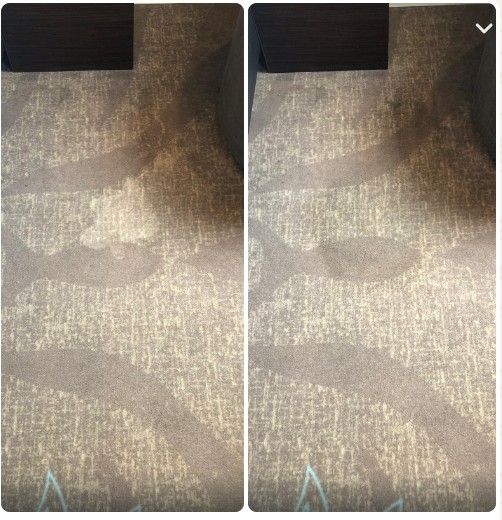
BD365 specialises in bleach spot repair, carpet dyeing and carpet restoration. Where suitable, precision colour application can restore the affected fibres without removing the entire carpet.

A single spot may cost far less to repair than a complete room replacement. BD365’s existing guidance gives general expectations of around £80–£150 for some small single-spot repairs, although every quote depends on the carpet fibre, colour, damage and access.
That difference matters in a deposit dispute.
A claim based on a professional repair assessment is usually easier to explain than:
“The carpet had one mark, so we replaced everything.”
“I got bleach on my carpet and it has stained”
This is one of the most common searches after an end-of-tenancy disaster.
The frustrating detail is that bleach damage is not usually a normal stain. A normal stain adds something to the carpet, such as coffee, wine or mud.
Bleach often removes or changes the existing colour.
That is why cleaning may not work. There may be no coloured residue left to remove. The original pigment has been affected.
Store-bought products can also be part of the problem. Vanish and Dr Beckmann are used with good intentions, but some stain-removing formulations contain oxidising ingredients that can lighten certain carpet dyes.
The result may be:
- A pale or white patch
- A yellow or orange halo
- A larger faded area
- A mark that becomes more visible after scrubbing
- A carpet that is clean, but still visibly discoloured
Once the damage is lighter than the surrounding carpet, stop experimenting.
The DIY fixes that make the evidence worse
The internet has suggestions for everything.
Some are less helpful than others.
Avoid:
- Applying more bleach to make the colour “even”
- Using coffee to darken a pale patch
- Rubbing in a Sharpie or felt-tip pen
- Trying a DIY dye pack without understanding the carpet fibre
- Scrubbing repeatedly with Vanish or Dr Beckmann
- Pouring multiple cleaning products onto the same area
- Covering the spot with household paint
These fixes can spread the damage, leave residue, alter the fibre or create an obvious dark patch. They can also make it harder to establish what happened originally.

For agents, the practical advice is simple: photograph the original damage before anyone attempts a home repair.
For tenants, the advice is equally simple: do not turn one bleach spot into a chemistry experiment.
A sensible process for letting agents
When a bleach spot appears at check-out, use this process:
- Photograph the area clearly.
- Compare it with the check-in inventory.
- Record the carpet’s age and condition.
- Ask whether the issue is colour loss, a removable stain or physical damage.
- Obtain a professional restoration quote.
- Obtain a like-for-like replacement quote only if replacement may genuinely be needed.
- Consider fair wear and tear and apportionment.
- Keep the deduction proportionate and evidence-backed.
This approach protects landlords from overclaiming and gives tenants a fairer explanation of the proposed deduction.
It also helps avoid the awkward moment when an adjudicator asks why a £900 carpet was needed to repair a mark that could have been restored for a fraction of the price.
Hotels and businesses face the same problem
This is not just a residential letting issue.
A hotel room may have one cleaning-chemical mark. An office may have a pale patch near a kitchenette. A serviced apartment may have damage from a rushed end-of-stay clean.
But one ruined carpet tile or one bleach spot in a hotel room is not automatically a reason to refloor an entire corridor.

Professional restoration can help reduce disruption, control costs and keep commercial spaces looking presentable. It is often a practical option for hotels, offices, property managers and professional cleaners who need a quick, targeted solution.
Nationwide carpet restoration from BD365
BD365 Carpet Colour Solutions helps letting agents, estate agents, landlords, homeowners, hotels and businesses choose restore over replace wherever practical.
Our services include:
- Professional carpet dyeing
- Bleach spot repair
- Colour restoration
- Expert colour matching
- Residential and commercial carpet restoration
We can often provide an initial assessment from clear photographs and offer nationwide UK coverage.

If you are dealing with a disputed end-of-tenancy bleach spot, send photographs before attempting DIY repairs or agreeing to full replacement.
A proportionate restoration quote may not only save money. It may also provide the evidence needed to support a fairer, more defensible deposit deduction.
Request a quote from BD365 Carpet Colour Solutions, or read the company’s guidance on how much it costs to fix a bleach spot on carpet.
Because when one bleach spot meets a £900 replacement claim, the adjudicator is likely to ask one very sensible question:
“Have you checked whether it can be restored first?”