The short version
A pre-sale carpet clean should make the place feel fresh, not leave two pale patches just before the photographer arrives. If a cleaning product has stripped the carpet’s colour, more cleaning won’t put it back. BD365 provides specialist carpet restoration, dyeing and bleach spot repair, with nationwide UK coverage. For suitable carpets, colour restoration can often be completed in place in a single visit, helping you avoid the cost and delay of replacing the carpet.
The story: clean carpet, very untidy timing
The house was nearly ready for the photos. The cushions were plumped, the kitchen sides were clear, and the estate agent had booked the photographer for later that week.
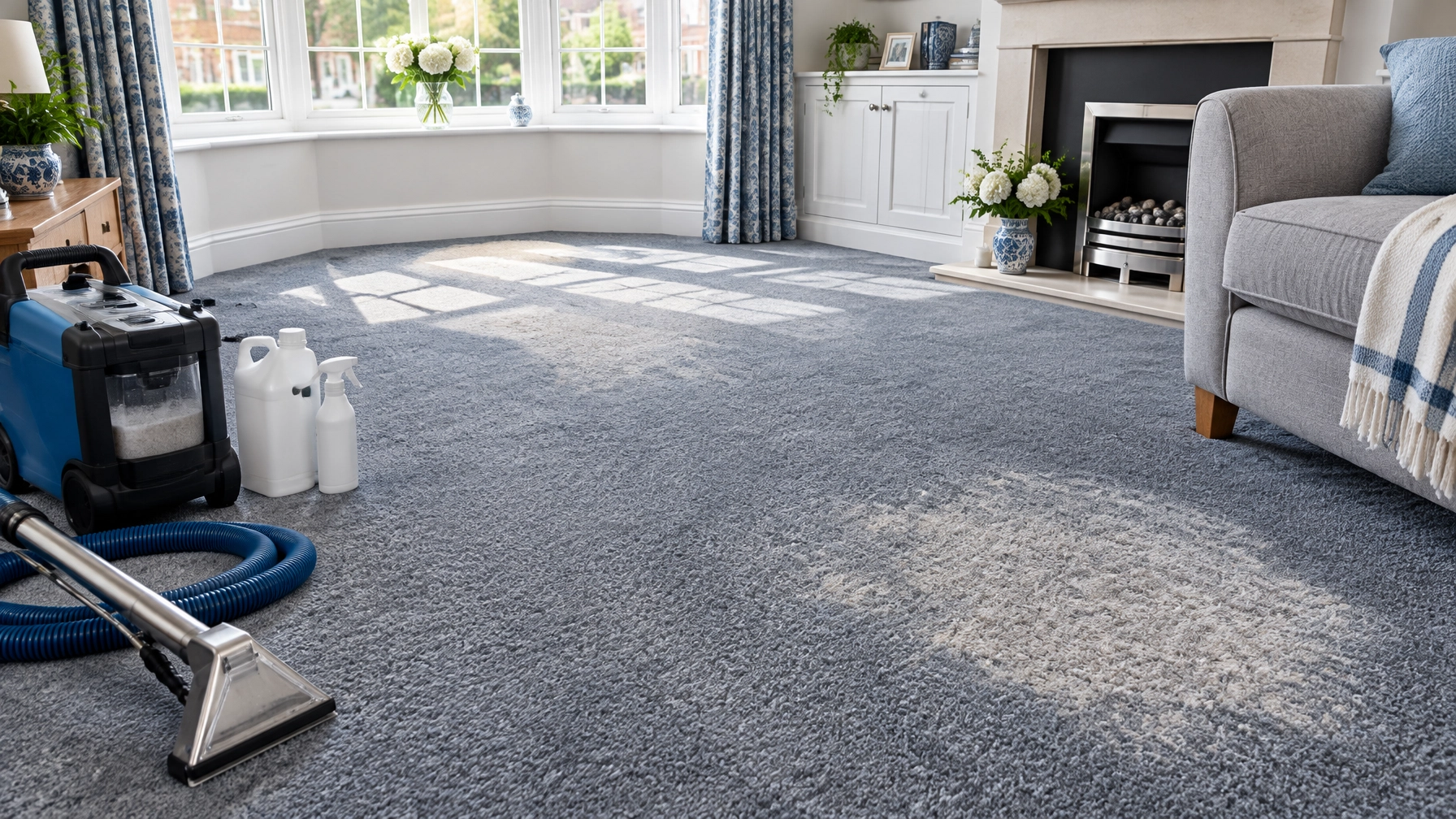
There were two marks on the living-room carpet: a small tea stain near the bay window and a mystery mark beside the sofa. Nothing dramatic. Just the sort of thing you notice when you’re trying to make a room look its best.
So the seller booked a budget “deep clean” from an online-listed cleaner. It seemed sensible. A professional was coming to deal with the marks, and the viewings were close enough to make doing it yourself feel like a risky idea.
During the clean, both areas looked brighter. The cleaner finished up, the carpet was left to dry, and the seller went back to the last-minute jobs.
Then, a couple of days before the photoshoot, the sofa shifted during the final tidy. There they were: two crisp, pale patches.
Cue the familiar property-sale maths: photos booked, viewings approaching, chain already stressful, and now one pale patch practically waving at the camera from the living-room floor.
Why the marks looked worse after they dried
A regular stain usually means something has been added to the carpet. Tea, for example, can leave residue or colour that cleaning may lift. A bleach spot is different: it’s often colour that has been altered or removed from the carpet fibres.
That difference matters. If there’s residue, cleaning may help. If the dye is gone, cleaning cannot clean the missing colour back in.
Some spot treatments can affect carpet colour if they’re unsuitable for the fibre or used incorrectly. That can include bleach-based products and some shop-bought spotters, including certain Vanish or Dr. Beckmann formulations. A professional cleaner may have chosen and applied the product themselves, so it’s understandable that a homeowner trusts the process and doesn’t think to check the bottle first.
The damage may not be obvious while the carpet is wet. Once it dries, the pale colour loss can stand out sharply against the surrounding pile. In this story, the two original marks may have been small, but now they had pale outlines of their own.
For a clearer explanation, see the difference between a bleach spot and a regular stain and why carpet can turn white after a bleach cleaner.
The photoshoot problem is real
An estate agent knows what happens when buyers look at a listing: they zoom in. A pale patch that seemed easy to miss in a busy room can become the main event in a bright, wide-angle photograph, especially when sunshine falls across the carpet or the photographer uses flash.
A good agent will flag the issue and talk through the options, rather than pretending it isn’t there or photoshopping it away. Honest presentation protects trust. It also gives the seller a chance to find out whether the carpet can be restored before deciding that the whole room needs new flooring.
The Tenancy Deposit Scheme’s guide to deposits, disputes and damages is written for rental disputes, not house-sale photography, but its evidence principles are relevant to agents and property professionals: clear dated photographs, reports and proportionate repair evidence can help establish what happened and what work is reasonable. For a seller, good records can also help keep conversations with the cleaner clear and factual.
A fast restoration assessment can beat a replacement scramble
When the carpet is otherwise in good condition, replacement isn’t automatically the only answer. BD365’s carpet restoration services include specialist bleach spot repair, carpet colour restoration and professional carpet dyeing. The aim is to restore colour where suitable, not to sell a new carpet when a targeted repair may do the job.
For a localised patch, colour work can often be carried out in place in a single visit, subject to the carpet, the damage and an assessment. That can be far quicker than sourcing replacement carpet, arranging a fitter, moving furniture and trying to line everything up with the photo date. The repair still needs appropriate time to dry and settle, so tell us your deadline when you get in touch.
BD365 is trusted and used by Dr Beckmann’s, and has specialist colour training in the UK from leading restoration experts. Its eco-friendly dyeing techniques are safe for children and pets. Results depend on the fibre, condition and extent of colour loss, so a specialist assessment comes first; some repairs blend extremely well, while others are an improvement rather than invisible.
Here are two examples of BD365 bleach spot repairs. These are real before-and-after jobs on commercial carpets, not the living-room scenario above:


Choosing restoration over replacement can also keep serviceable carpet out of landfill. If you’re comparing options, read how much it can cost to fix a bleach spot and browse the carpet restoration FAQs. You may also see the US spelling carpet recoloring; in the UK, we call it carpet recolouring.
If a hired cleaner’s product may have caused it
If you’re selling, take these four practical steps:
- Photograph the patches close-up and from further back, showing where they sit in the room.
- Note what product was used and ask the cleaner for its name.
- Call BD365 for a specialist colour assessment before the photoshoot.
- Keep receipts and report the issue to the cleaner’s insurer if it may be claimable.
That’s documentation, not a DIY repair plan. Avoid adding more cleaning products while the cause and condition are being assessed.
For cleaners, it’s worth checking policy wording before a job goes sideways. Public liability policies can treat damage to the property being cleaned differently from damage to other property; cover for treatment risks may need to be explicitly included. Gleaming Insurance explains treatment-risk cover and why policy details matter. Prevention matters too: use colour-safe spotters, follow product instructions and spot-test in an inconspicuous area before treating a visible mark.
For estate and letting agents: make restoration part of the prep plan
A pale patch discovered on photo day is no one’s favourite surprise. If a vendor has booked a clean before marketing, it’s sensible to ask what products will be used on the carpet and to have the condition photographed beforehand. If colour damage appears, record it promptly and explore restoration before defaulting to full replacement.
BD365 also provides carpet restoration for landlords, letting agents and property managers. The same pre-arrival clean risk applies to hotels and businesses: a quick spruce-up can become a bigger presentation issue if the wrong product changes the carpet’s colour.
Two pale patches do not automatically mean a new carpet
The original tea or mystery mark may have been a cleaning issue. A pale patch after treatment can be a colour-loss issue, and that distinction changes the next step. Cleaning might remove residue; it can’t replace dye that’s gone.
If your pre-sale clean has left the carpet looking patchy, contact BD365 for an honest assessment before you order replacement flooring or let the photographer zoom in on the problem. We specialise in carpet dyeing, bleach spot repair and carpet colour restoration across the UK.
Call 0800 1931 365, message us on WhatsApp, or email info@bd365.co.uk.