TLDR
A white streak, stripe or drip trail across carpet is often bleach-related colour loss, not dirt. Cleaning will not restore colour that has been chemically removed from the carpet fibre. BD365 Carpet Colour Solutions provides professional carpet dyeing, bleach spot repair and carpet restoration across the UK, helping homeowners, hotels, landlords, businesses and professional cleaners restore suitable carpets instead of replacing them. Send photos for a free assessment and honest advice.
Welcome to the bleach line edition
Most bleach damage arrives in the usual form: one pale circle, one yellow patch, one annoying little mark beside the bath.
But occasionally, Reddit presents us with something more dramatic.
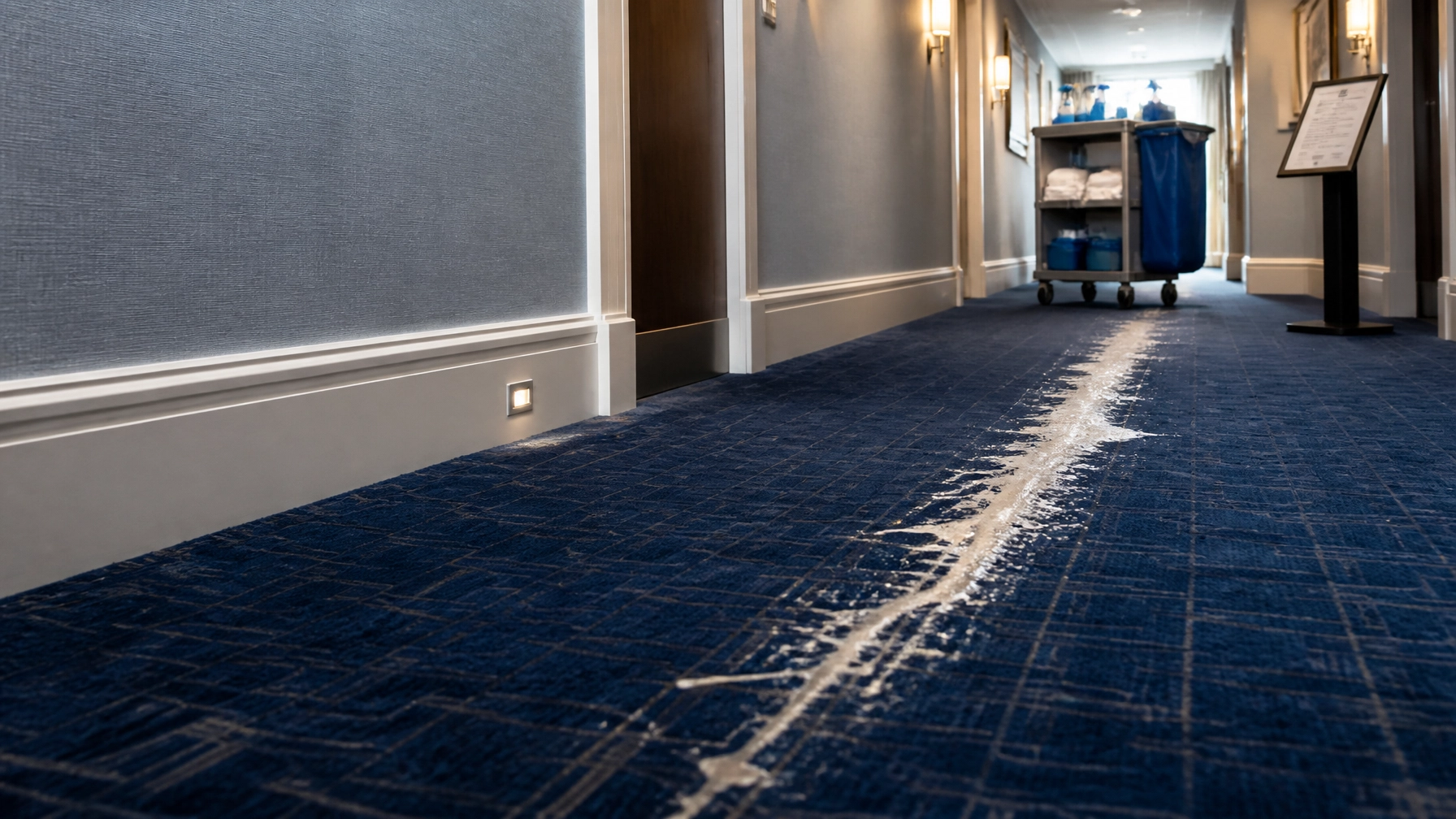
A long white stripe across a landing.
A dotted trail down a hotel corridor.
A pale line beside a carpet edge.
A streak that looks suspiciously like someone dragged a steam cleaner wand through the room and left the evidence behind.
The confusing part is that this damage does not look like a traditional “spot”. It looks like a shadow, dirty water, a cleaning mark or even a strange pattern in the carpet.
Sometimes, it is none of those things.
It may be a chemical trail.

Why does bleach create a line instead of a spot?
Carpet colour damage follows the path taken by the liquid.
That might be:
- A mop or bucket of diluted bleach water carried across a carpeted landing.
- A wet cleaning cloth dragged along the edge of a room.
- Disinfectant dripping from a spray bottle.
- A housekeeper’s trolley leaving small splashes along a corridor.
- A steam cleaner wand or hose carrying chemical residue.
- A bottle leaking as someone walks from one room to another.
- A cloth being used to wipe a skirting board, with the wet edge touching the carpet.
The result is a line, stripe, series of dots or uneven trail.
Where the chemical touched the carpet, it may have attacked the original dye. The colour has not simply been covered by a pale substance. It has been changed or removed from the fibre itself.
That is why the shape can look so oddly precise. It follows the route of the mop, cloth, wheel, drip or wand.
In short, the carpet has kept the receipt.
Is it bleach damage or just a cleaning mark?
Not every pale line is bleach damage. Carpet can also show:
- Cleaning residue.
- Pile distortion.
- A watermark.
- Hard-water deposits.
- Uneven drying.
- Flattened fibres reflecting light differently.
- Soil removed from one strip while the surrounding carpet remains dirty.
A few clues can help.
A residue or pile mark may feel crusty, powdery or stiff. It may change when cleaned correctly or when the pile is brushed in a different direction.
Chemical colour loss usually feels much more ordinary. The fibres may feel soft and unchanged, but the colour is noticeably lighter. The edges may be sharp. The streak stays pale even after professional carpet cleaning.
If cleaning makes the surrounding carpet brighter while the stripe remains white, the contrast can become even more obvious.
That is the moment many people realise they have not got a dirty carpet.
They have got a missing-colour problem.
For more background, see our guide to the difference between a bleach spot and a regular stain.
Why cleaning will not fix a bleach streak
A normal stain adds something to the carpet.
Coffee adds colour. Mud adds soil. Grease adds residue.
Cleaning is designed to remove those unwanted substances.
Bleach damage works differently. It can destroy or alter the dye already present in the carpet fibre. There is no ordinary stain left to extract.
That is why:
- Steam cleaning will not put the original colour back.
- Carpet shampoo will not recreate the missing pigment.
- Scrubbing will not reverse the chemical reaction.
- A spot cleaner may make the line look brighter without repairing it.
Steam cleaning can still be useful for general carpet hygiene. It is simply not a colour restoration treatment. As we explain in our article, steam cleaning does not remove bleach spots.
A bleach line needs colour repair, not another round of cleaning.
The DIY fixes people try : and why they usually backfire
When a white stripe appears, the internet gets creative.
We have seen people consider:
- Scrubbing the line until it “blends”.
- Applying more bleach to make the whole stripe look intentional.
- Using permanent marker pens.
- Trying hair dye.
- Painting the fibres.
- Applying fabric dye from a craft shop.
- Cleaning the entire corridor again and hoping the mark disappears.
It is understandable. A long white line feels like a problem that should be possible to wash away.
Unfortunately, DIY colour correction is rarely as simple as colouring inside the lines.
Marker ink can look far too dark, especially under hotel lighting. It may also bleed, transfer onto shoes or become obvious when the carpet is cleaned.
Household dyes are not necessarily suitable for the carpet fibre. They can leave a patchy, flat or incorrect colour.
Scrubbing can roughen weakened fibres and make the damaged strip reflect light differently. Adding more chemicals can spread active damage or create a second problem beside the first.
The safest immediate response is simple: blot any fresh liquid with a clean white cloth, avoid rubbing, keep people off the area where possible and do not mix cleaning products. Then ask a professional for advice.
The hotel and commercial carpet problem
For hotels, serviced accommodation and commercial buildings, a bleach line is more than a cosmetic nuisance.
A corridor is one of the most visible parts of a property. Guests walk through it repeatedly. A pale stripe can make an otherwise premium interior look tired, poorly maintained or unfinished.
Common commercial causes include:
- Housekeeping trolleys moving between rooms.
- Disinfectant or bathroom cleaner dripping during room turnaround.
- Cleaning cloths being placed on the carpet.
- A carpet cleaning wand leaving a chemical trail.
- Spillages being dragged along high-traffic routes.
- Pressure to reopen rooms before the carpet has been properly assessed.
Replacing an entire corridor is expensive and disruptive. It can involve moving furniture, lifting carpet, sourcing a matching batch, arranging fitting and closing areas of the property.
Professional bleach spot repair and carpet colour restoration may provide a more practical alternative where the carpet fibre and condition are suitable.
BD365 works with hotels, offices, landlords, facilities teams and commercial property managers across the UK. A photo assessment can help establish whether the line is likely to be repairable before anyone orders replacement carpet.

How professional colour restoration fixes a bleach line
At BD365 Carpet Colour Solutions, we specialise in professional bleach spot repair, carpet dyeing and colour restoration.
A long streak needs a different approach from a single round mark. The repair has to follow the length, width and changing intensity of the trail. Some parts may have suffered heavier chemical exposure than others.
The process generally involves:
-
Assessing the carpet
We consider the fibre, colour, pile condition, age and extent of the damage. -
Checking the chemical damage
Any remaining active chemical needs to be dealt with before colour is applied. -
Matching the surrounding colour
Carpet is rarely one flat shade. It may contain several tones, flecks or pattern colours. -
Applying colour carefully
Professional tools, including fine precision applicators and airbrush-style equipment, allow colour to be built up gradually rather than slapped across the whole line. -
Blending the repair
The aim is to soften the transition between the restored section and the surrounding carpet. -
Setting and checking the result
The repaired area is reviewed once the colour has settled, with realistic expectations explained from the start.

The final result depends on the fibre, original dye, age, wear and severity of the chemical exposure. Some repairs blend extremely well. Others achieve a significant visual improvement rather than disappearing completely.
That honest assessment matters.
Restoration versus replacement
For a localised stripe, restoration can offer several advantages:
- Lower cost than replacing an entire room or corridor.
- Less disruption for residents, guests and staff.
- Faster turnaround.
- Less carpet sent to waste.
- A way to preserve a high-quality or difficult-to-match carpet.
- A more sustainable option where the carpet is still structurally sound.
Our carpet repair cost guide explains the factors that affect pricing, including the size of the damage, fibre type, colour complexity, access and location.
A line may be longer than a spot, but that does not automatically mean the whole carpet needs to go.
When replacement genuinely is the right call
Restoration is not suitable for every carpet, and a responsible specialist should say so.
Replacement may genuinely be the better option when:
- The carpet is worn thin across the whole area.
- The backing or pile has been physically damaged.
- The chemical has caused melting, brittleness or severe fibre breakdown.
- The affected area is extensive and heavily visible.
- The carpet cannot accept colour reliably.
- There are multiple overlapping problems, such as severe wear, odour and widespread staining.
- You were already planning a full refurbishment.
- A suitable replacement carpet is readily available and disruption is manageable.
BD365 does not believe every carpet should be rescued at any cost. We assess first and advise honestly. If restoration is unlikely to produce a worthwhile result, we will tell you.
See a white streak? Send us a photo
If your carpet has a white line, stripe, drip trail or pale corridor mark, do not assume it is just dirty water.
Send a few clear photographs in natural light, including:
- A close-up of the streak.
- A wider image showing the full room, landing or corridor.
- The carpet edge and surrounding area.
- Any details about what caused the damage.
- Products used before the mark appeared.
- Your postcode or property location.
BD365 Carpet Colour Solutions provides nationwide UK coverage for homes, hotels, businesses, rental properties and commercial premises.
Request a free photo assessment, or contact us directly:
- Freephone: 0800 1931 365
- WhatsApp: 07561 700670
- Email: info@bd365.co.uk

The final word on the bleach-line drama
A white streak across your carpet can look bizarre because it is a record of movement: the path of a mop, trolley, cloth, spray or cleaning wand.
It is often not dirt.
It is often not a shadow.
And it is not something a permanent marker should be invited to solve.
Where the carpet is suitable, professional colour restoration can give the damaged area a second chance. It can save money, reduce waste and avoid the disruption of replacing an otherwise serviceable carpet.
Before you rip up the corridor, send BD365 a photo.
