TLDR
A bleach spot can appear to grow when people scrub, rub or repeatedly wet it. The bleach gets pushed further through the carpet fibres, while the disturbed pile makes the damaged area look even larger. It is not a normal stain, either. Bleach removes colour rather than adding dirt. Stop touching it, avoid adding more cleaning products and contact BD365 Carpet Colour Solutions for professional bleach spot repair, precision carpet dyeing and carpet restoration. We provide fast, eco-friendly solutions for homes, hotels and businesses with nationwide UK coverage.
“It was only this big yesterday…”
This is one of the most common lines we hear after a carpet bleach accident.
Someone notices a pale mark. They dab it. Then they scrub it. Then they apply a cleaner to “lift the stain”. The next morning, the spot appears wider, fuzzier and much more noticeable.
Cue the classic Reddit update:
“The spot got bigger!”
Unfortunately, the carpet is not being dramatic. The damage may genuinely have spread. And even when the bleach itself is no longer moving, scrubbing and repeated cleaning can make the affected area look larger.
The good news? A bleach spot does not automatically mean you need a brand-new carpet.
Why does a bleach spot spread?
Bleach behaves very differently from coffee, mud or red wine.
A regular stain adds colour or residue to the carpet. Bleach can remove the carpet’s original dye. That means cleaning alone cannot bring the colour back.
There are a few reasons the mark may seem to “grow”.
1. Scrubbing pushes the bleach outwards
When you scrub a wet bleach spot, you are not simply cleaning one small patch. You are working the liquid into nearby fibres.
The carpet pile acts a little like a collection of tiny absorbent strands. Pressure, friction and moisture can move the bleach sideways, deeper into the pile and sometimes towards the backing.
That creates a larger area of colour loss.
The harder you scrub, the more likely you are to create:
- A wider, pale halo around the original spot
- Uneven colour loss
- Fuzzy or disturbed edges
- Flattened or rough-looking fibres
- A bigger repair area for a professional to restore
The carpet is not asking for a massage. It is asking for everyone to step away from the cloth.
2. Moisture causes wicking
If the carpet is repeatedly soaked, liquid can travel through the fibres and backing. As it moves, it can carry bleach residue with it.
This is particularly concerning when the spill has reached:
- The carpet backing
- The underlay
- Seams or joins
- Areas underneath furniture
- Patterned or textured carpet where the edges are harder to see
Once the area dries, you may notice a larger pale patch than you originally saw.
3. Scrubbing changes the way light reflects
Even where the bleach has not travelled much, aggressive scrubbing can alter the pile.
Flattened fibres reflect light differently from the surrounding carpet. The result can look like a larger, duller or more obvious patch.
On patterned carpets, this effect is even more noticeable. A missing section of colour interrupts the design. A roughened section interrupts the texture. Together, they can make a small accident look like a full flooring emergency.
4. The original edge becomes harder to identify
Bleach damage is rarely a neat circle. It may appear as a splash, drip, streak or irregular cloud.
After several DIY attempts, the original shape can become difficult to distinguish from surrounding dampness, fading and pile disturbance. This is why the final repair may need to cover a wider area than the first visible mark.
The biggest mistake: treating bleach like a normal stain
This is where many DIY attempts go sideways.
People reach for:
- Carpet shampoo
- Strong stain removers
- Washing-up liquid
- More bleach
- Ammonia
- Vinegar
- Baking soda
- Permanent markers
- Hair dye
- Fabric pens
- Steam cleaners
Some of these products may be suitable for other cleaning situations. They are not automatically safe for bleach-damaged carpet.
Most importantly, never mix bleach with ammonia, vinegar or other cleaning chemicals. Dangerous fumes can be produced. Ventilate the area, keep children and pets away, and follow the product safety instructions.
If the spill is fresh, carefully blot rather than rub. Use a clean white cloth and work towards the centre. Do not keep experimenting with household products once you have removed the immediate excess.
For more guidance, see our advice on what to do after accidentally spilling bleach on carpet.
Why DIY colour repairs often create a second problem
Once the carpet is pale, the temptation is to colour it back in.
This sounds simple. Find a brown pen, apply it to the white patch and hope for the best.
Carpet fibres, however, are not a colouring book.
A marker may look close under one light and completely wrong in daylight. It may sit on the surface rather than bonding evenly with the fibre. On a patterned carpet, it can cover one part of the design while making the surrounding colours look muddy.
The common DIY results include:
- Dark outlines around the repair
- Purple, green or grey undertones
- A visible “painted-on” patch
- Colour transfer onto socks, furniture or paws
- Fading after cleaning or sunlight
- A larger and more complicated restoration job
A Reddit suggestion can be entertaining. It is not always a restoration plan.
The National Carpet Cleaners Association also warns that home colouring methods such as permanent markers, crayons and hair dye can create a new stain rather than solve the original damage. Their advice is to consult a professional where the carpet has been lightened by bleach. Read the NCCA guidance on bleach on carpet.

How professional bleach spot repair stops the problem
At BD365 Carpet Colour Solutions, we do not simply cover the white patch.
Our process is designed to deal with the damage properly, then restore the missing colour as accurately as possible.
1. We assess the carpet first
The fibre type, original colour, pattern, texture and depth of the damage all matter.
A bleach spot on a plain synthetic carpet is different from a bleach spill on a luxury wool carpet or a multi-coloured hotel corridor. We assess whether the fibres are suitable for dyeing and whether the damage is mainly colour loss, chemical weakening or both.
2. We deal with remaining chemical residue
Before adding colour, any active bleach or unwanted residue must be addressed.
If dye is applied while bleach is still active, it can be affected or stripped again. Professional restoration therefore begins with careful preparation and neutralisation, rather than rushing straight to the colour-matching stage.
This is one reason repeated DIY cleaning can make the job more difficult.
3. We recreate the missing colour
Bleach removes colour. Professional carpet dyeing puts it back.
BD365 technicians use expert colour matching to create a close match with the surrounding carpet. We consider the base shade, the lightness, the undertones and the way the colour changes across the pile.
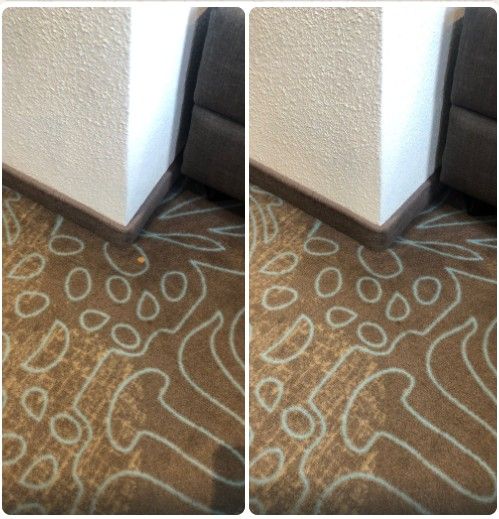
Patterned carpets require even more care. Multiple shades may need to be restored so the design flows naturally rather than ending in a suspicious-looking brown blob.
4. We apply colour with precision
The application method depends on the carpet and the damage.
For small marks and detailed areas, precision syringes can help control exactly where colour is placed. Airbrushes may be used to blend larger or softer transitions. These tools allow colour to be built gradually and accurately, rather than dumped onto the fibres in one heroic but regrettable squirt.
The result is a repair that blends into the existing carpet instead of sitting on top of it.

Why restoration beats replacement
Replacing an entire carpet because of one bleach spot is often unnecessary.
A replacement can involve:
- New carpet
- Underlay
- Fitting
- Furniture removal
- Disposal
- Room downtime
- Matching adjoining areas
- Disruption to residents, guests or staff
For hotels, offices, rental properties and commercial spaces, the disruption can be just as frustrating as the bill.
Professional bleach spot repair is usually a fraction of the cost of replacing a whole room or corridor. Our carpet restoration cost guide explains why a bespoke quote is needed and what can affect the price.
Restoration can be especially valuable when:
- The carpet is high-end or difficult to replace
- The original style has been discontinued
- The damage is in a busy hotel corridor
- A tenant needs to protect a deposit
- A property manager needs a fast turnaround
- An insurance claim requires a practical repair option
- The rest of the carpet is in good condition

It is also the more sustainable choice
There is no reason to send a perfectly serviceable carpet to landfill because of a few bleached fibres.
Choosing restoration helps extend the life of the carpet already in place. It avoids the manufacture, transport and installation of a replacement, while reducing waste and the associated disruption.
At BD365, we use eco-friendly dyeing techniques designed to be safe for families, pets and occupied commercial environments. It is a practical way to improve the appearance of a carpet without taking the most wasteful route.
Our approach is simple:
Restore where possible. Replace when necessary.
What should you do if the spot is still spreading?
Take these steps:
- Stop scrubbing.
- Do not apply another cleaning chemical.
- Ventilate the area.
- Keep children and pets away from the spill.
- Blot gently with a clean white cloth if the spill is fresh.
- Take clear photographs in natural light.
- Contact BD365 for professional advice and a quote.
The sooner we can assess the damage, the easier it is to understand what has happened. We work with homeowners, hotels, businesses, property managers, professional cleaners and insurance companies across the UK.
The final word: put the cloth down
A bleach spot can spread because the liquid wicks through the carpet. It can also look larger because scrubbing damages the pile and creates a wider visual halo.
Either way, more rubbing rarely helps.
If Reddit has taught us anything, it is that a small carpet accident can quickly become a 47-comment saga involving markers, bathroom products and someone’s uncle’s “guaranteed” method.
You do not need a saga. You need the right assessment and a careful repair.
BD365 Carpet Colour Solutions specialises in carpet dyeing, bleach spot repair and carpet restoration. With expert colour matching, precision syringes and airbrush application, we can often restore the appearance of damaged carpet faster, more sustainably and at a much lower cost than replacement.
Contact BD365 for a bespoke carpet restoration quote and give your carpet a second chance.
