TLDR
Nail polish remover containing acetone can leave a pale, bleach-like patch on carpet because it may alter the carpet dye. It can also damage fibres, adhesives or backing, depending on the carpet construction. For estate agents and landlords, the safest next step is to stop adding products, photograph the damage and arrange a professional assessment. BD365 Carpet Colour Solutions provides carpet dyeing, bleach spot repair and carpet restoration across the UK, helping suitable carpets avoid unnecessary replacement. Restoration is not guaranteed, but it is often worth assessing before starting a costly, disruptive flooring project.
The Reddit-style carpet panic: “I only used nail polish remover”
It usually starts with a small accident.
A tenant drops a bottle of nail varnish. A little colour lands on the carpet. Someone reaches for nail polish remover, assuming the solvent will save the day.
Then comes the follow-up post:
“I used acetone on the carpet and now there’s a white patch. Have I ruined the whole room?”
For a letting agent, this is not just an internet question. It can become an end-of-tenancy dispute, a delayed check-out report and an unexpected replacement bill.
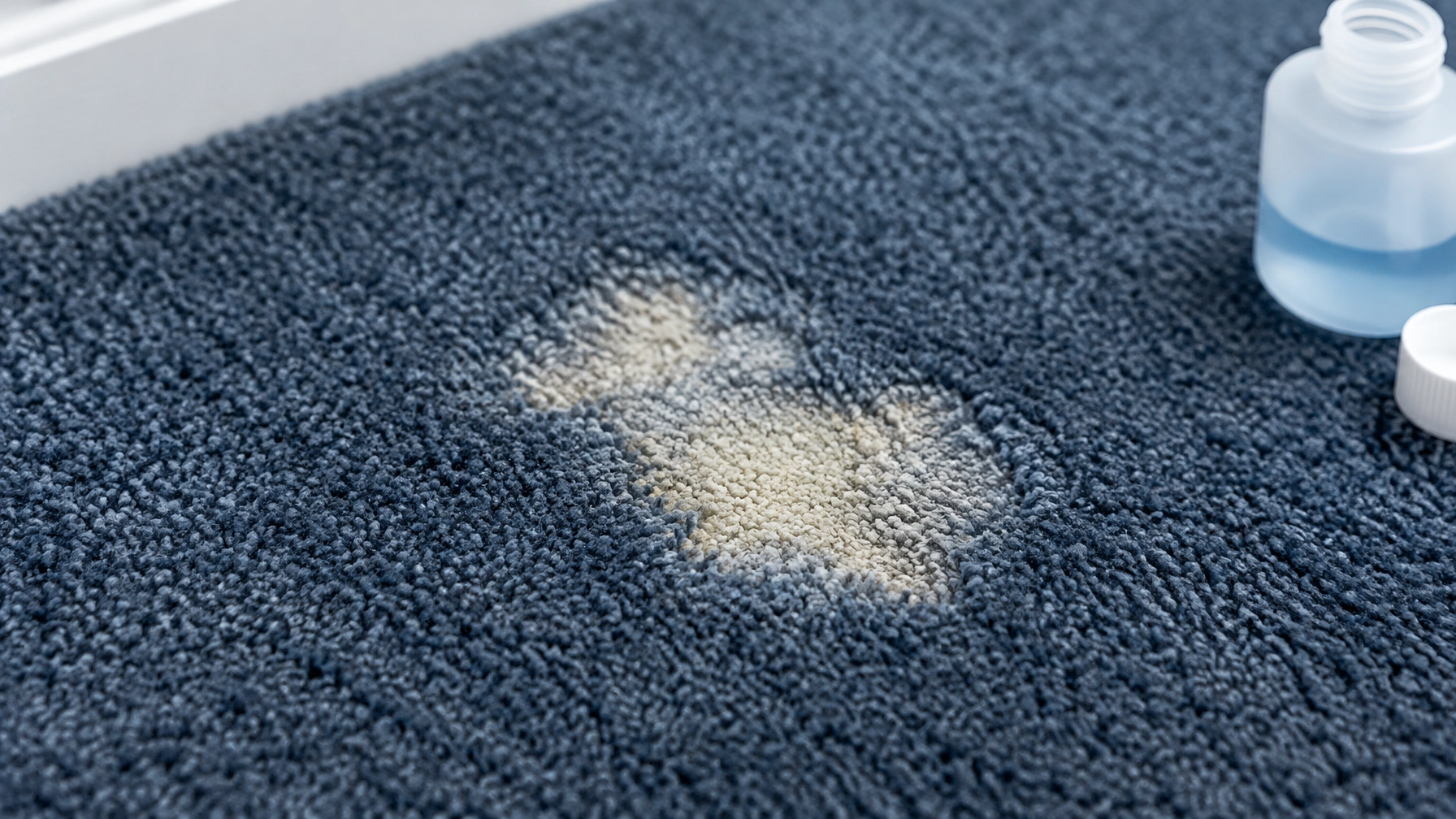
The frustrating part is that the original nail varnish may no longer be the main issue. The pale patch left behind can be colour loss rather than a conventional stain.
Why acetone can leave a bleach-like mark
A normal stain adds unwanted material or colour to carpet. Coffee, make-up, mud and wine may leave a darker or visibly dirty area.
Acetone is different.
Depending on the fibre, dye and amount of product involved, it may affect the existing colour in the carpet. That can leave a patch which looks white, yellow, orange or simply much paler than the surrounding pile.
It may look exactly like a bleach spot.
However, it is not necessarily the same chemical process as household bleach. The important point is the result: the original colour has been changed or removed, so ordinary carpet cleaning cannot simply lift the problem away.
The Carpet and Rug Institute warns that solvents should not be poured directly onto carpet or allowed to reach the backing. Its guidance explains that solvent exposure can affect the latex bond between carpet layers.
Bane-Clene also warns that acetone can bleach carpet, dissolve some fibres and cause backing to come unglued if it penetrates.
That means there may be two problems:
- Colour damage: a pale or uneven patch where the original dye has been affected.
- Physical damage: softened, distorted, brittle or loose fibres, or backing and adhesive problems beneath the surface.
The carpet may still be restorable. But nobody can responsibly guarantee that from a Reddit photograph alone.
Estate agents: document first, debate later
At check-out, a pale carpet patch can quickly become a question of responsibility.
Was it nail polish remover? A cleaning product? A previous stain treatment? Sun fading? Or one of those store-bought spot removers that has lightened the carpet?
Products such as Vanish or Dr Beckmann may be suitable for particular stains and surfaces when used exactly as directed. But some stain-removing formulas can also alter colour on susceptible carpets. A pale mark after cleaning is not automatically proof of deliberate damage or misuse.
For a fair and efficient inspection, record:
- A close-up photograph of the patch.
- A wider photograph showing its position in the room.
- The date it was discovered.
- Any explanation given by the tenant or cleaner.
- The product name, if known.
- Whether the carpet feels physically different.
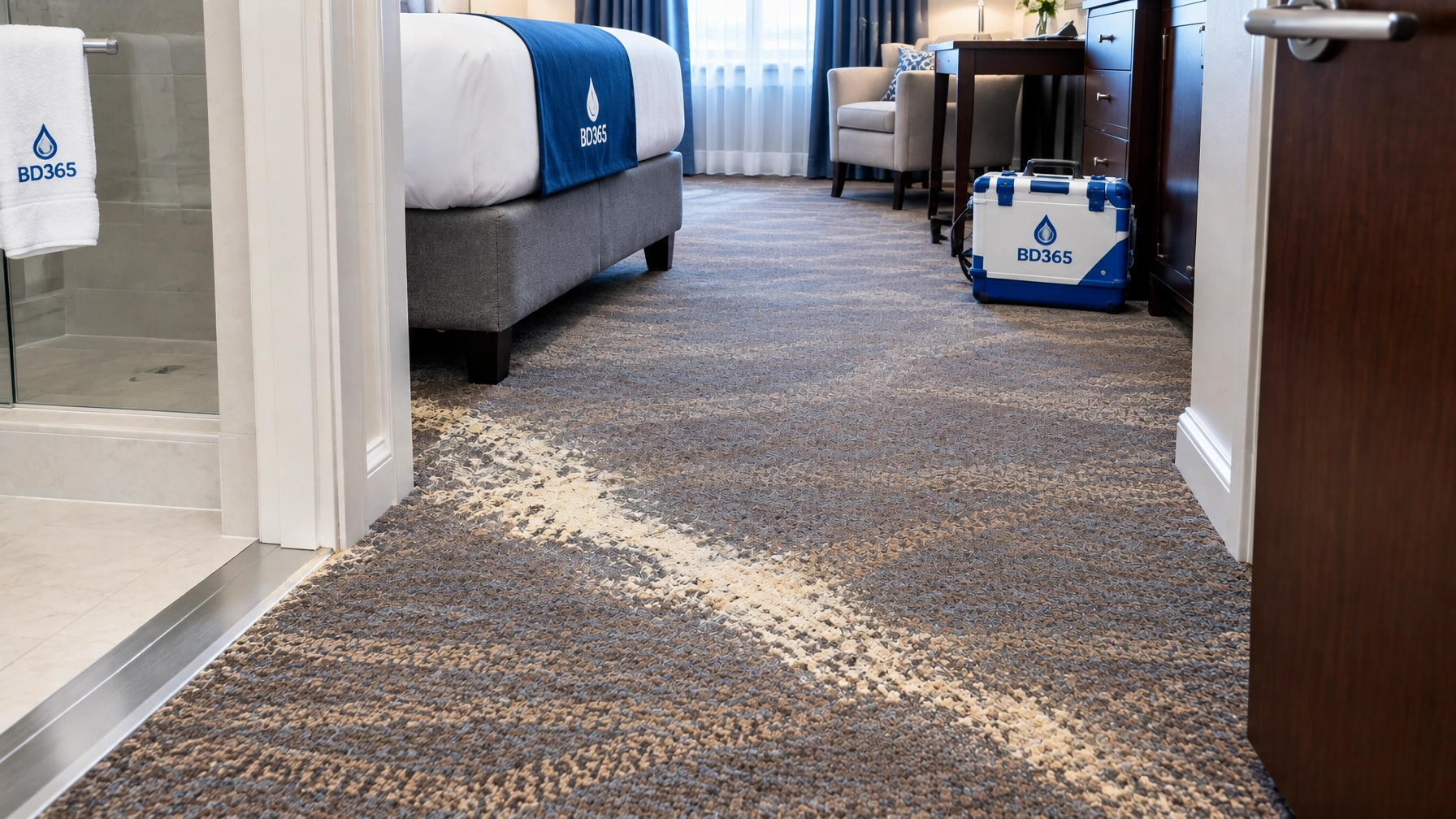
- Whether the mark is isolated or part of a wider trail.
Avoid making a replacement decision based on appearance alone. A pale spot can look dramatic in a flash photograph while the carpet around it remains in good condition.
A professional assessment gives the landlord and tenant better evidence. It can also prevent an otherwise serviceable carpet being removed unnecessarily.
The safe next step is not “try one more thing”
When a pale patch appears, the temptation is understandable.
Perhaps another cleaner will remove the residue. Perhaps a stronger stain remover will even out the colour. Perhaps a marker, dye kit or internet trick will make it disappear.
This is where a small problem can become a much larger one.
For acetone damage, the sensible next step is:
- Stop adding products.
- Do not scrub, sand, heat or attempt to recolour the patch at home.
- Follow the product’s safety information if the spill is fresh, including ventilation and ignition precautions.
- Photograph the carpet and retain the nail polish remover bottle or product details.
- Seek a professional carpet restoration assessment.
Do not try to neutralise acetone with another household chemical. Do not assume that because the surface feels normal, the backing is unaffected.
The Carpet and Rug Institute’s acetone guidance and Shaw Floors’ nail polish guidance both underline an important principle: carpet construction and manufacturer instructions matter. There is no universal treatment that is safe for every carpet.
Why carpet restoration should be considered before replacement
A nail polish remover accident can make a whole room feel condemned.
For landlords, that may mean a replacement carpet, new underlay, fitting, disposal and a longer void period. For homeowners, it means furniture moving, disruption and the challenge of matching the rest of the property. For letting agents, it can delay marketing or handover.
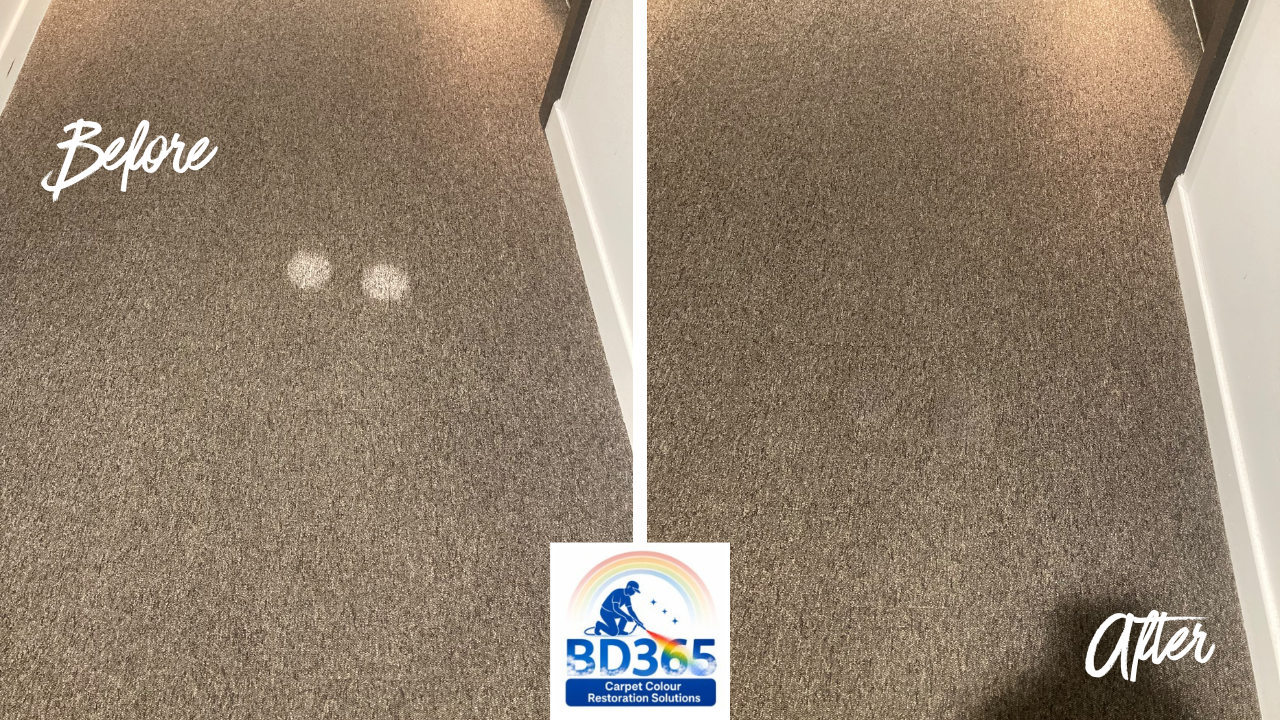
If the damage is localised and the carpet remains structurally sound, professional restoration may offer a more sensible route.
BD365 Carpet Colour Solutions specialises in:
- Professional carpet dyeing.
- Bleach spot repair.
- Carpet colour restoration.
- Colour correction for faded or chemically damaged areas.
- Domestic, rental and commercial carpet assessments.
The aim is to rebuild or blend the missing colour into the surrounding carpet, rather than paint an obvious patch on top.
The result depends on the fibre, colour, pile condition, age, backing and depth of damage. Some repairs blend extremely well. Others produce a strong improvement rather than a completely invisible finish.
That honest distinction matters. Restoration is an alternative to replacement, not a magic wand.
Hotels and businesses: presentation matters, but downtime costs more
A pale acetone mark might appear in a hotel bedroom, serviced apartment, salon, office or reception area.
The carpet may be perfectly usable apart from one visible patch. Yet in a guest-facing environment, a small mark can appear in photographs, attract complaints or make a room feel poorly maintained.
That creates an awkward choice:
- Block the room or area.
- Remove furniture and replace the full carpet.
- Accept the mark and risk presentation problems.
- Arrange a specialist assessment and explore localised restoration.
Where the carpet is suitable, targeted colour restoration can reduce disruption. A repair may fit into a maintenance window instead of becoming a full flooring project.
This is especially relevant to hotels and facilities teams working between departures and arrivals. A carpet issue should be assessed against the cost of lost room nights, contractor delays and operational disruption, not just the price of a replacement roll.
BD365’s existing hotel carpet repair guide explains why localised restoration can be worth considering before taking a whole room out of service.
What professional assessment looks at
A photo assessment is a useful starting point, particularly for a letting agent managing several properties. It does not replace an on-site inspection where the damage is complex, but it can quickly establish whether restoration appears worth exploring.
A professional will consider:
- The likely carpet fibre.
- The colour and pattern.
- Whether the patch is colour loss or surface residue.
- Signs of melted, fused or brittle fibres.
- Whether the pile has changed texture.
- Whether the solvent may have reached the backing.
- The overall age and condition of the carpet.
- Whether the affected area is localised enough to blend.
Professional dyeing may be suitable where the fibres remain sound but the colour has been altered. If the carpet has suffered physical damage, a more extensive repair may be needed.
If the backing has delaminated, the pile is badly distorted, or the carpet is already worn out, replacement may genuinely be the better option.
That is why BD365 assesses first and advises honestly. The goal is to avoid both unnecessary replacement and unrealistic promises.

Restore before you replace: the practical case
Restoration can offer three clear advantages where the carpet is suitable:
Lower cost
Repairing one affected area is often considerably less expensive than replacing a complete room or corridor.
Less disruption
There is no need to uplift an entire carpet, move everything out, wait for new materials or coordinate a full fitting appointment.
Less waste
Keeping a usable carpet in service avoids sending bulky flooring to waste and reduces the environmental impact of manufacturing and transporting a replacement.
For eco-conscious landlords, homeowners and businesses, restoration supports a simple principle: replace only when restoration is no longer sensible.
When replacement may be better
BD365 will not recommend restoration simply because a customer wants to avoid a replacement bill.
Replacement may be more appropriate where:
- The carpet is physically melted, fused or severely brittle.
- The backing or adhesive has failed extensively.
- Seams have opened or the carpet has buckled.
- Damage covers a large or highly visible area.
- The carpet is already at the end of its useful life.
- The fibre is unsuitable for effective colour restoration.
- A wider refurbishment is already planned.
Acetone damage is not always repairable. But a pale patch is not automatic proof that the whole carpet must go.
Send photos before you condemn the carpet
If nail polish remover has left a pale patch, resist the urge to keep experimenting. Stop adding products, document what happened and ask for a professional opinion.
For estate and letting agents, that can mean clearer check-out evidence and fewer unnecessary deposit disputes. For hotels and businesses, it may mean avoiding room downtime. For homeowners, it may save the cost and disruption of replacing an otherwise healthy carpet.
Send BD365 Carpet Colour Solutions:
- A close-up photograph.
- A wider room photograph.
- The product details, if known.
- Your postcode or location.
- Whether the property is domestic, rented or commercial.
BD365 provides UK-wide carpet restoration, carpet dyeing and bleach spot repair assessments.
Call: 0800 1931 365
WhatsApp: 07561 700670
Email: info@bd365.co.uk
A photo assessment is the sensible first move. Restore where possible. Replace only when it is genuinely the better option.