TL;DR
A knocked-over colour bowl, a peroxide drip by the styling chair or a pale trail beside the backwash can leave salon carpet looking beyond saving. But chemical damage removes colour; it is not ordinary dirt, so cleaning cannot put the shade back. BD365 specialises in carpet restoration, carpet dyeing and bleach spot repair that can help suitable carpets avoid replacement, disruption and unnecessary waste. We cover the UK, from Cornwall to the Highlands, and can travel across Europe by arrangement. Send us photos for a free initial assessment.
That pale patch nobody noticed on Saturday
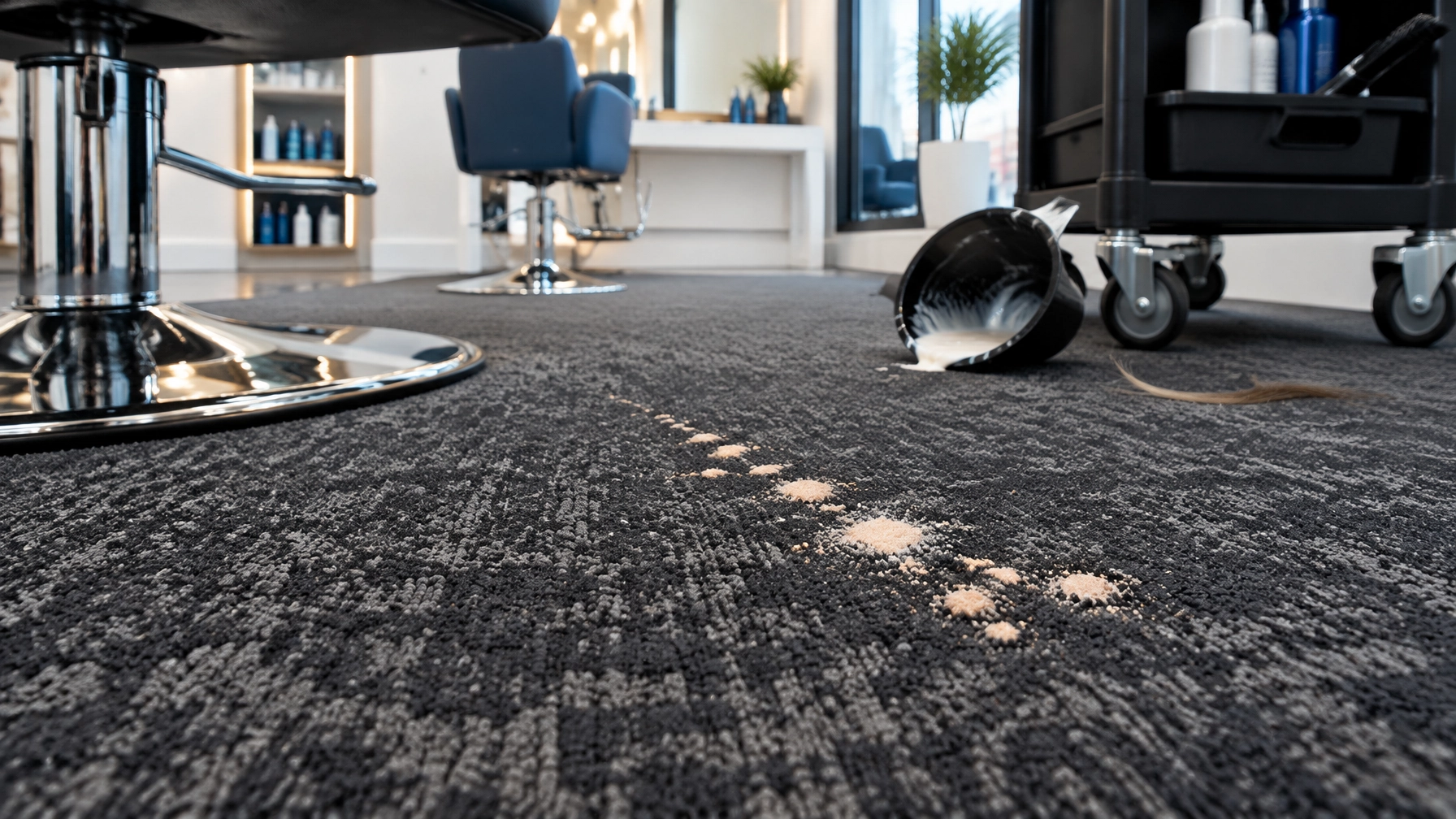
The colour bowl slips off the trolley. A few drops of developer land beside the styling chair. Nobody sees them. Then Monday morning arrives, the carpet looks oddly pale and someone searches: “I’ve bleached my salon carpet.”
Or it is a string of peroxide drip marks by the mirror, a light trail beside the backwash, or a tint spill that followed a mobile hairdresser from the kit bag to a client’s hallway. At home, a colour bowl knocked over in the living room can leave the same unwelcome souvenir.
For a letting agent, it may show up during a salon tenant’s check-out or in a beauty room between lets. For a hotel spa manager, it can be a treatment-room floor that looks tired but cannot easily be taken off sale.
It is a new kind of commercial carpet problem, and it does not always announce itself while the appointment book is full.

Why hair and beauty spaces are hard on carpet
Salons bring a small chemistry set onto the floor every day. Hair colour bowls, tinting brushes, trolleys, capes, damp towels, sectioning clips, bleach powders and spray bottles all move around. Add perming solution, semi-permanent colour and the occasional “just a tiny splash” moment.
Hair developer contains hydrogen peroxide. Lightening products may also contain persulphates. These oxidising agents can remove or alter carpet dye. They do not just sit on top like loose dirt. A drip can travel from a bowl to the floor, or from a trolley wheel to the area around a chair.
Mobile hairdressers take similar products into clients’ homes. A visit meant to refresh someone’s colour can leave a pale mark on a living-room carpet or hallway. The room may look fine until the equipment is packed away.
Why the damage appears after the appointment
Busy salons are excellent at hiding small problems. Dark patterned flooring, warm downlights, mirrors, chair bases, capes and constant footfall all distract the eye. In the evening, the light is often dimmer and the last thing anyone wants is a carpet inspection.
Then the mark appears in a phone-flash photo, a booking image or the bright light of Monday morning. Chemical discolouration can continue to develop or become more noticeable over the following 24 to 72 hours, so a small splash may not look like much at first.
That delay is why the pale patch can feel as if it has appeared from nowhere. It has not. It has simply waited for the right lighting.
Colour loss is not a stain
A regular stain leaves something behind. Bleach or peroxide damage takes something away: the carpet’s colour. More scrubbing, steam cleaning or a deeper clean may remove soil around the patch, but it cannot replace missing pigment.
BD365 explains the difference in its guides to bleach spots versus regular stains and whether bleach stains can actually be removed. There is also a useful explainer on why steam cleaning does not remove bleach spots.
The short version: if the original shade has been chemically changed, cleaning is not colour restoration.
A fair word about Vanish and Dr Beckmann
Store-bought spotters have their place for the stains they are designed to treat. Some carpet products from Vanish and Dr Beckmann contain oxygen-based bleaching agents. That does not make them the same as hair bleach, and it is not a reason to blame a product without knowing what happened.
It does mean that, on a carpet already affected by peroxide or colour loss, product choice matters. Follow the exact product label, check that the product is suitable for that carpet, and test colour fastness on a hidden area first. If you contact a specialist, tell them what has already been used. That information helps them assess the carpet properly.
For product details, see the manufacturers’ guidance for Vanish carpet shampoo and Dr Beckmann Carpet Stain Remover.
The salon-owner maths: repair or refit?
A replacement quote can look like the simplest answer until the full list arrives: measuring, order lead times, discontinued ranges, uplift, fitting, underlay, gripper, disposal, furniture and equipment out and back. Then there are lost appointments, lost takings and a room unavailable while the work happens.
BD365’s published guide prices are:
- £80–£150 for a straightforward single spot
- £150–£250 for multiple or slightly more complex areas
- £300+ for complex or large areas
By comparison, replacing a room can reach £600–£1,600+ once the wider costs are counted. The actual choice depends on the carpet, damage and scope, but a localised bleach spot repair may be a much easier decision than closing a salon or treatment room mid-season. You can read more in our bleach spot repair price guide.
A practical note for agents and landlords
A salon or beauty-unit check-out can quickly turn a carpet mark into a deposit or dilapidations conversation. Clear, dated photographs help record what is visible, where it is and how extensive it appears. Keep the photos with the check-out notes, and record any known incident or products used.
A restoration assessment and quote can document the likely loss and a possible repair option without jumping straight to full replacement. It can also help keep the conversation grounded in the condition of the carpet, rather than turning every pale patch into a debate about betterment.
For landlords and agents, that is useful evidence whether the next step is restoration, a further inspection or replacement.
Hotel spas: every closed room has a cost
In a hotel spa or leisure setting, the issue is not just how the carpet looks. A treatment room taken off sale means block-outs, rescheduling and fewer opportunities to welcome guests. A visible pale patch can also make its way into guest photos and reviews.
If the carpet is suitable, targeted restoration may help avoid the scale and downtime of a refit. For multi-site salon groups and hotel operators, consistent assessment across locations can also help teams decide which rooms need attention first.
What professional carpet restoration involves
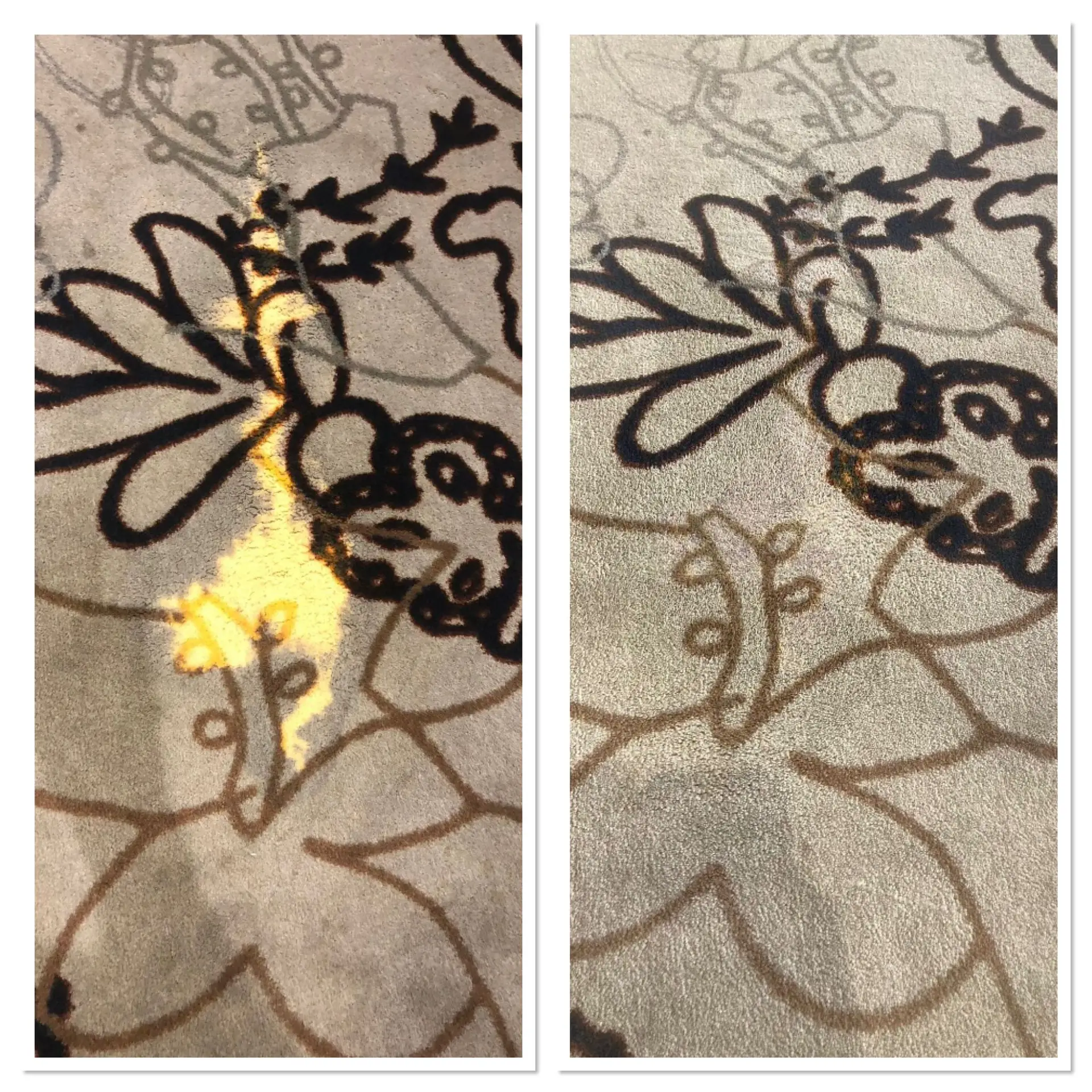
BD365 starts by assessing the fibre, any residue and the colour change. The team then considers whether the carpet is suitable and how the existing shade and pattern can be matched. A physical sample can be agreed before work begins, so expectations are clear.
Where restoration is appropriate, expert colour matching and precision application techniques, including syringes and airbrushes, help blend colour into the pile and pattern. BD365 uses eco-friendly products designed to be safe around clients, children and pets when used as directed.
Carpet dyeing is not a magic wand. Dye cannot rebuild fibre that is worn through, melted or torn. Some polypropylene and polyester carpets may also be unsuitable for this type of repair. That is why an honest assessment comes before a promise.

A simple salon incident checklist
A few straightforward habits can make it easier to manage future accidents:
- Keep trolleys and drip trays on hard flooring where possible.
- Choose carpet products suited to the carpet and follow their labels.
- Use saturated towels and mats under the backwash area.
- Photograph and log any spill or mark on the day it happens.
- Tell the carpet specialist which products have been used.
This is about good incident records, not attempting a repair. If colour has been lost, professional assessment is the sensible next step.
When replacement really is the right call
Restoration is not suitable for every carpet. Replacement may be the better option if the carpet is extensively worn, the fibres are melted or torn, the damage is widespread, or the fibre will not accept a suitable colour treatment. It may also make sense if a refurbishment was already planned.
BD365 will say when restoration is unlikely to be worthwhile. The aim is to help you make an informed choice, not to rescue every floor at any cost.
Before you order new carpet, send us a photo
BD365 Carpet Colour Solutions specialises in carpet restoration, professional carpet dyeing and bleach spot repair for homes and commercial spaces. We help suitable carpets get a second chance, saving avoidable replacement costs and reducing waste.
For a free initial photo assessment, send a room view, close-ups of the pale area, your location and a note about what happened. Include any product already used.
- UK freephone: 0800 1931 365
- WhatsApp: 07561 700670
- Email: info@bd365.co.uk
From Cornwall to the Highlands, BD365 covers the UK, with work across Europe by arrangement. A pale patch does not automatically mean a new floor. Sometimes the smarter option is to restore, not replace.